

Ravine Gardens State Park Travel Guide
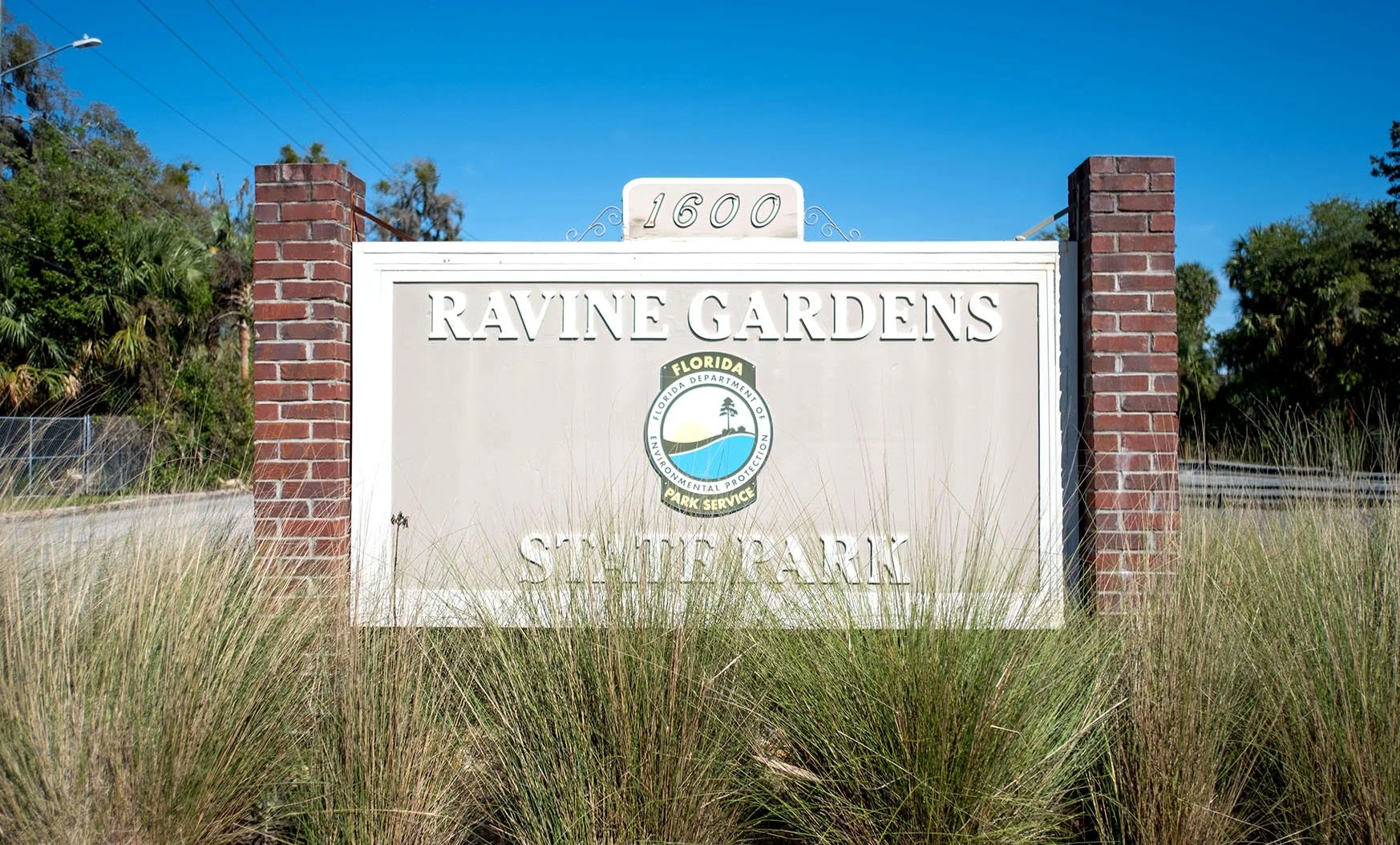
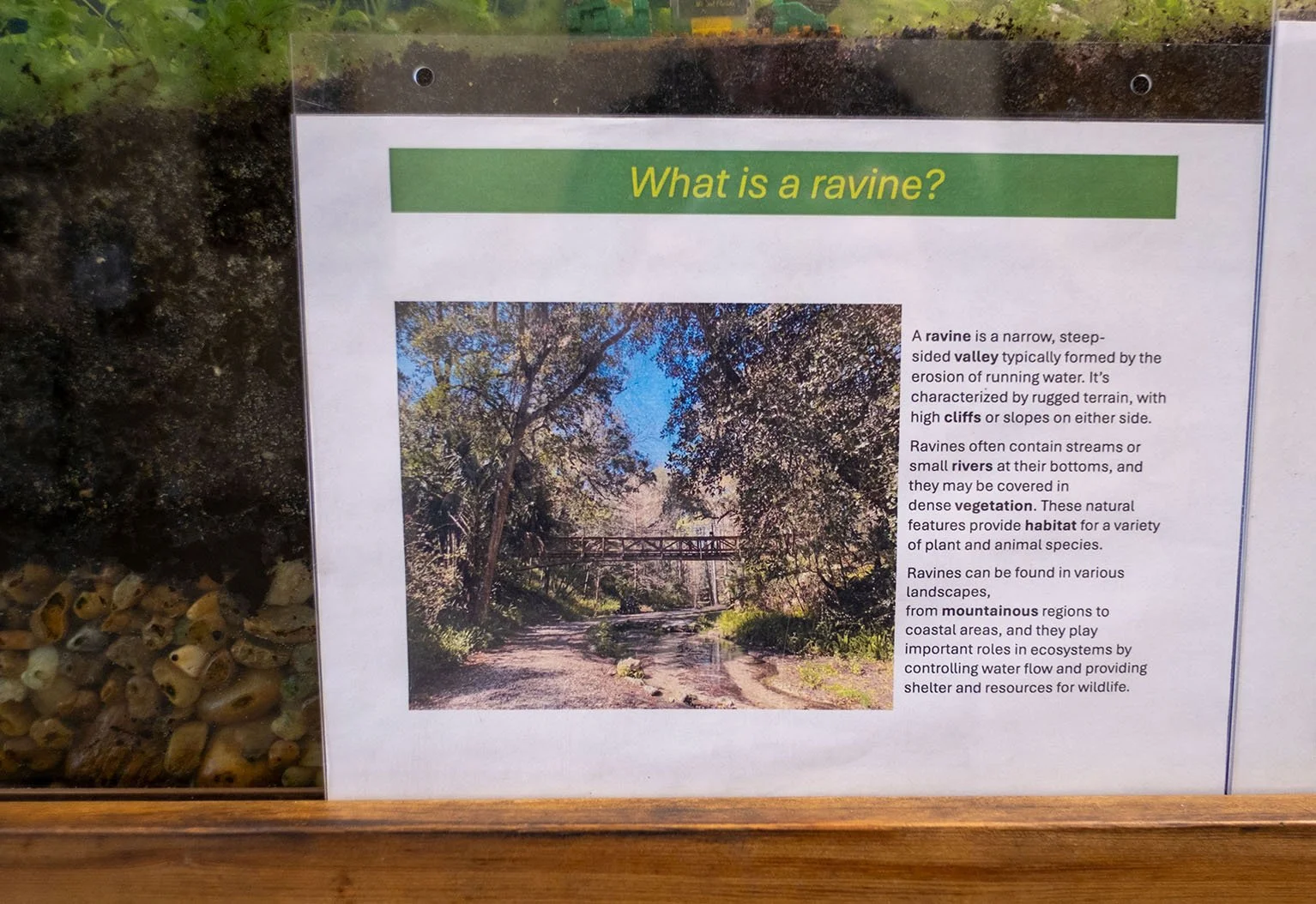
If you’re looking for one of North Florida’s most unique hidden gems, Ravine Gardens State Park should be at the top of your list. Tucked away in Palatka Florida, this historic park offers a completely different landscape from the flat terrain most people associate with Florida—featuring two dramatic ravines up to 120 feet deep with steep banks at 45-degree angles. Experience lush gardens, suspension bridges, and seasonal azalea blooms that transform the park into a pink paradise.
Whether you’re planning a weekend adventure, or relaxing picnic day, here’s everything you need to know before visiting.
When to Visit: Azalea Season
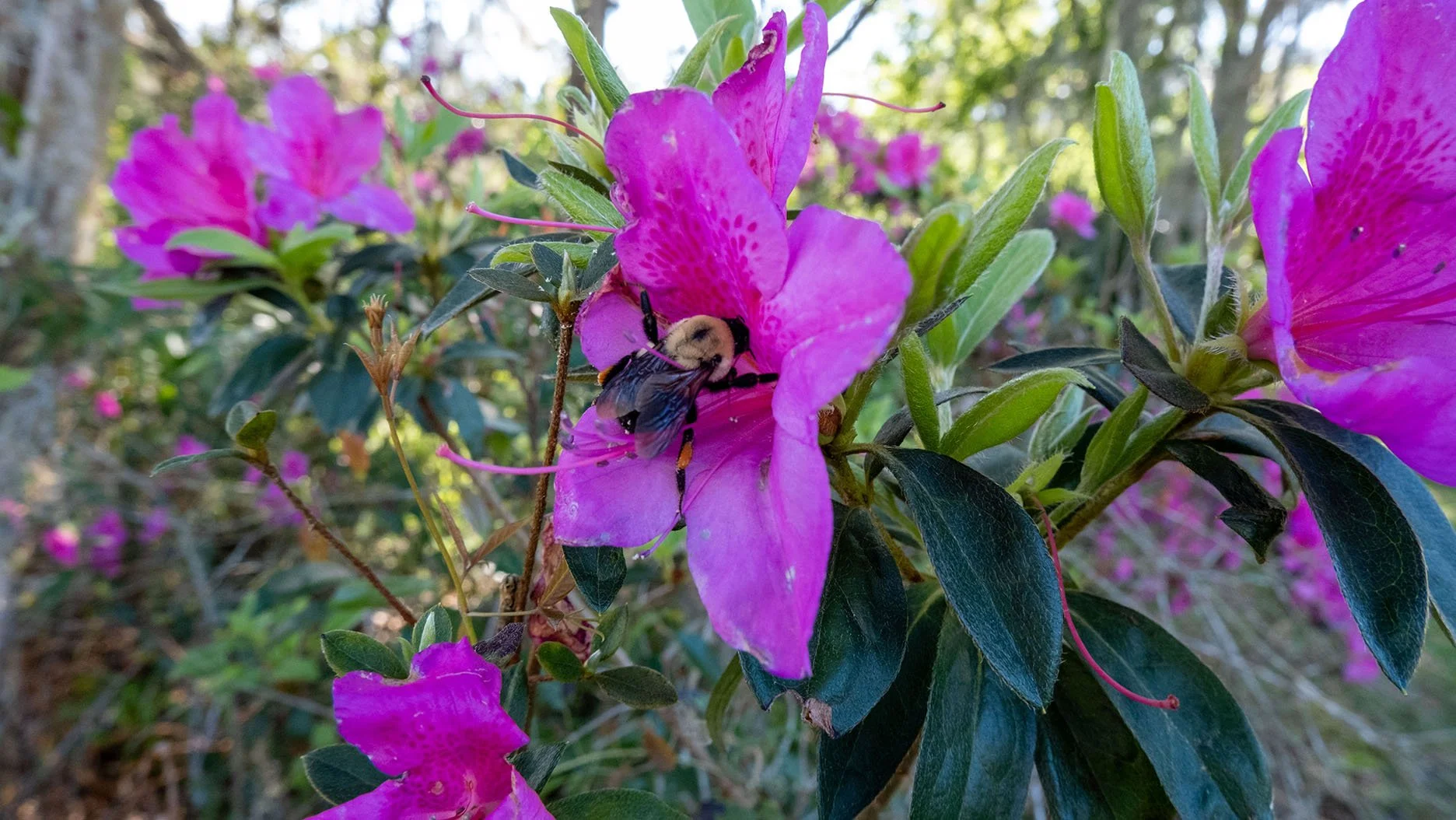
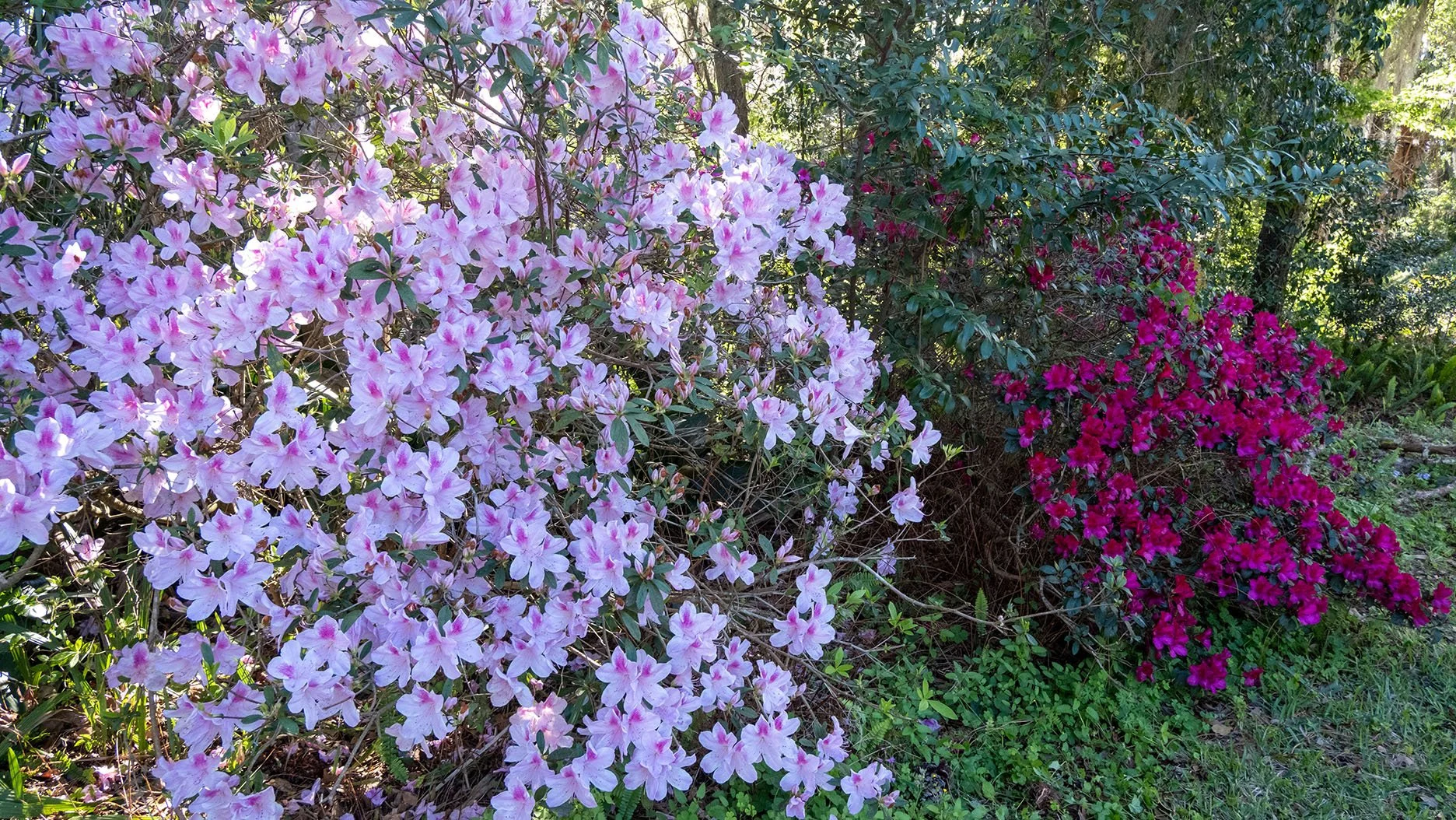
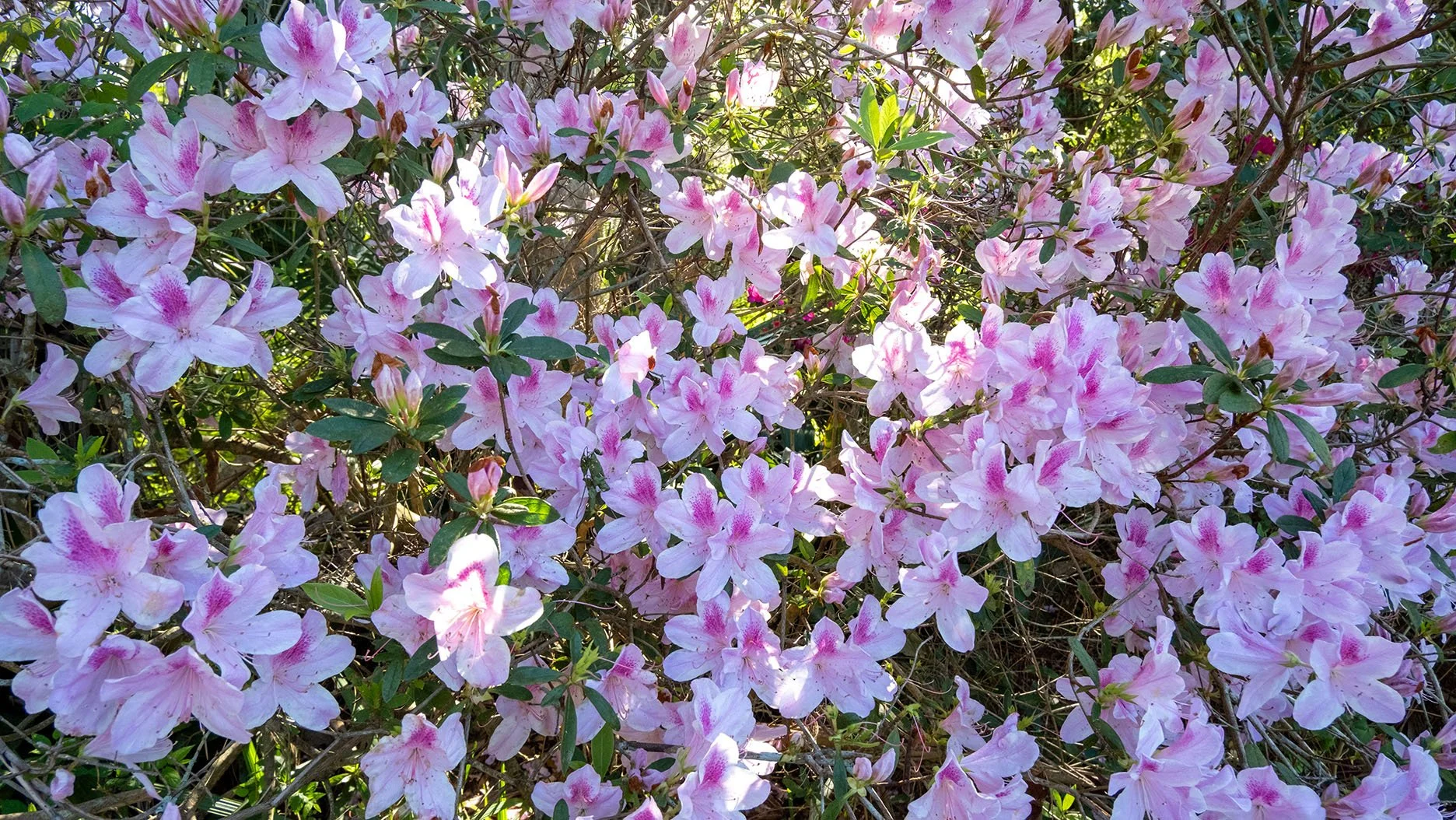
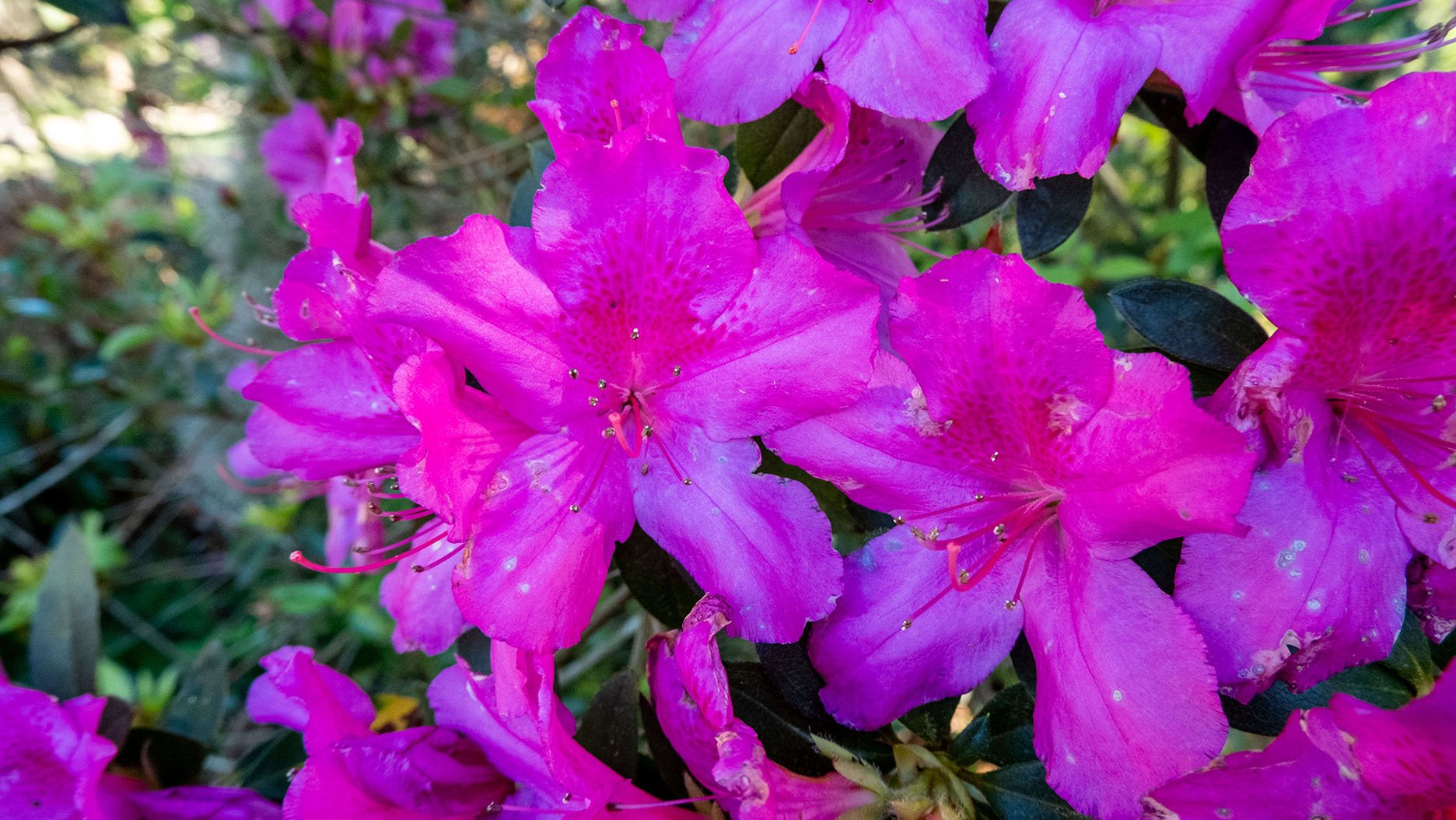
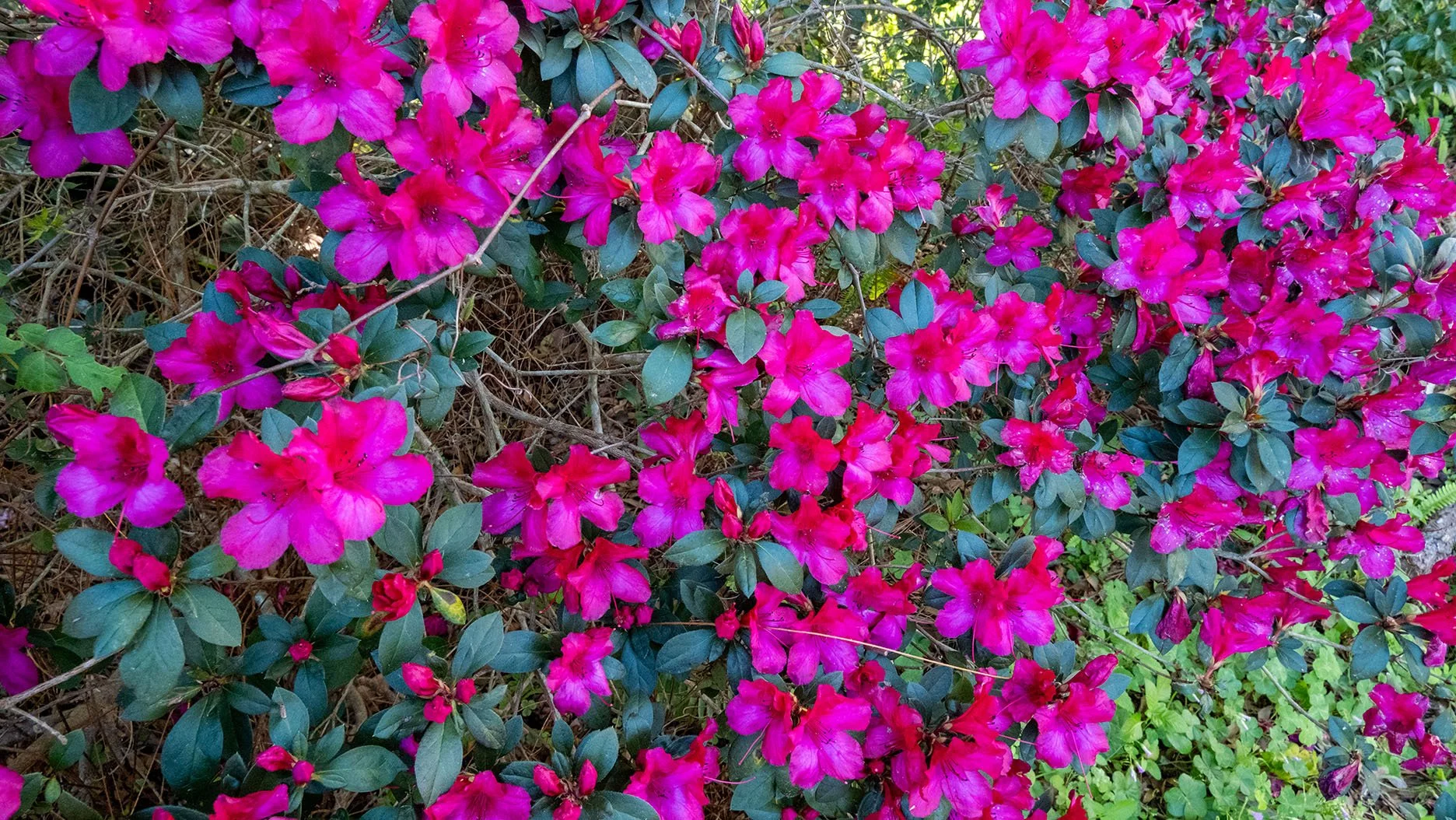
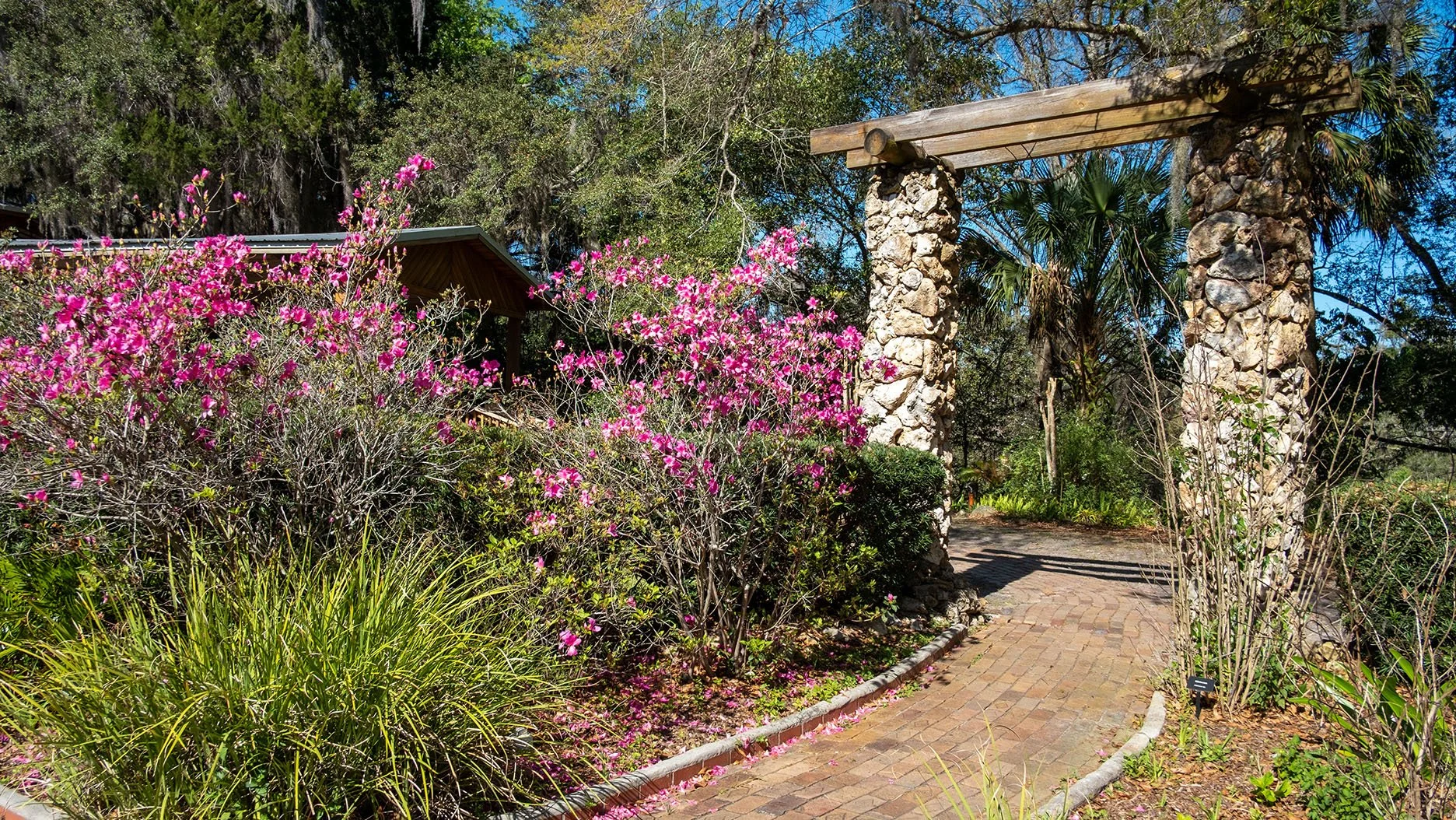
One of the biggest draws to Ravine Gardens is its incredible azalea bloom. The park is home to thousands of azaleas planted during the 1930s, and they create a stunning display each year.
Bloom season: Late December through early March
Peak bloom: Typically February (weather-dependent)
Bloom style: “Rolling bloom” — not all flowers bloom at once, extending the viewing season
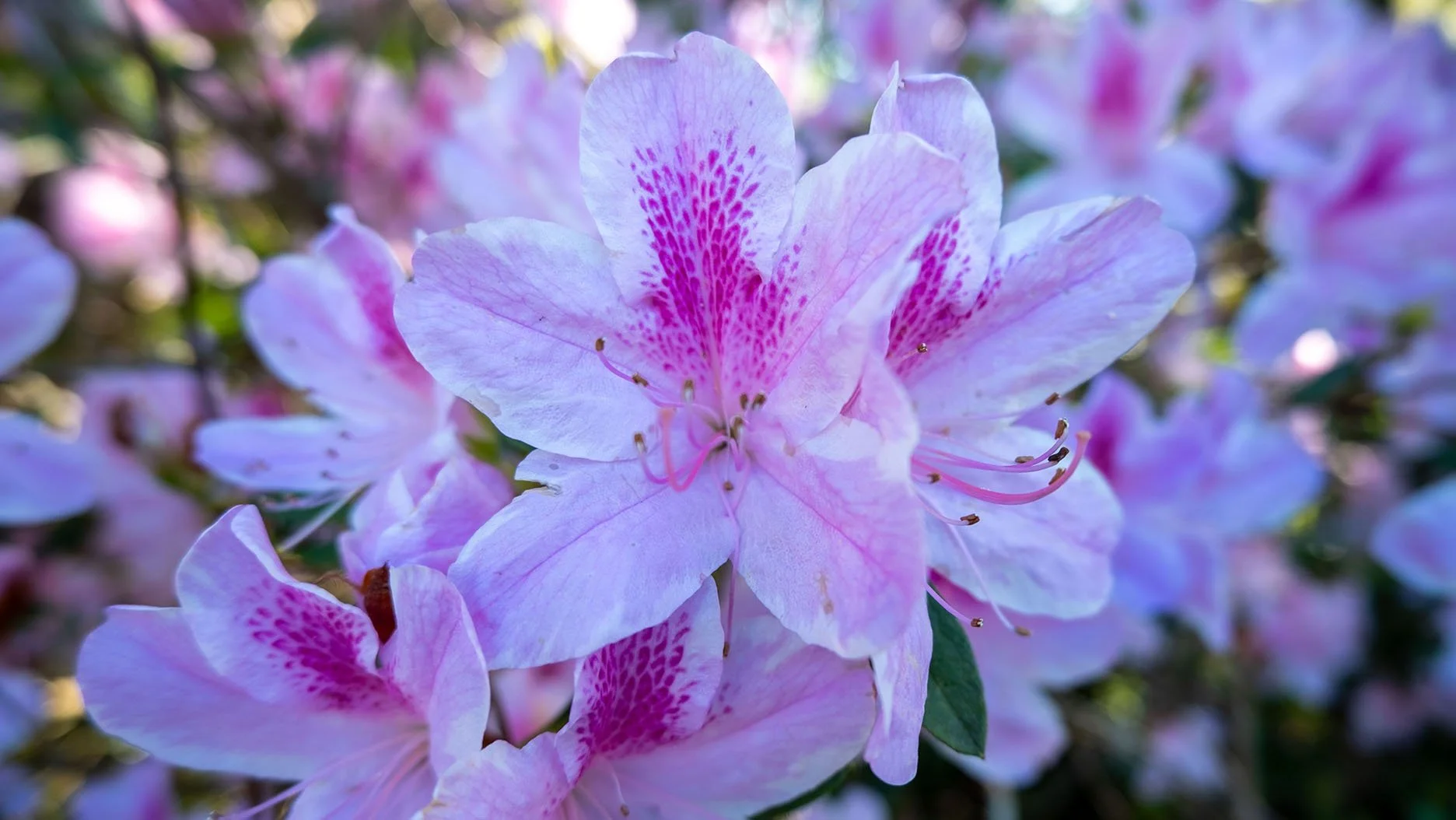
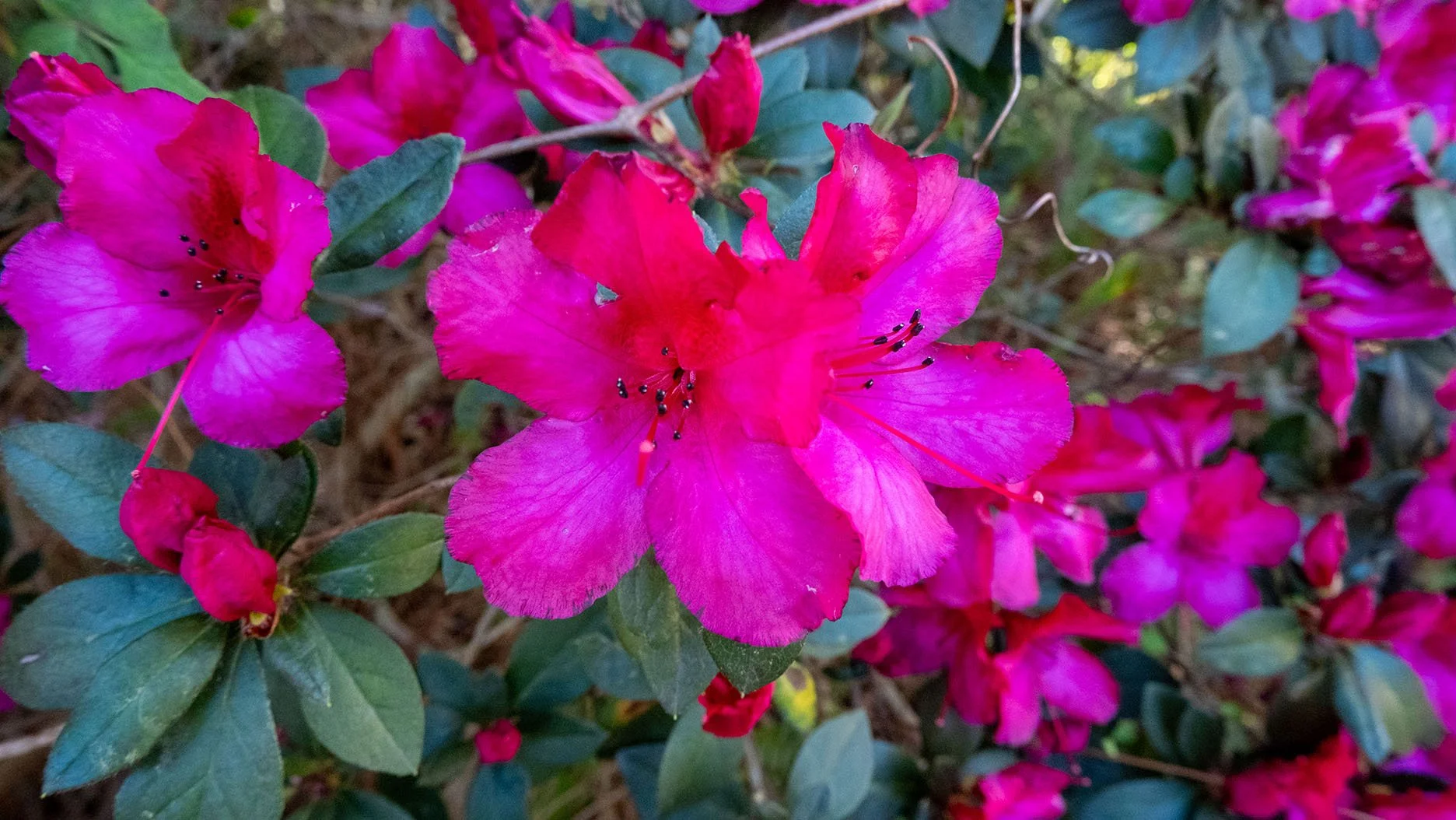
During peak bloom, up to 60–70% of the azaleas flower at the same time, creating vibrant pops of pink, white, and red throughout the ravines.
✨ Pro tip: Visit mid-February for the best balance of peak blooms and fewer crowds compared to festival weekends.
Trails & Hiking Experience
Ravine Gardens offers a mix of easy scenic paths and more adventurous hiking trails. In total, the park features around four main trails with varying difficulty levels.
Main Trails Include:
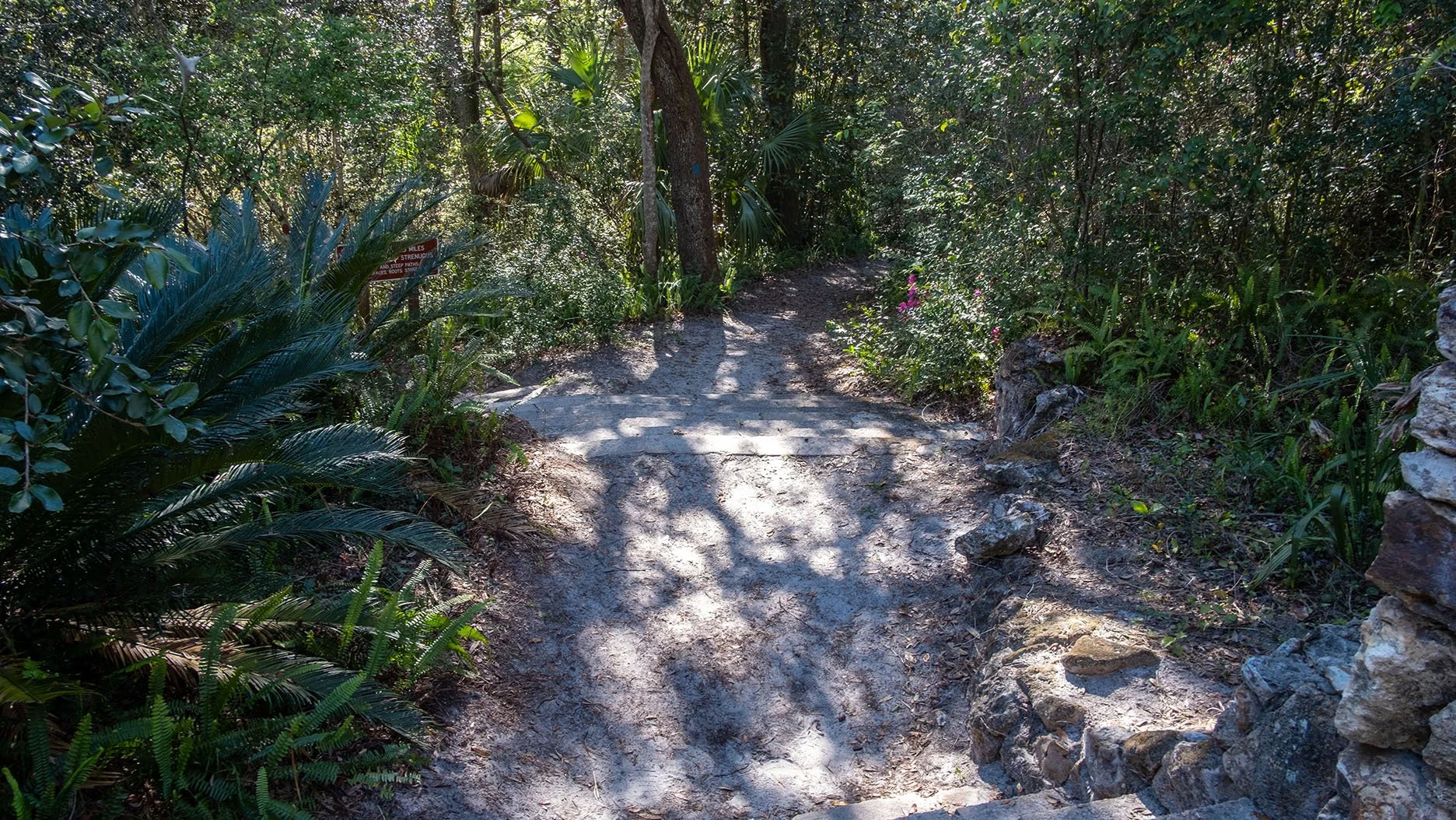
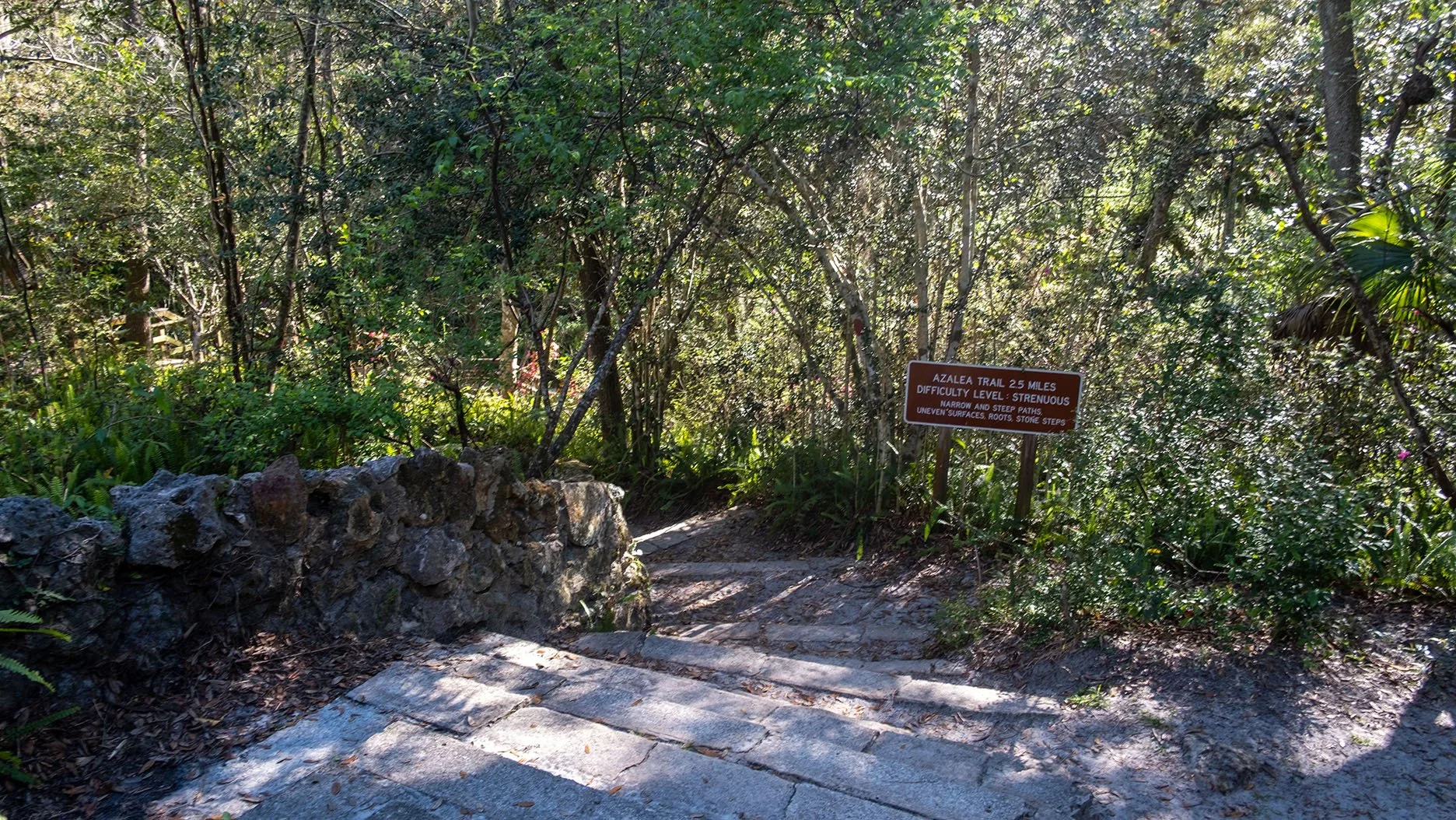
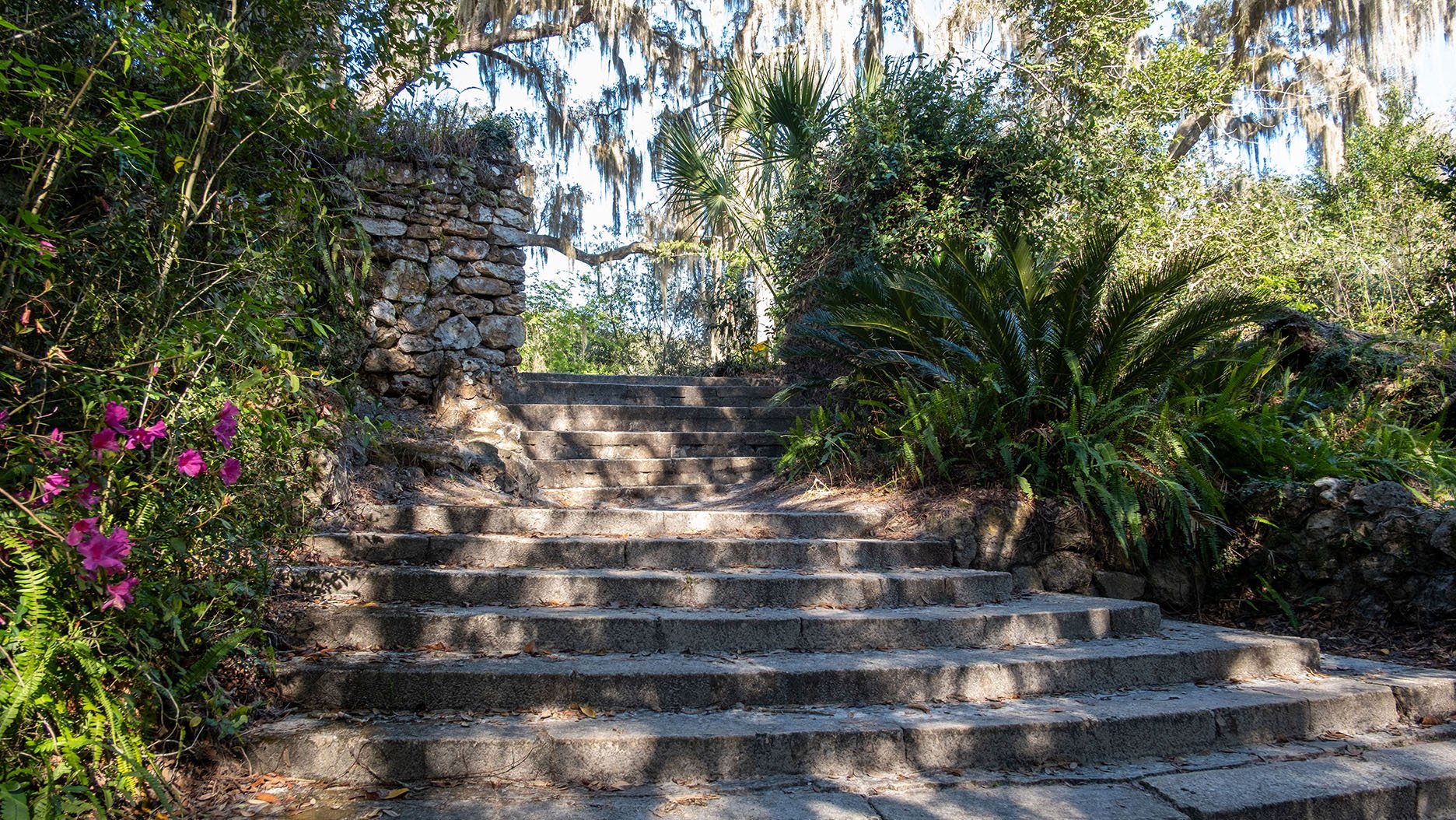
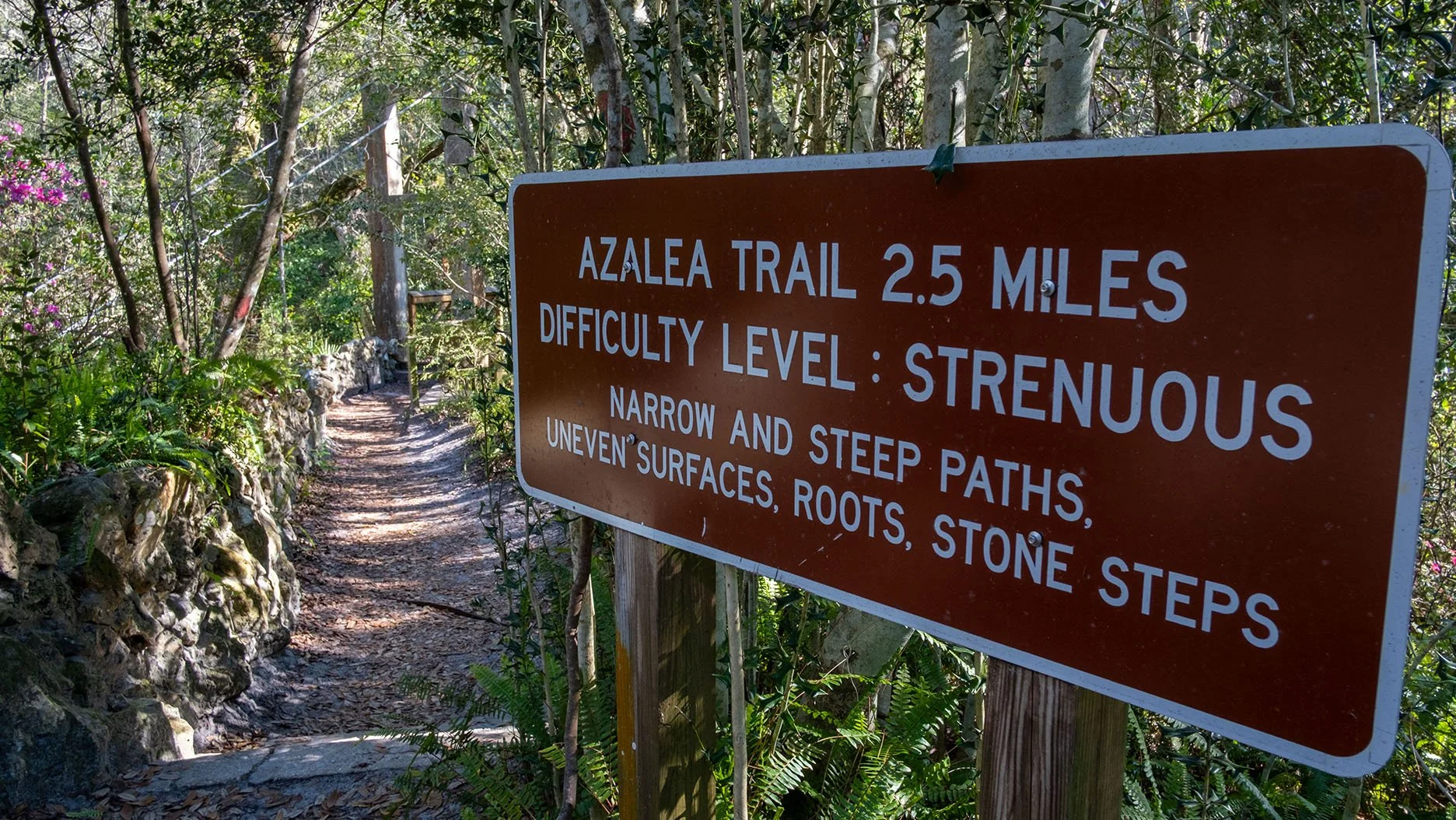
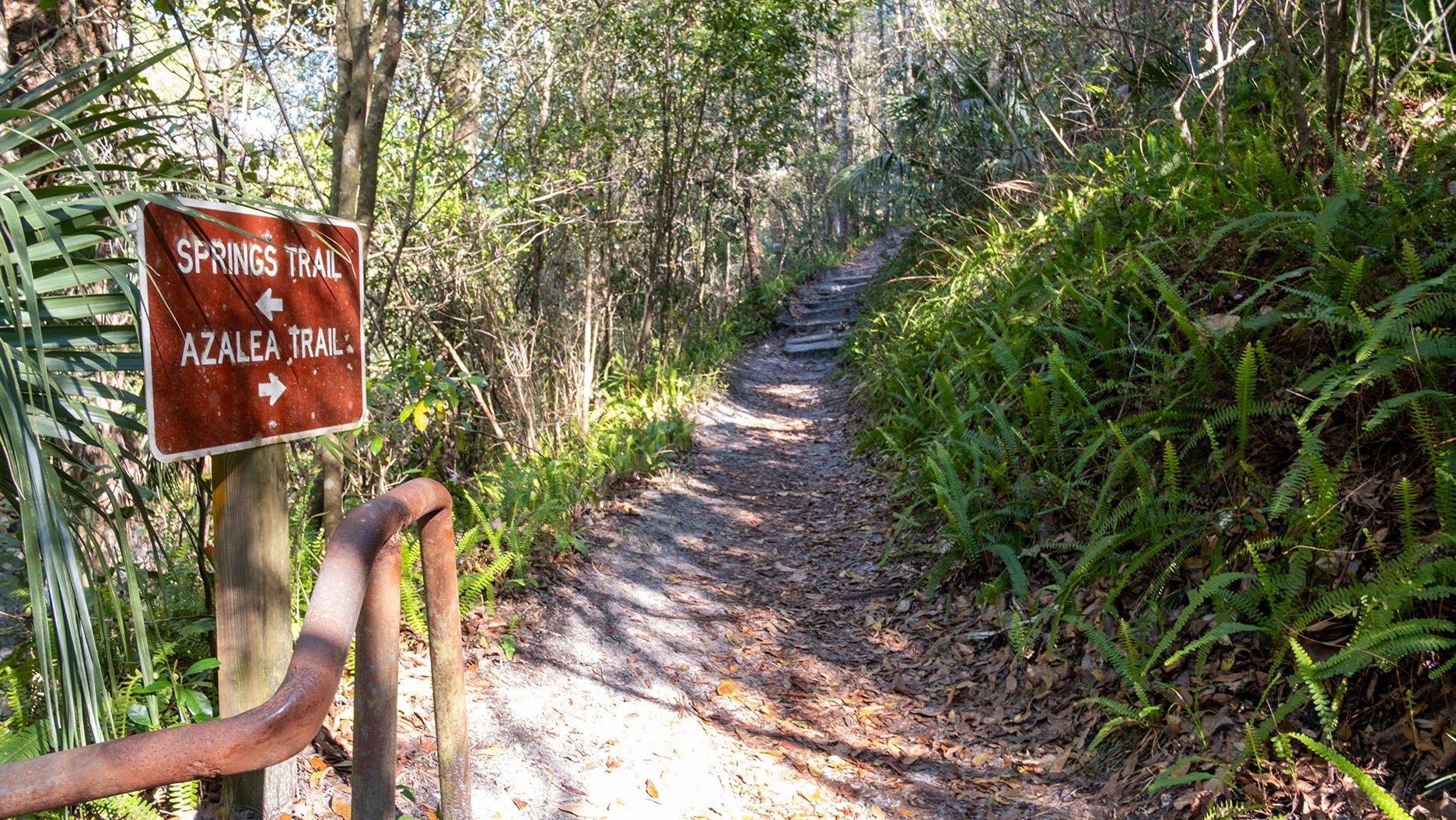
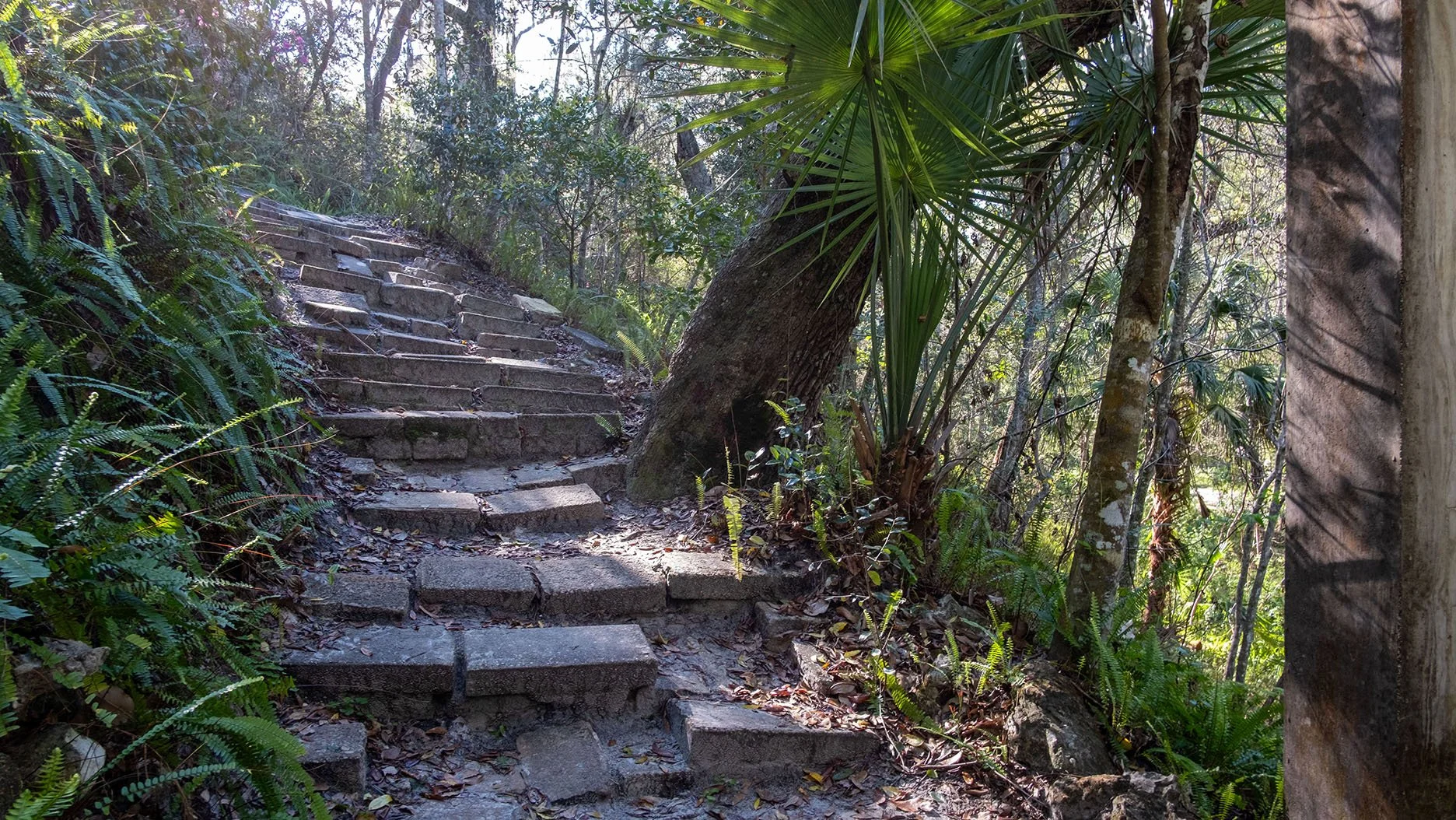
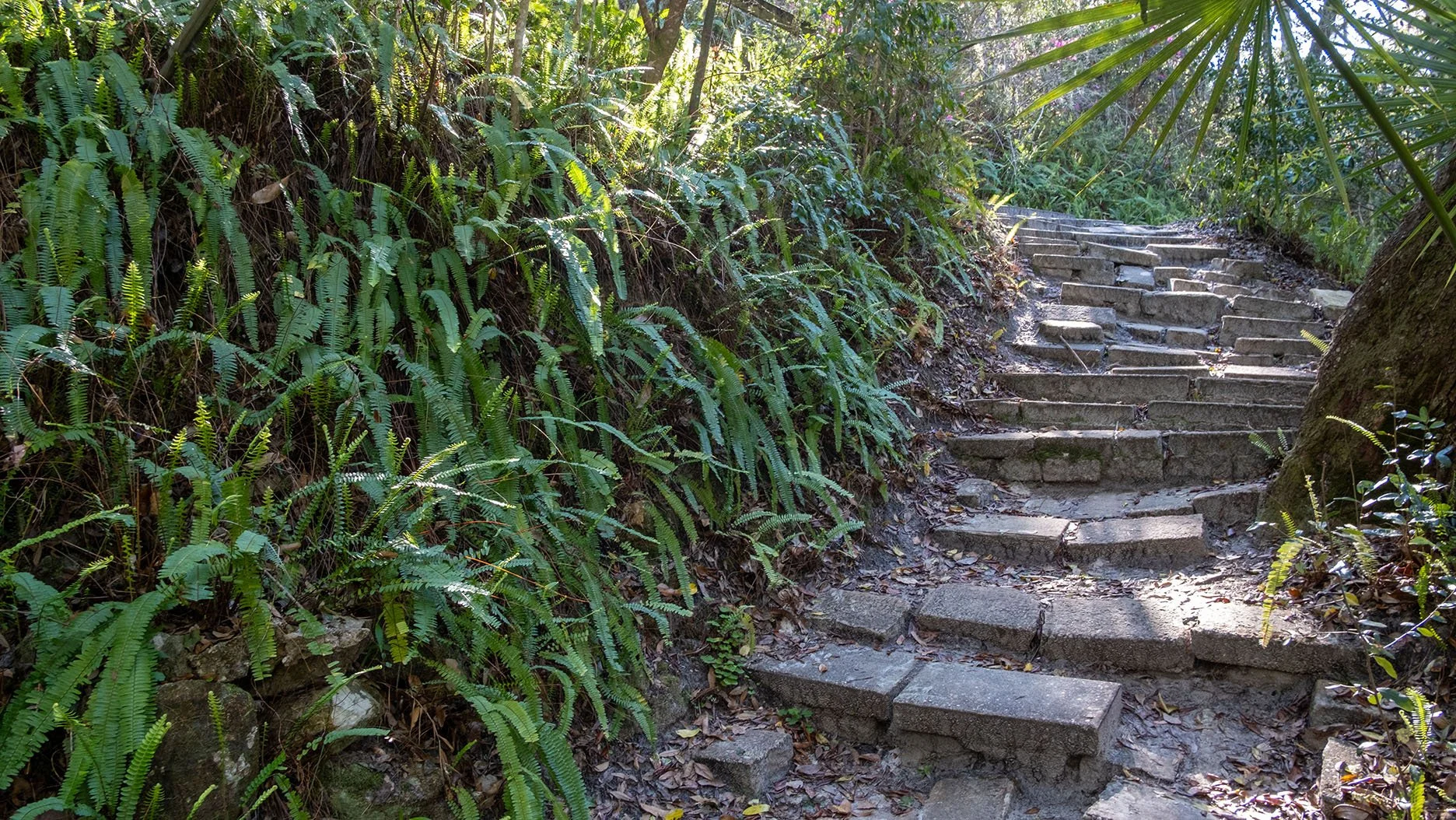
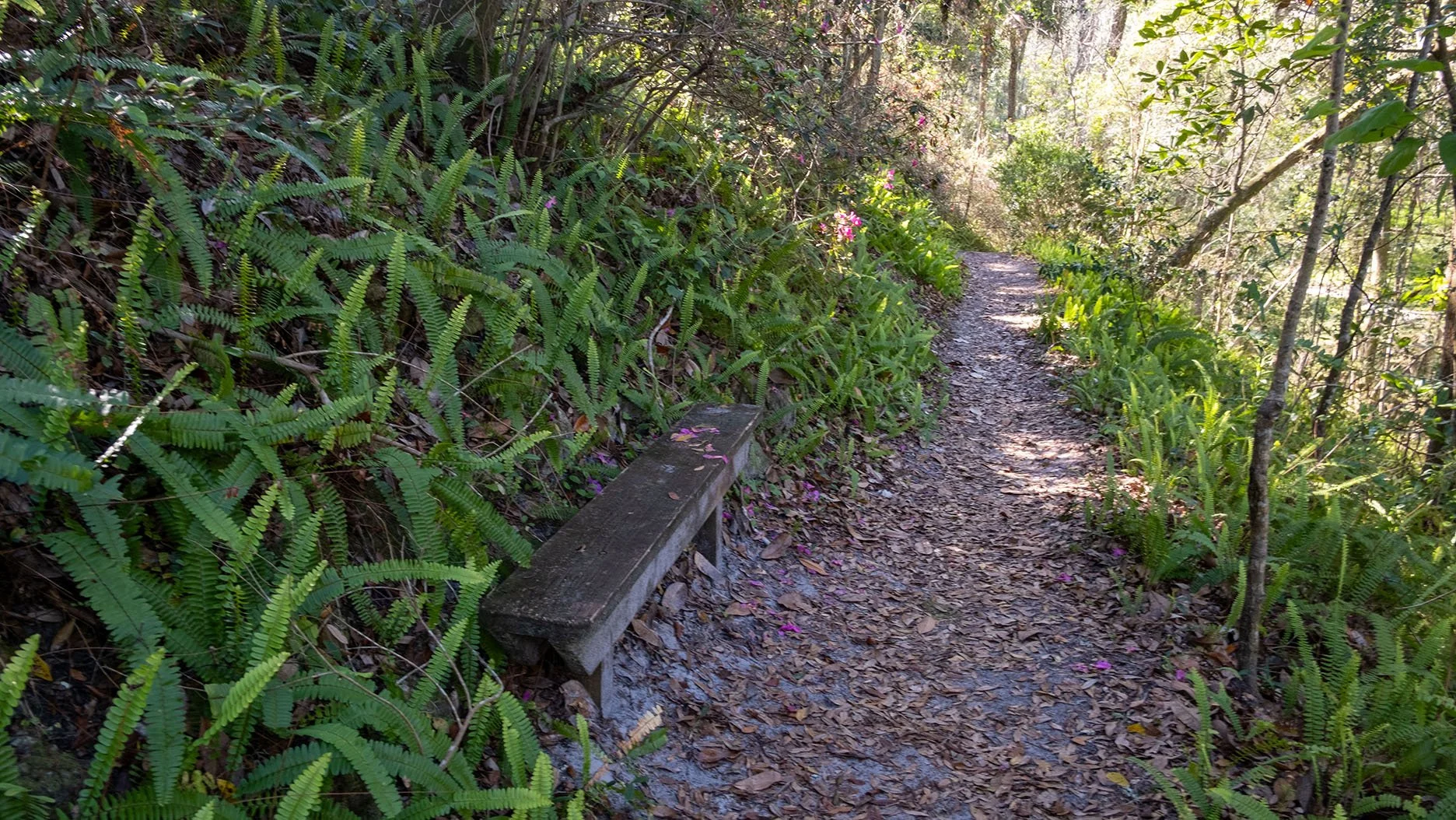
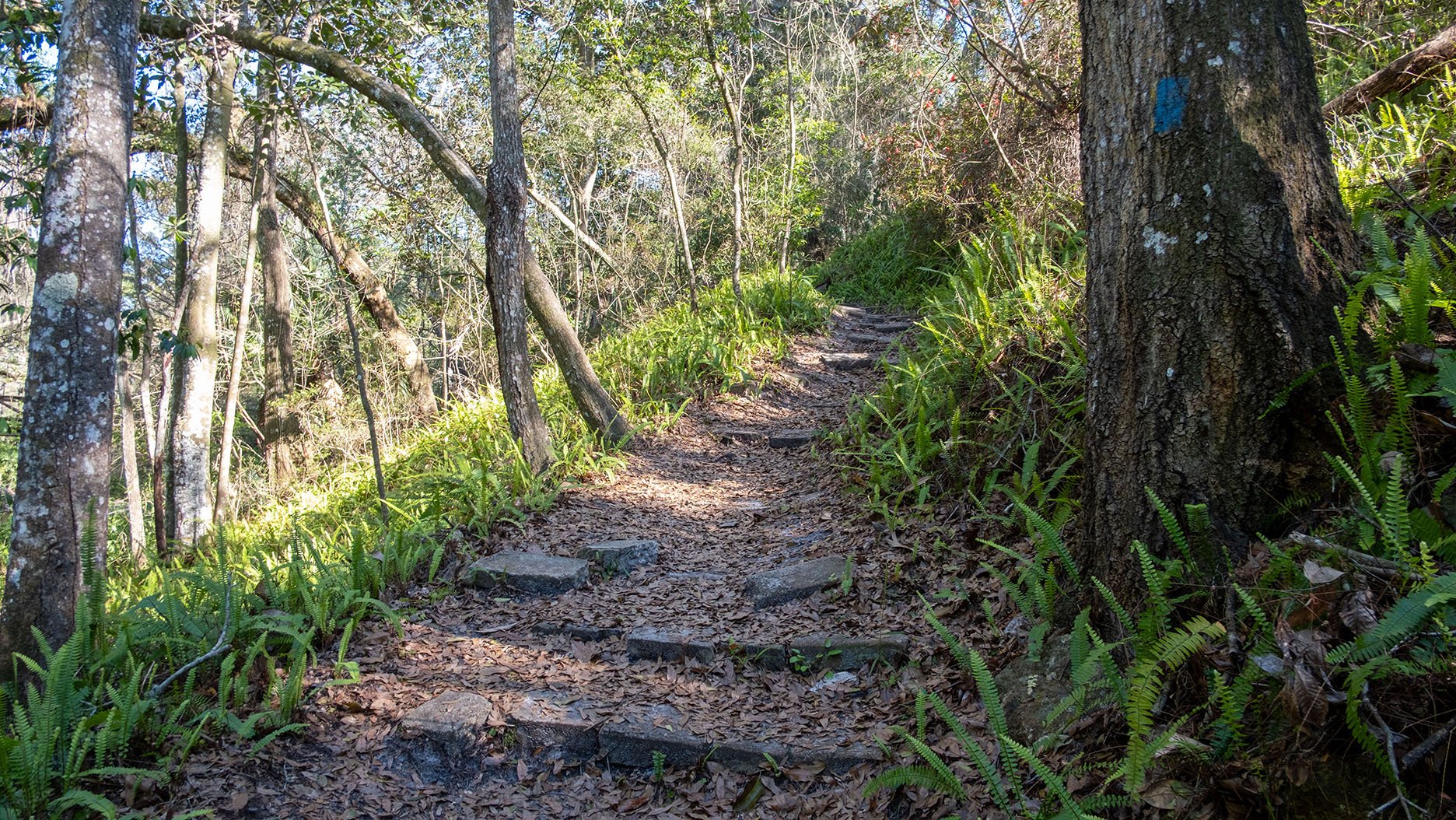
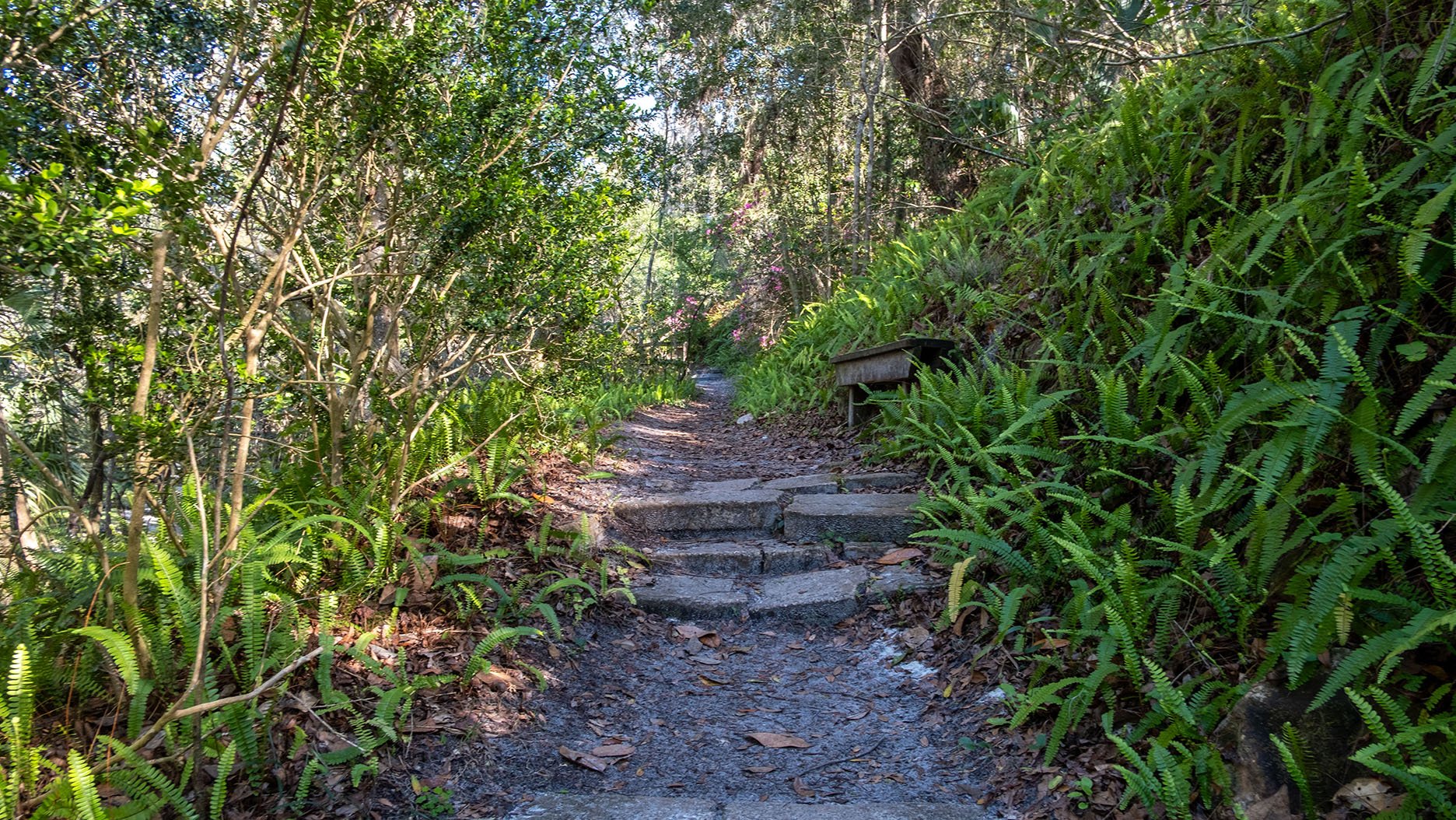
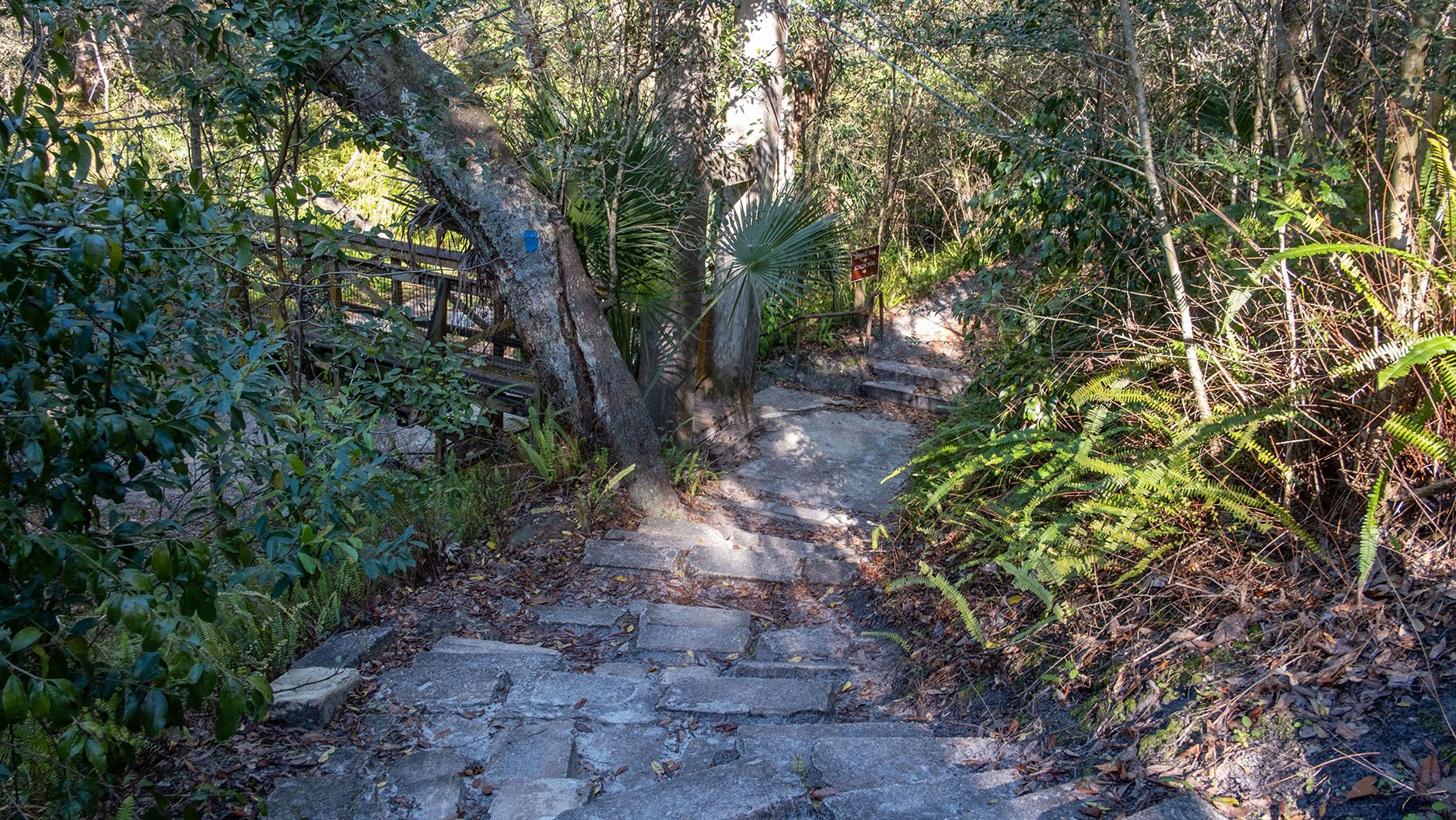
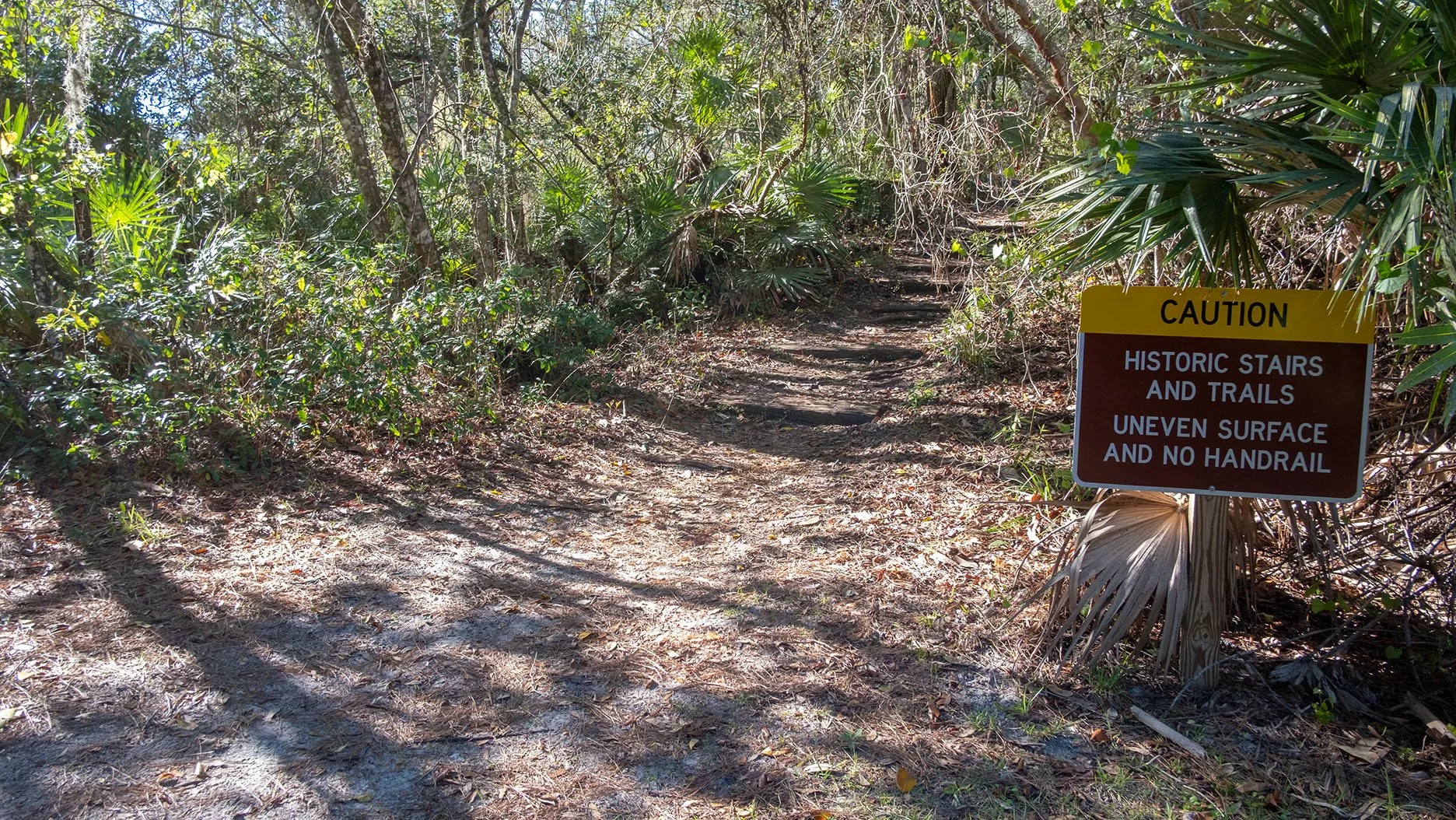
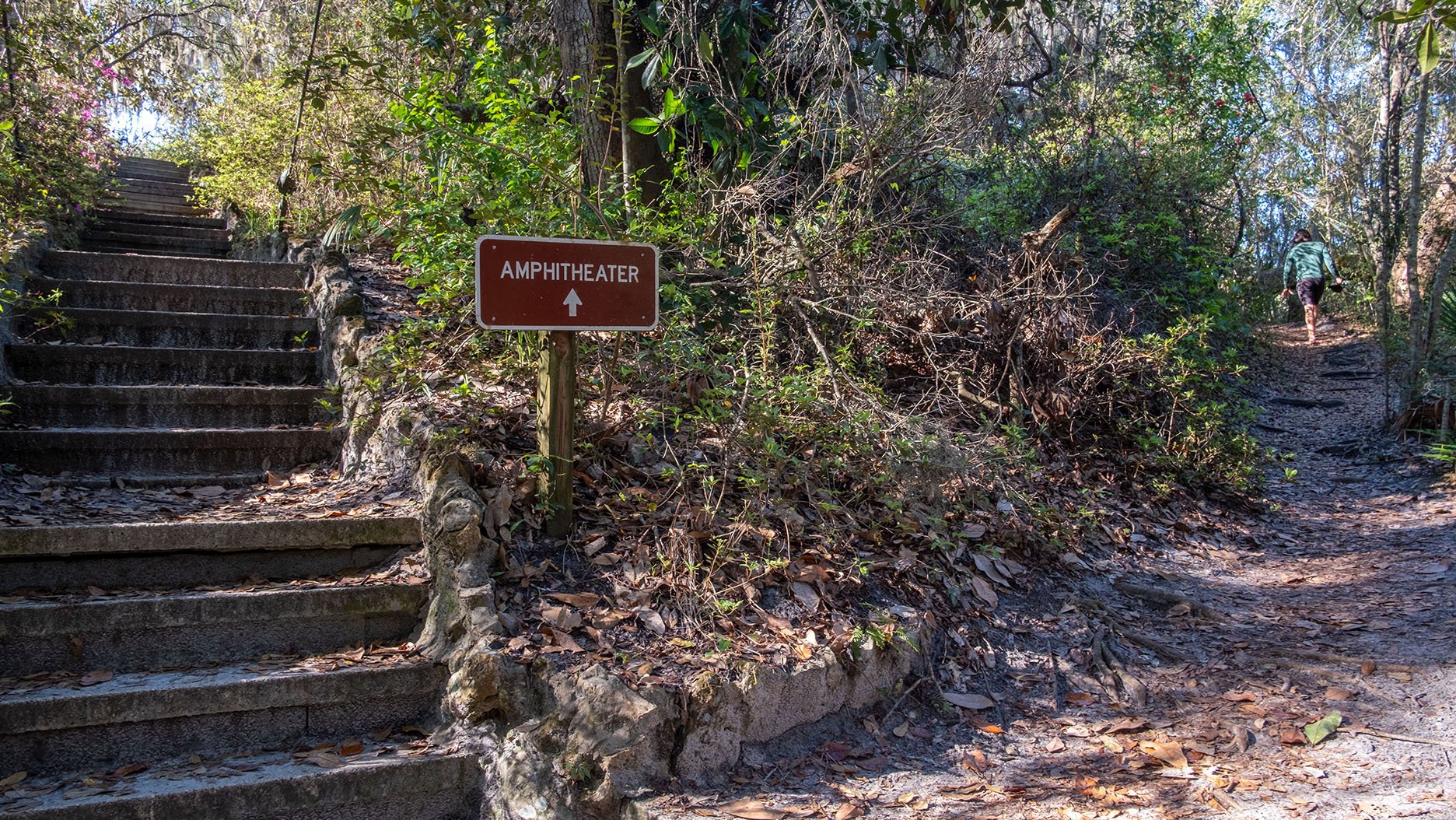
Azalea Trail (2.5 miles) – The most popular and challenging trail with steep terrain and stairs
Ravine Loop Road (1.8 miles paved) – Easy, accessible loop around the ravines
Springs Trail (0.6 miles) – Moderate trail through spring-fed areas
Whitewater Path (0.72 miles) – Easy trail along the ravine floor
What to expect:
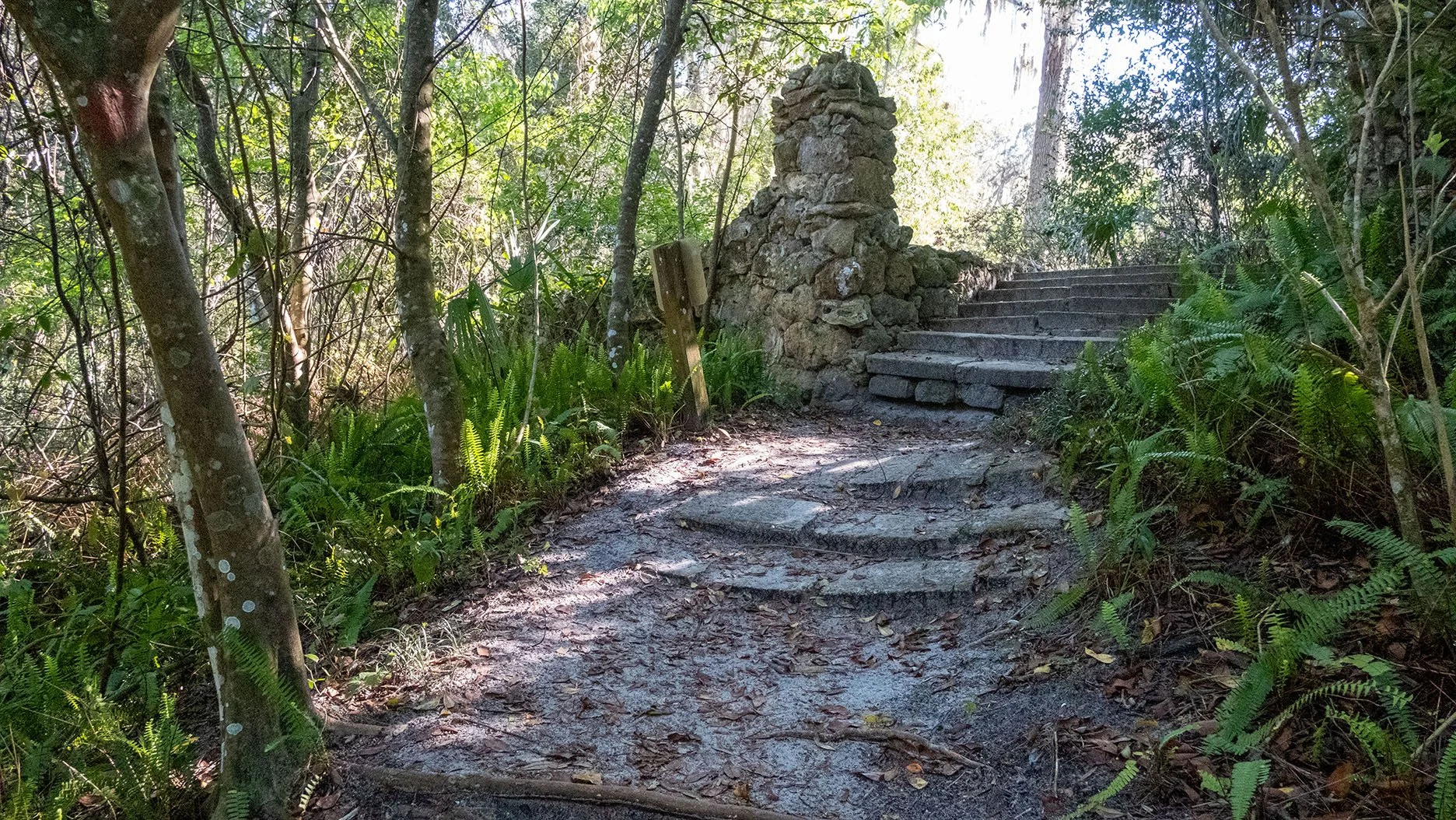
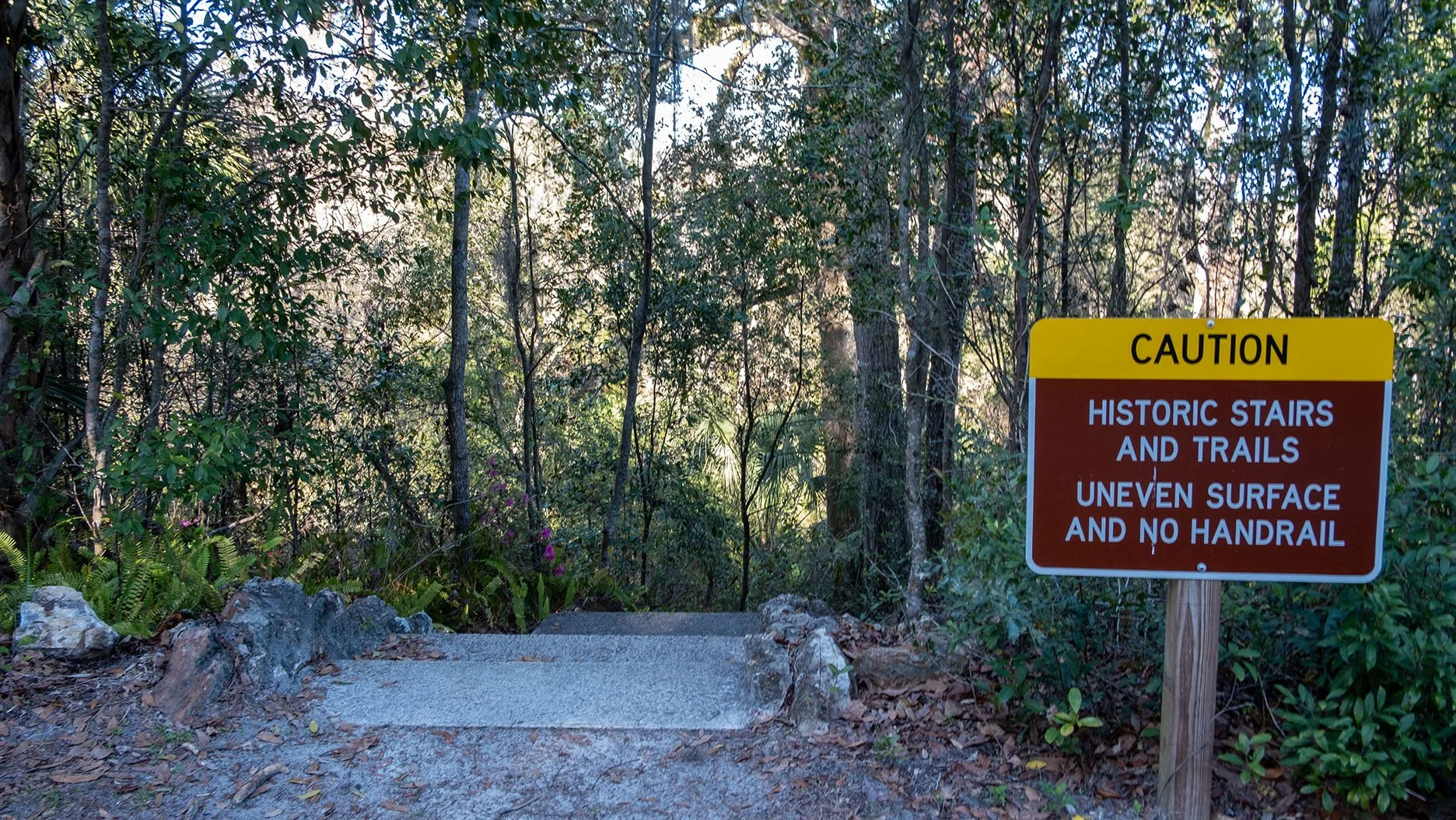
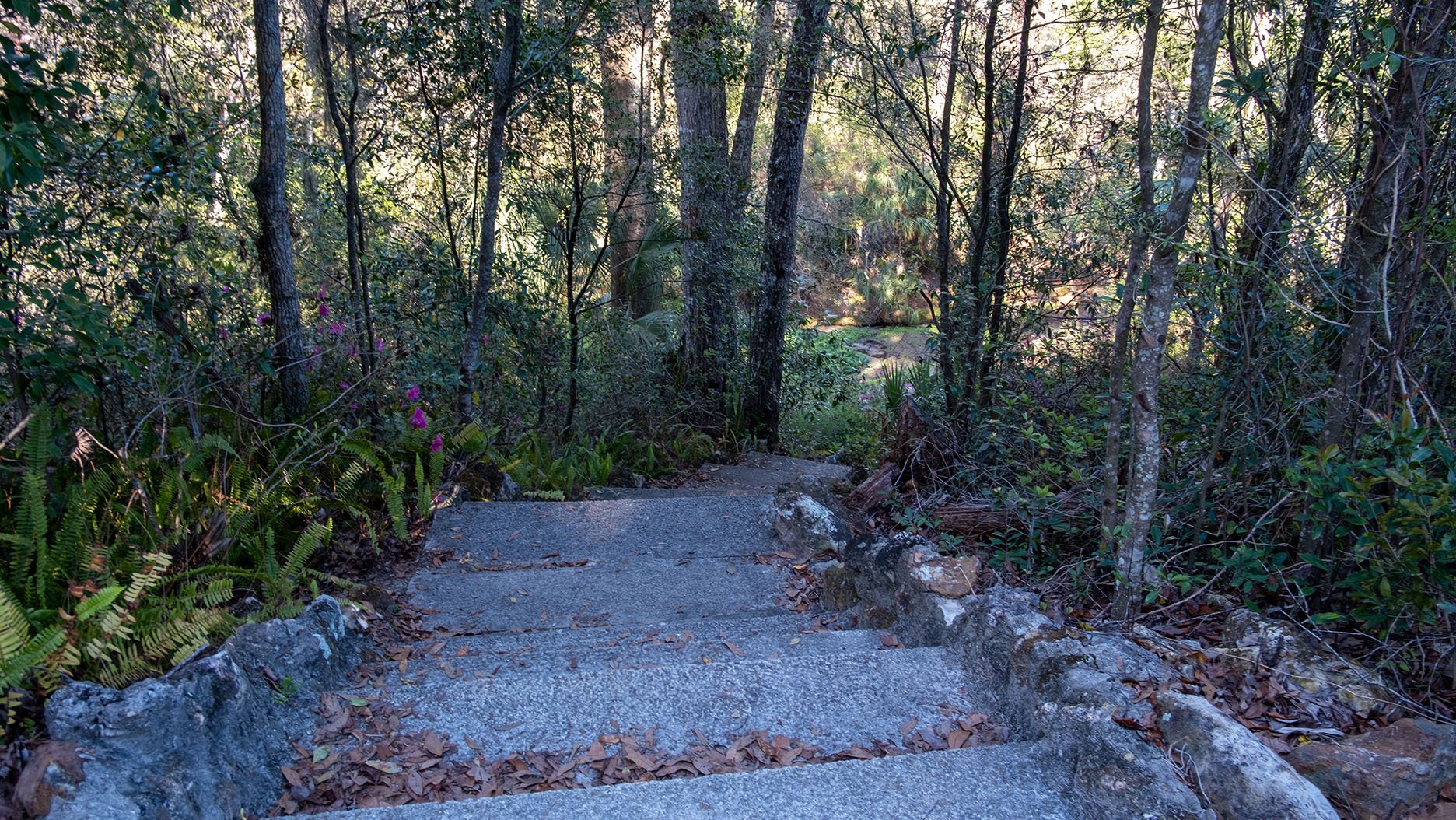
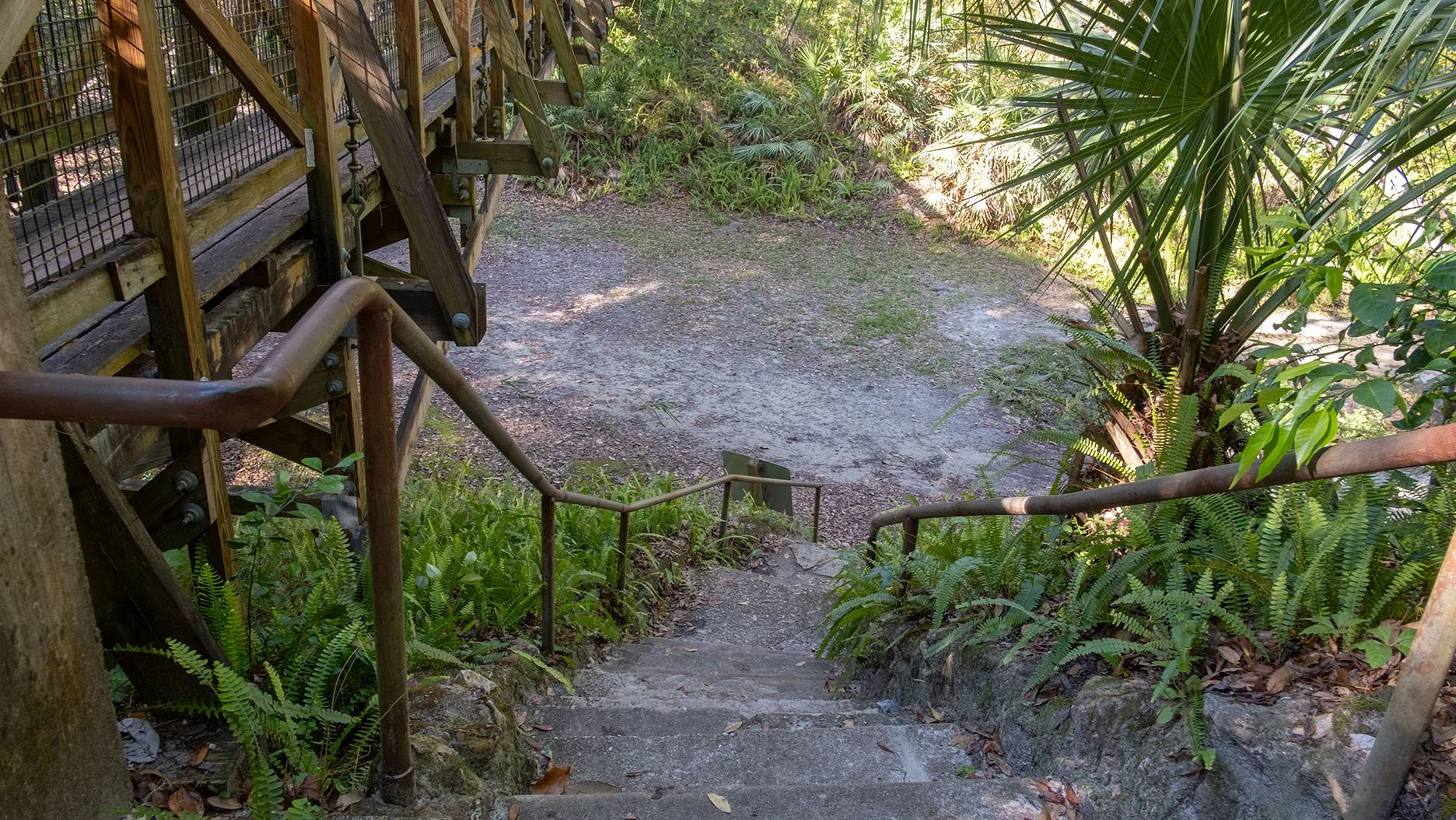
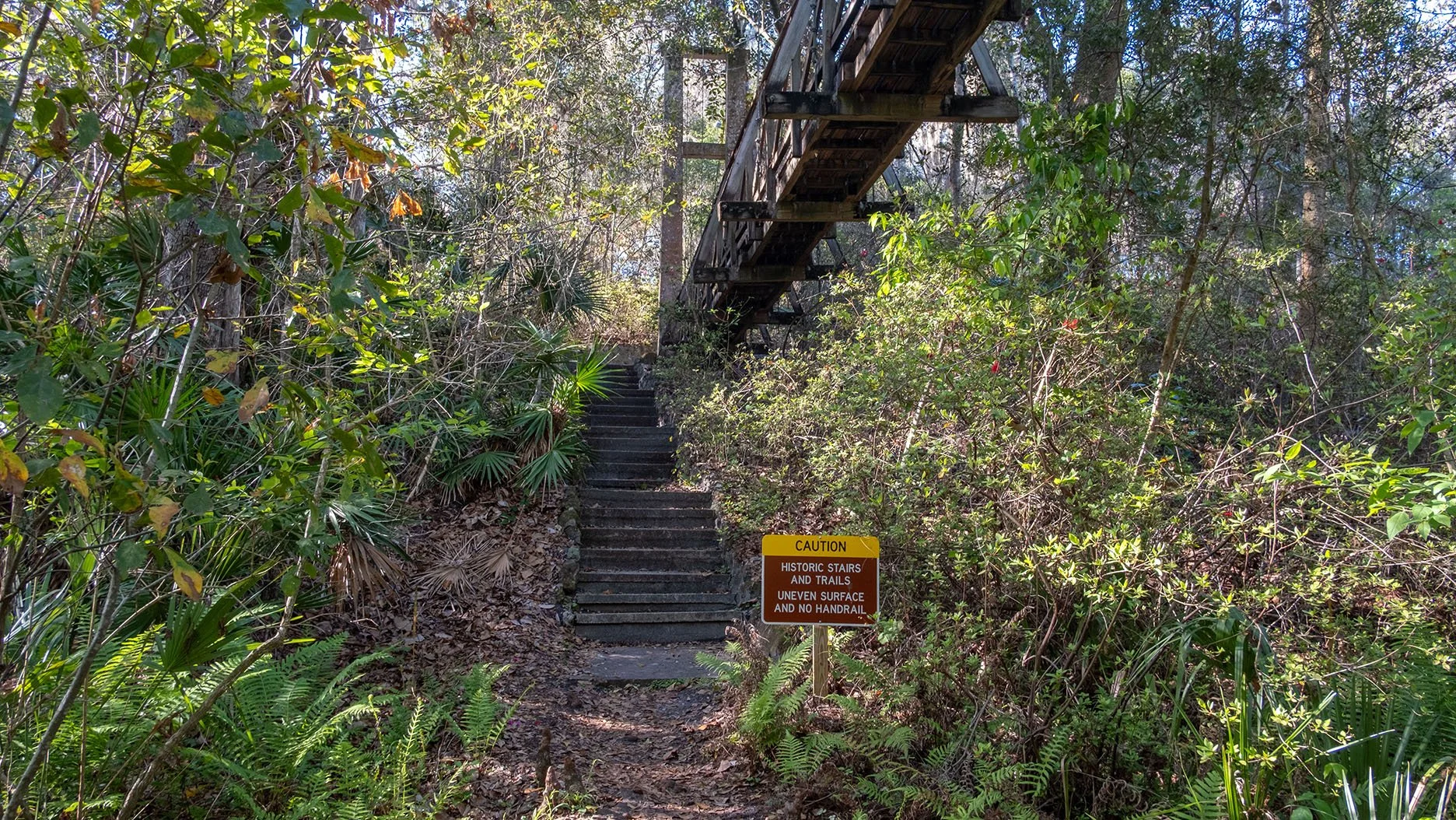
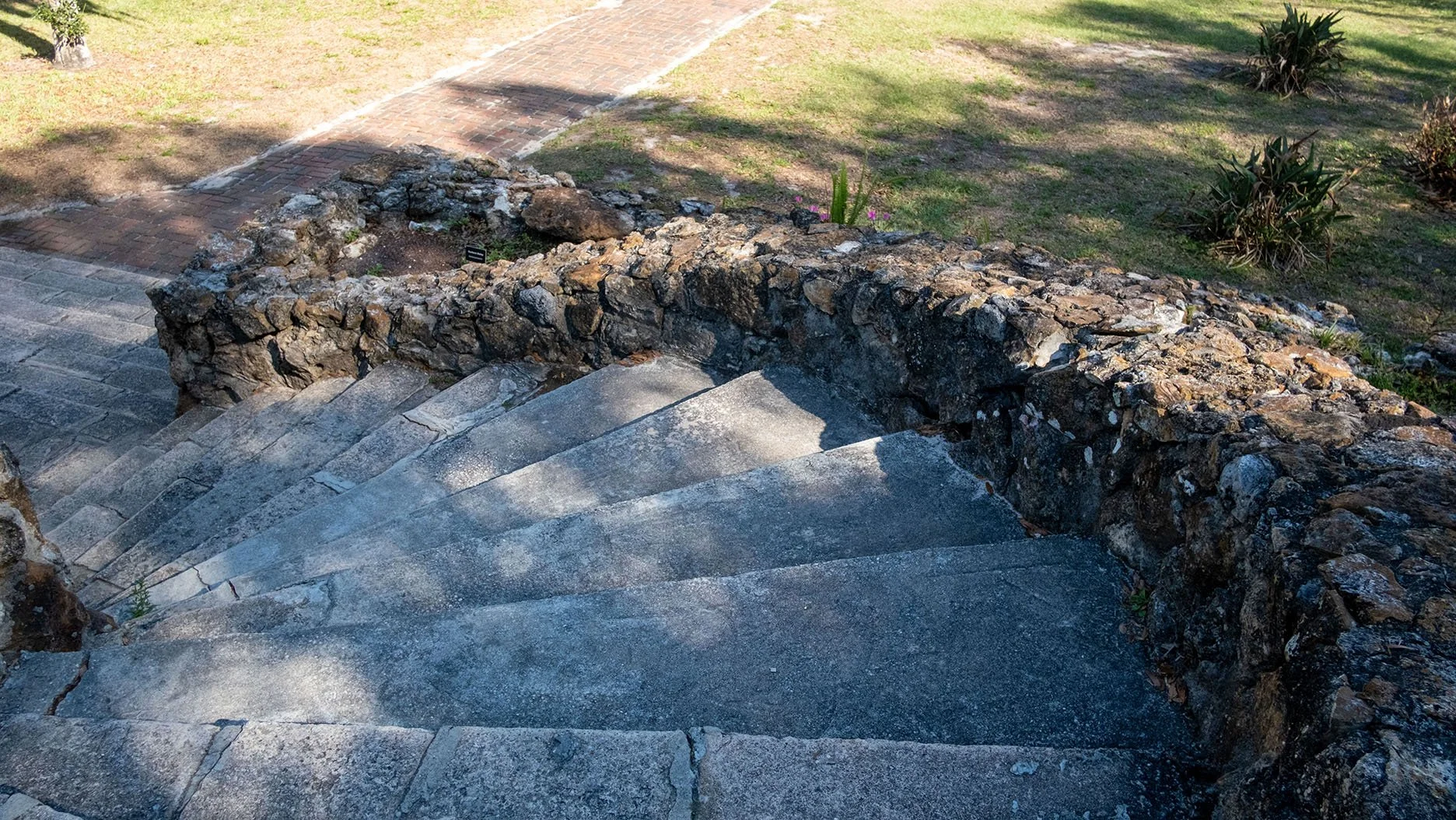
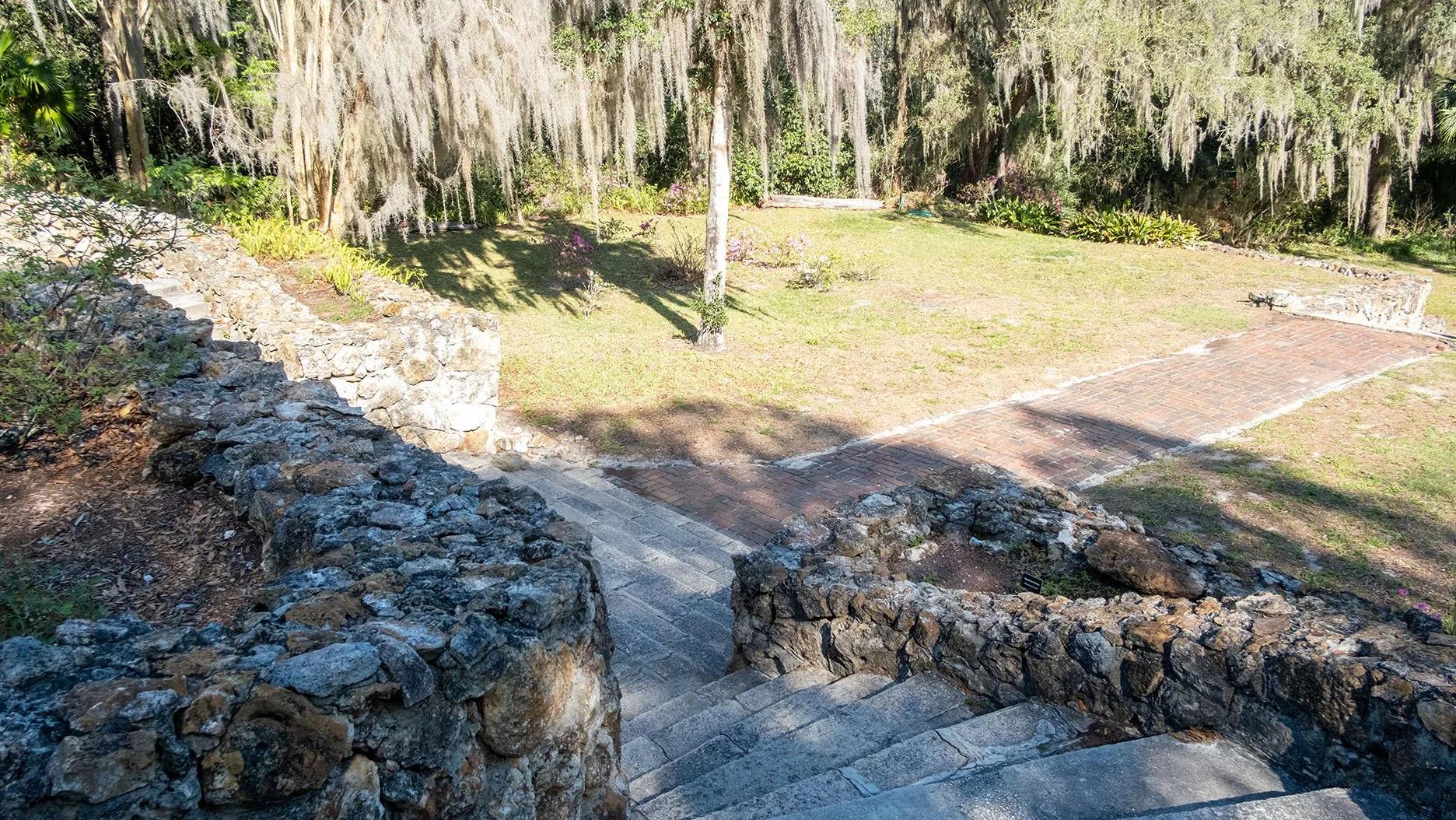
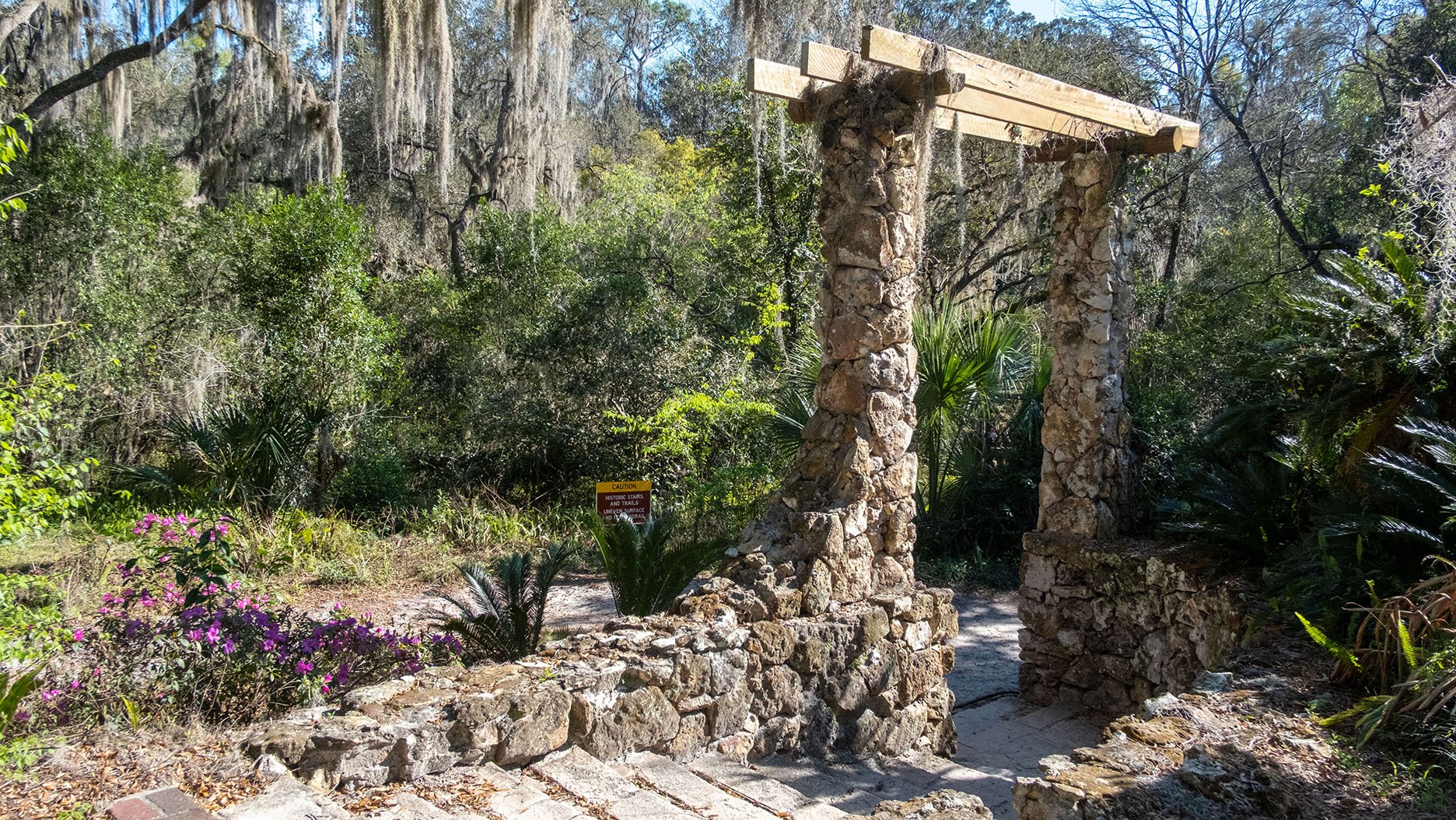
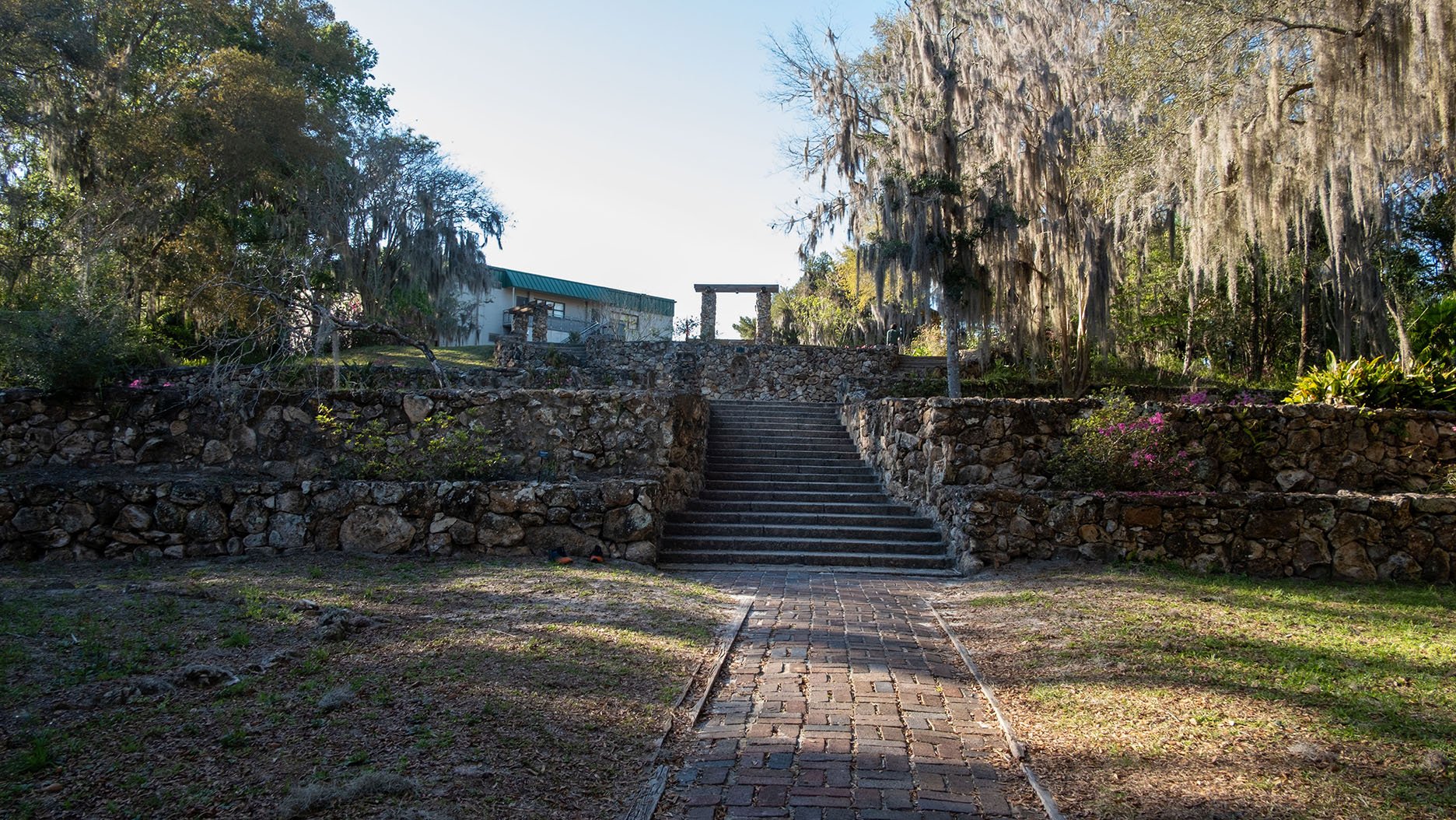
Stone staircases
Shaded forest paths
Steep elevation changes (rare for Florida!)
Scenic overlooks
This variety makes the park perfect for both casual walkers and more adventurous hikers.
Suspension Bridges
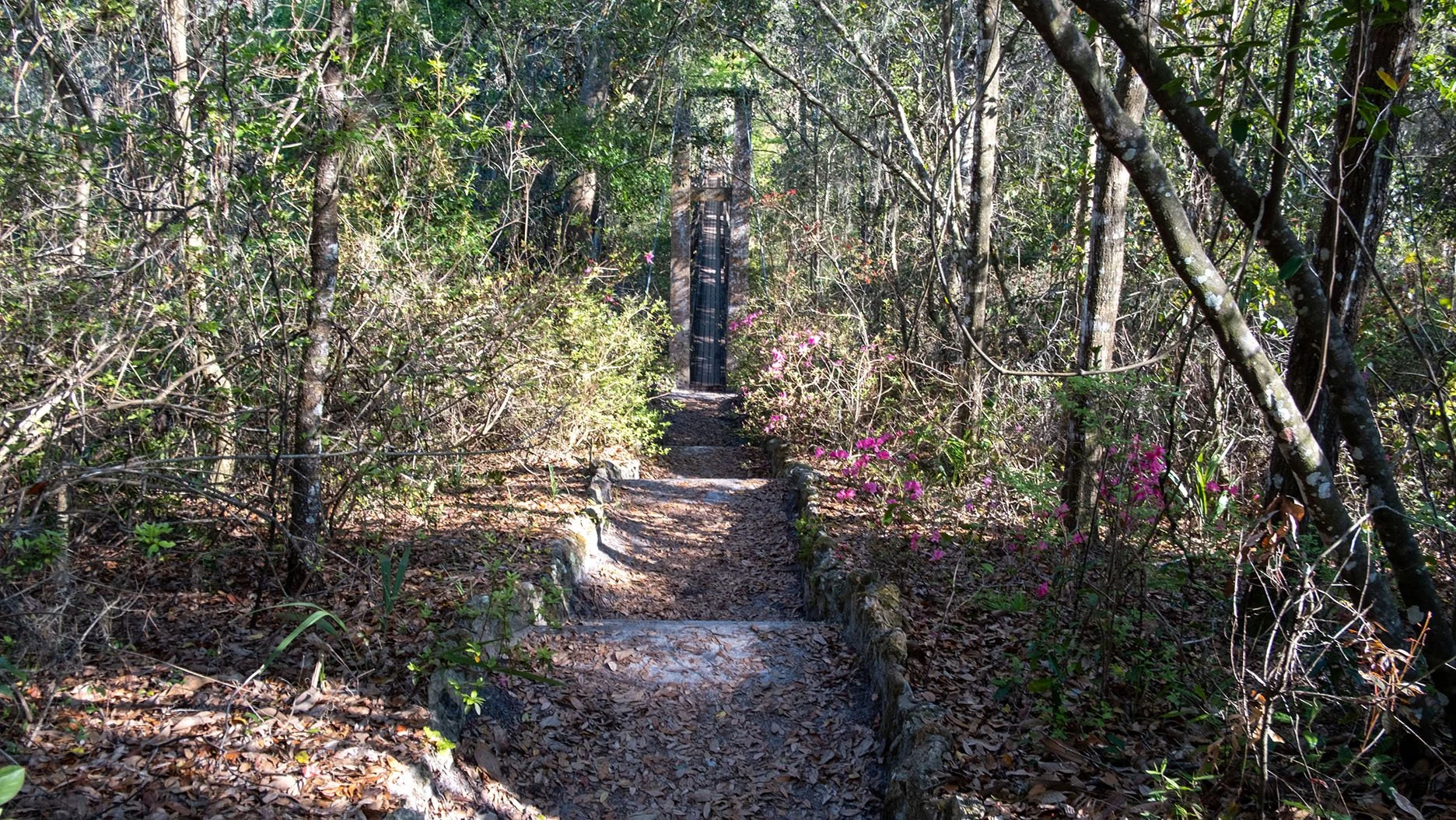
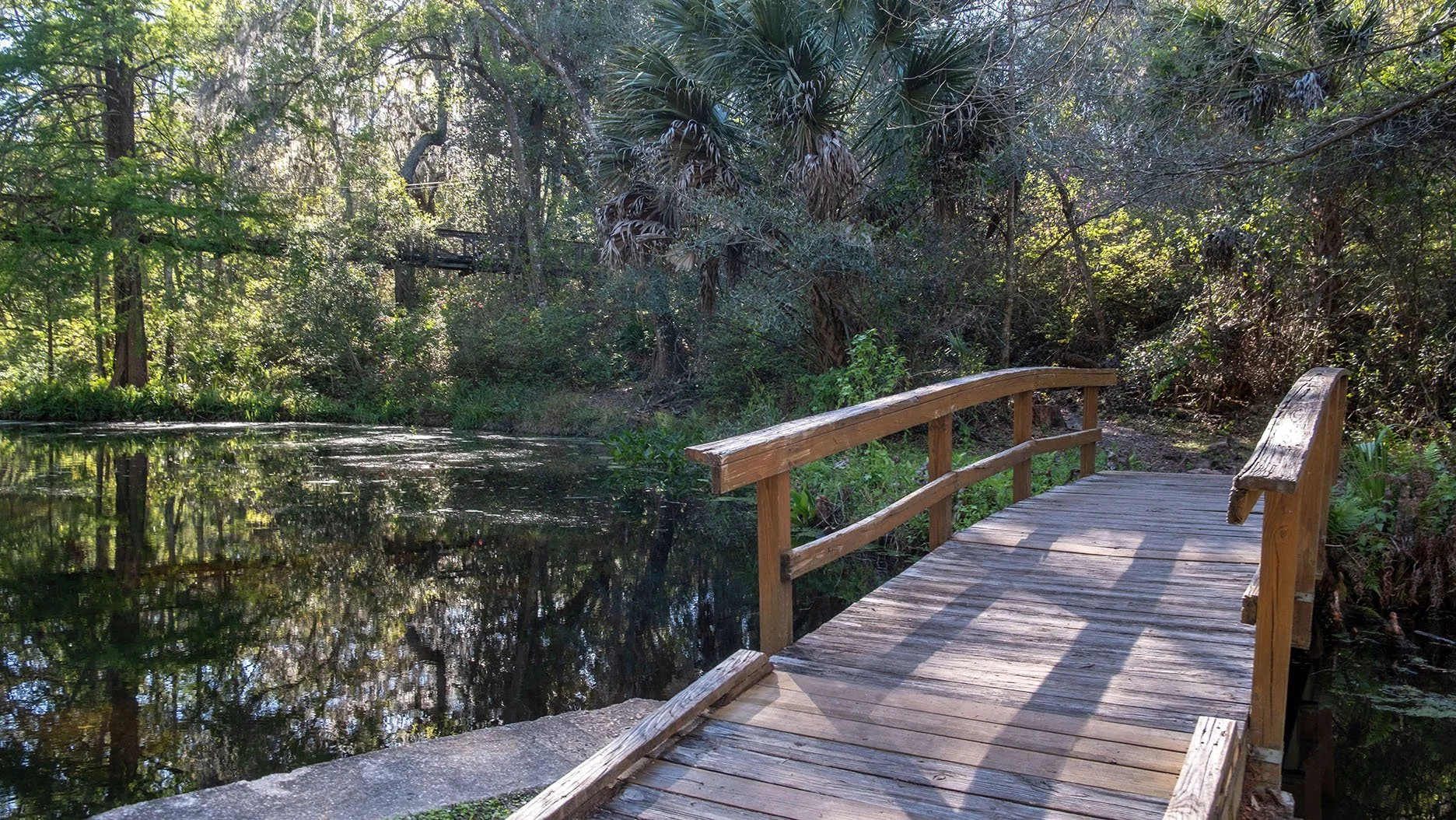
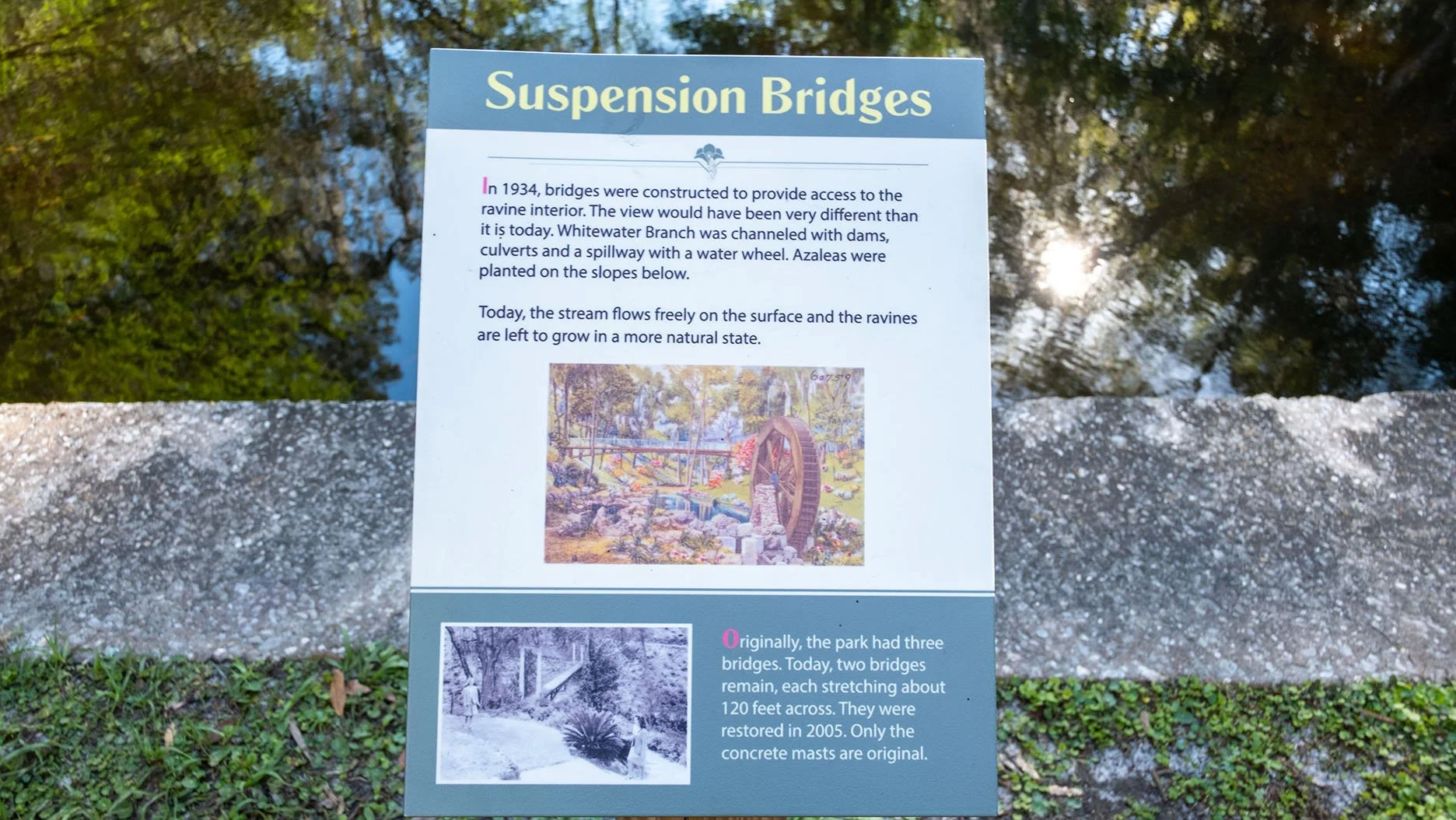
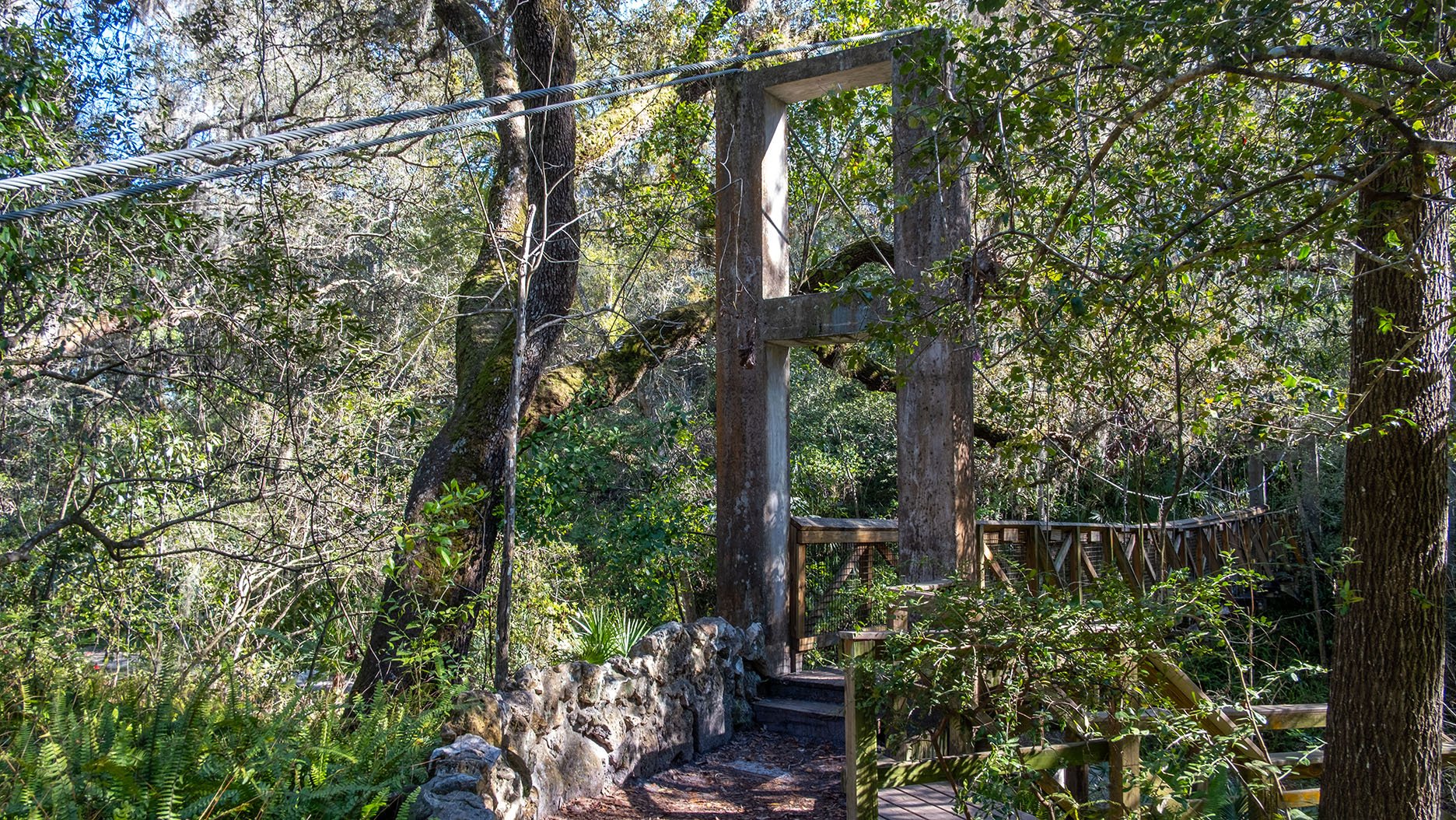
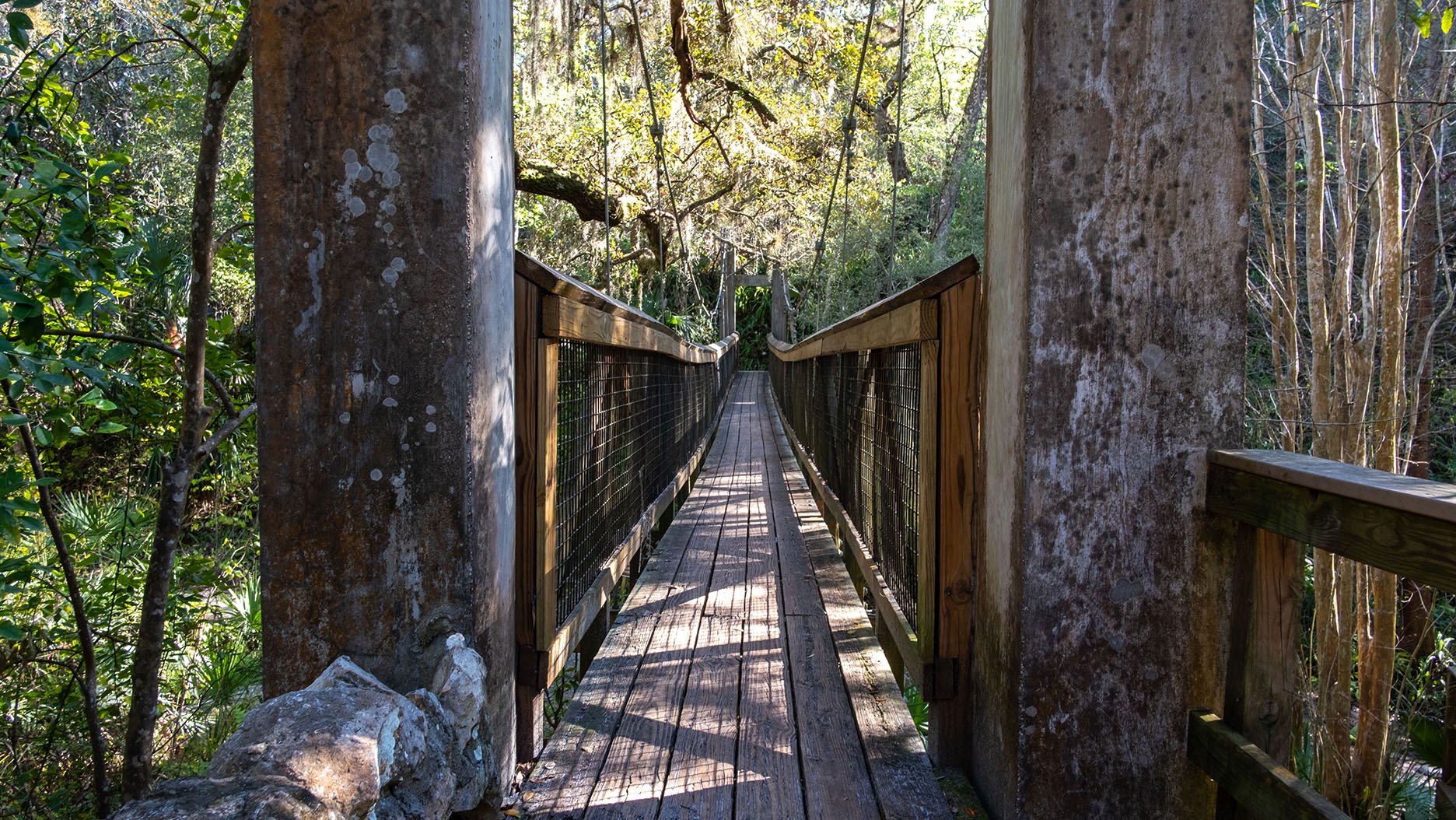
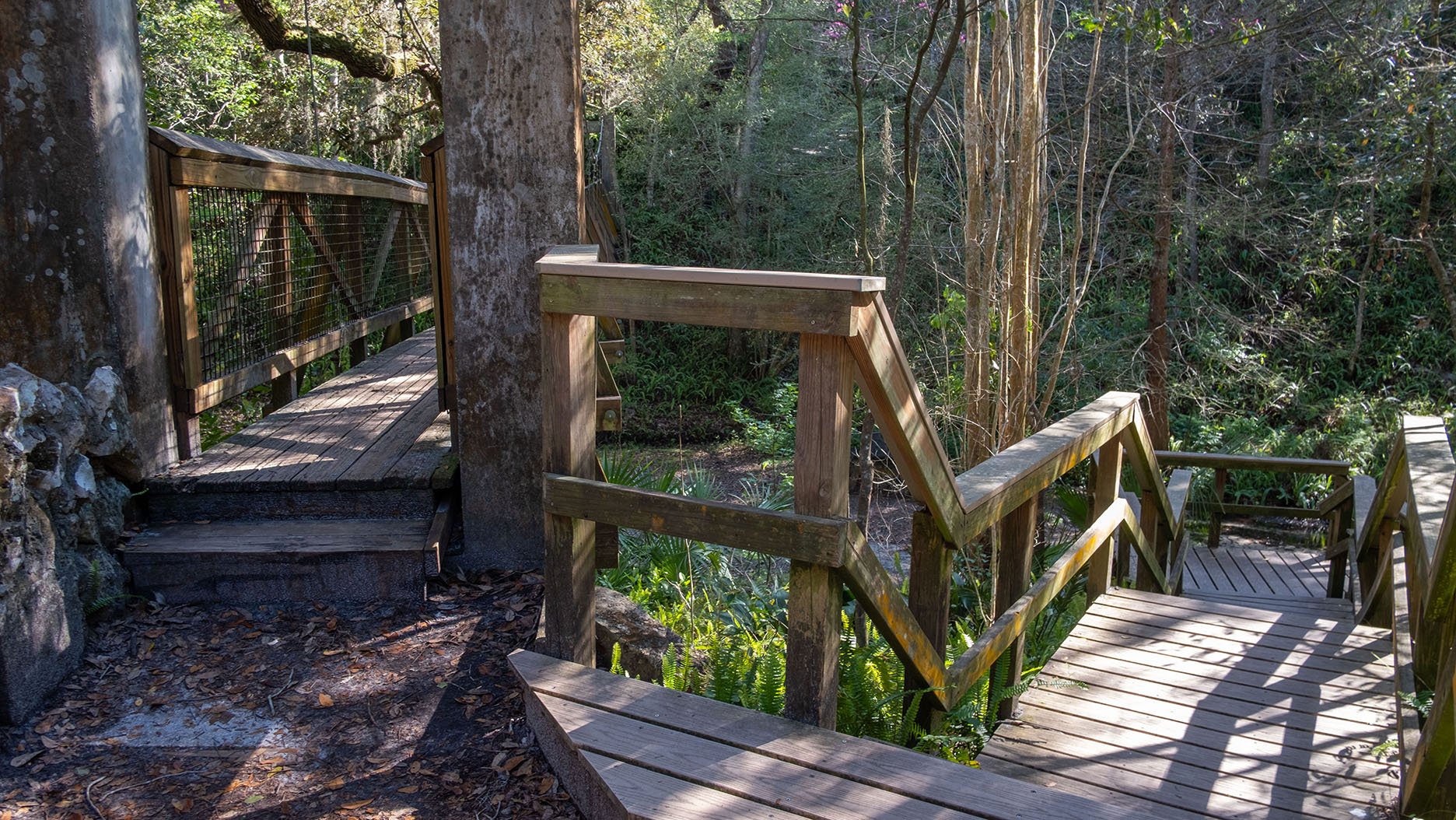
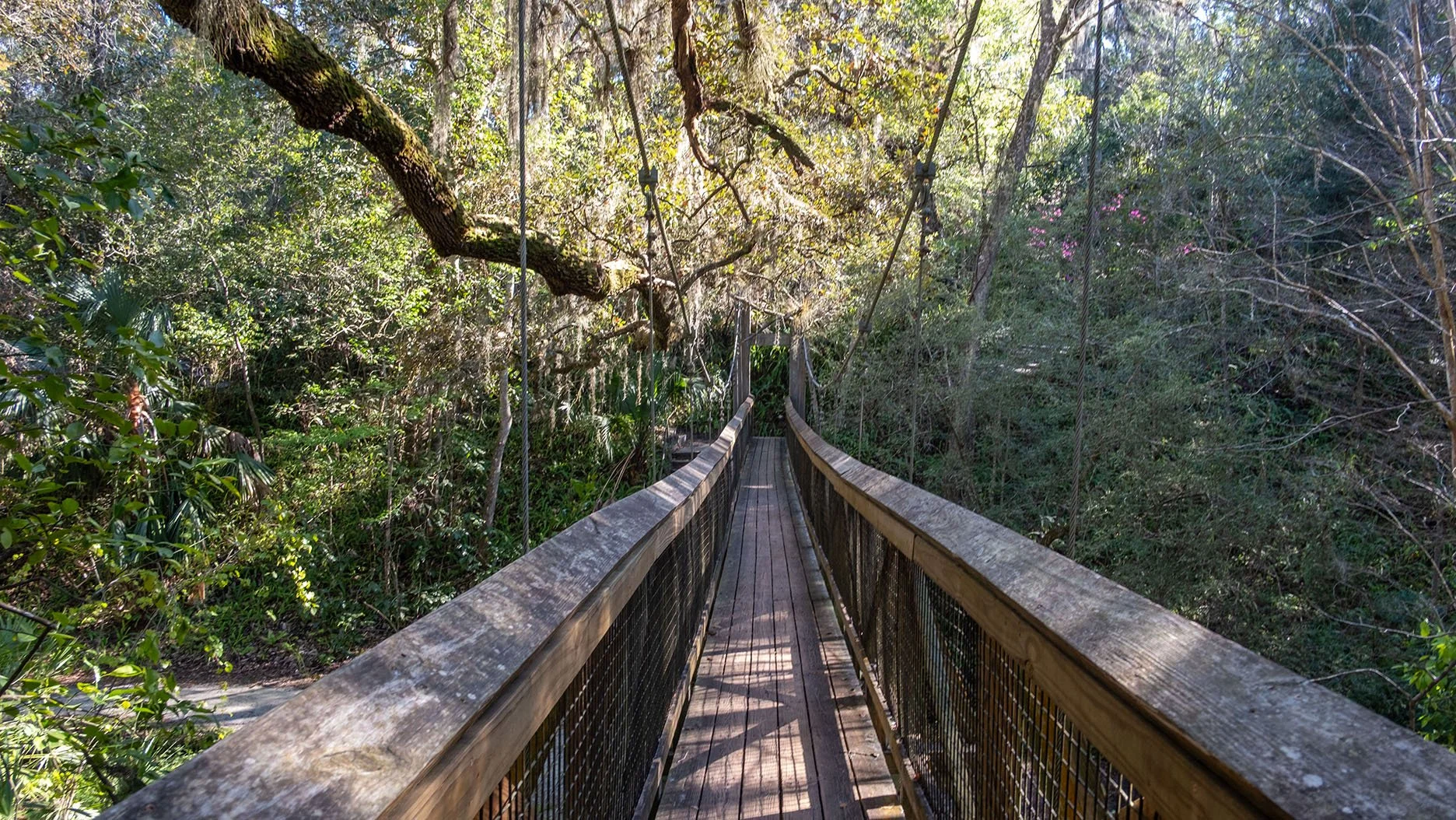
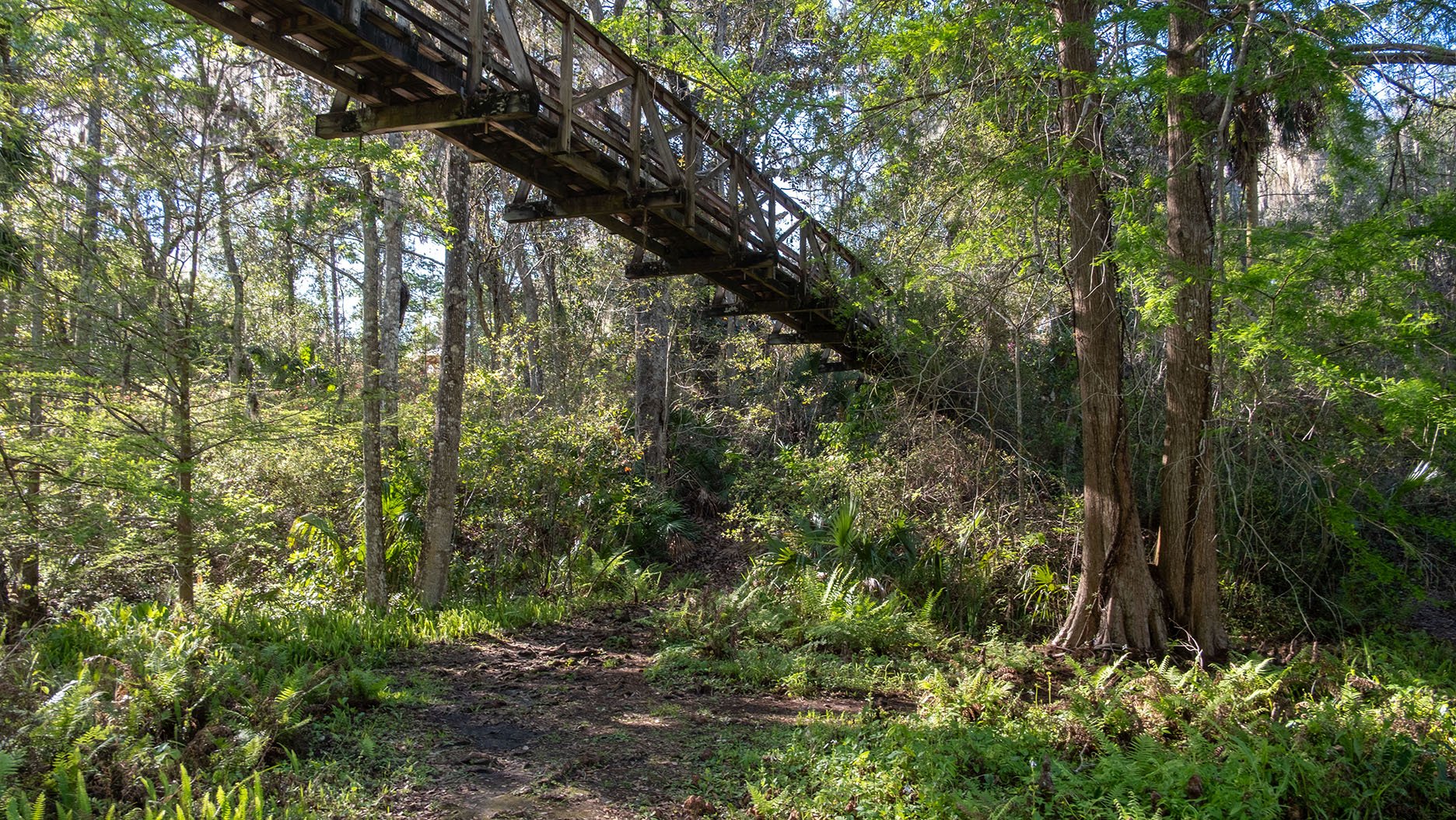
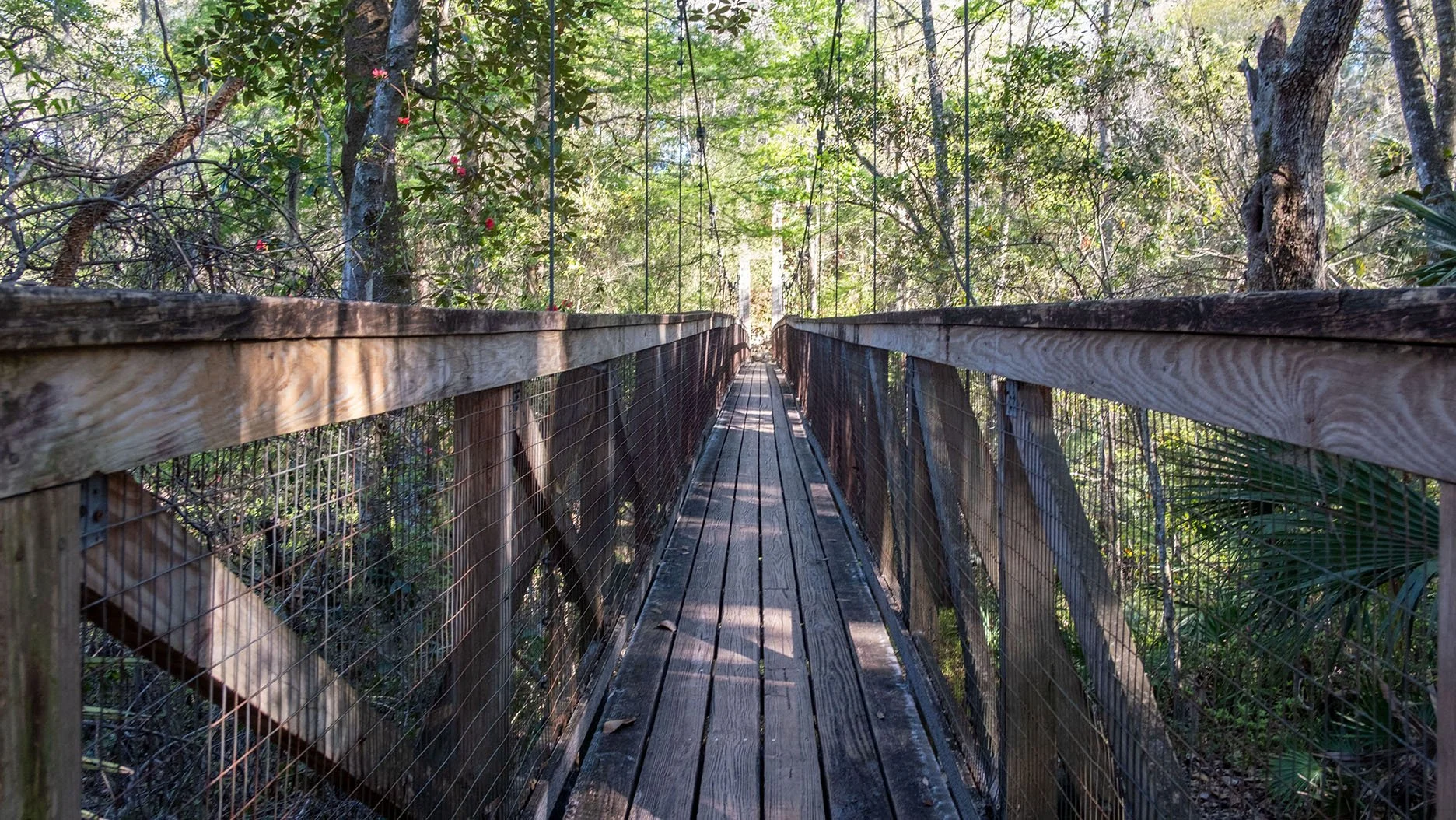
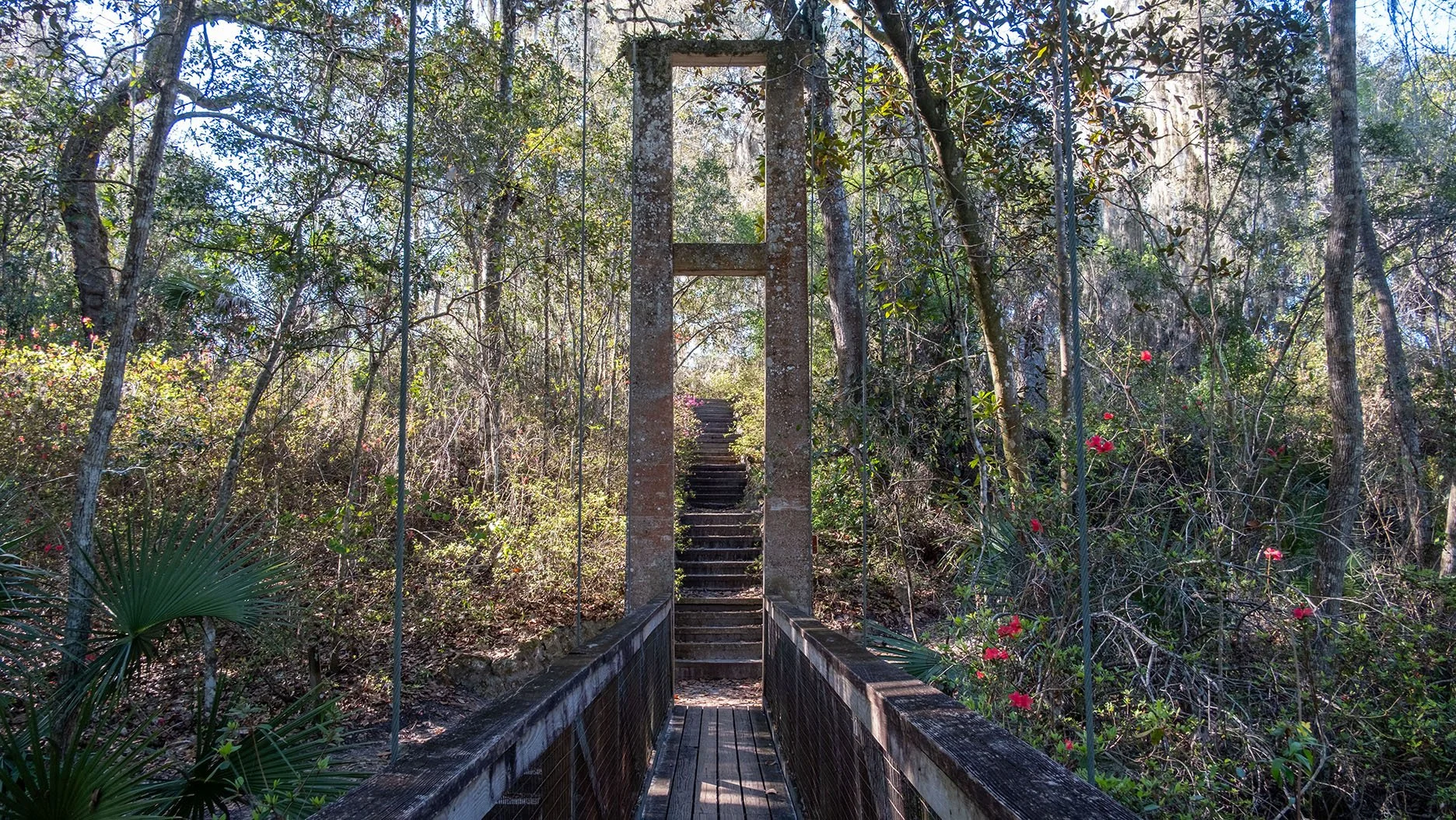
One of the most iconic features of the park is its two suspension bridges, which provide incredible views of the ravines below.
Each bridge spans about 120 feet
Originally built in the 1930s and later reconstructed
Designed with concrete bases and steel cable supports
Interestingly, these bridges span land rather than open water, crossing over landscaped ravine areas where water was redirected underground during development.
Walking across them is a must-do experience—and a favorite photo spot for visitors.
Amphitheater & History
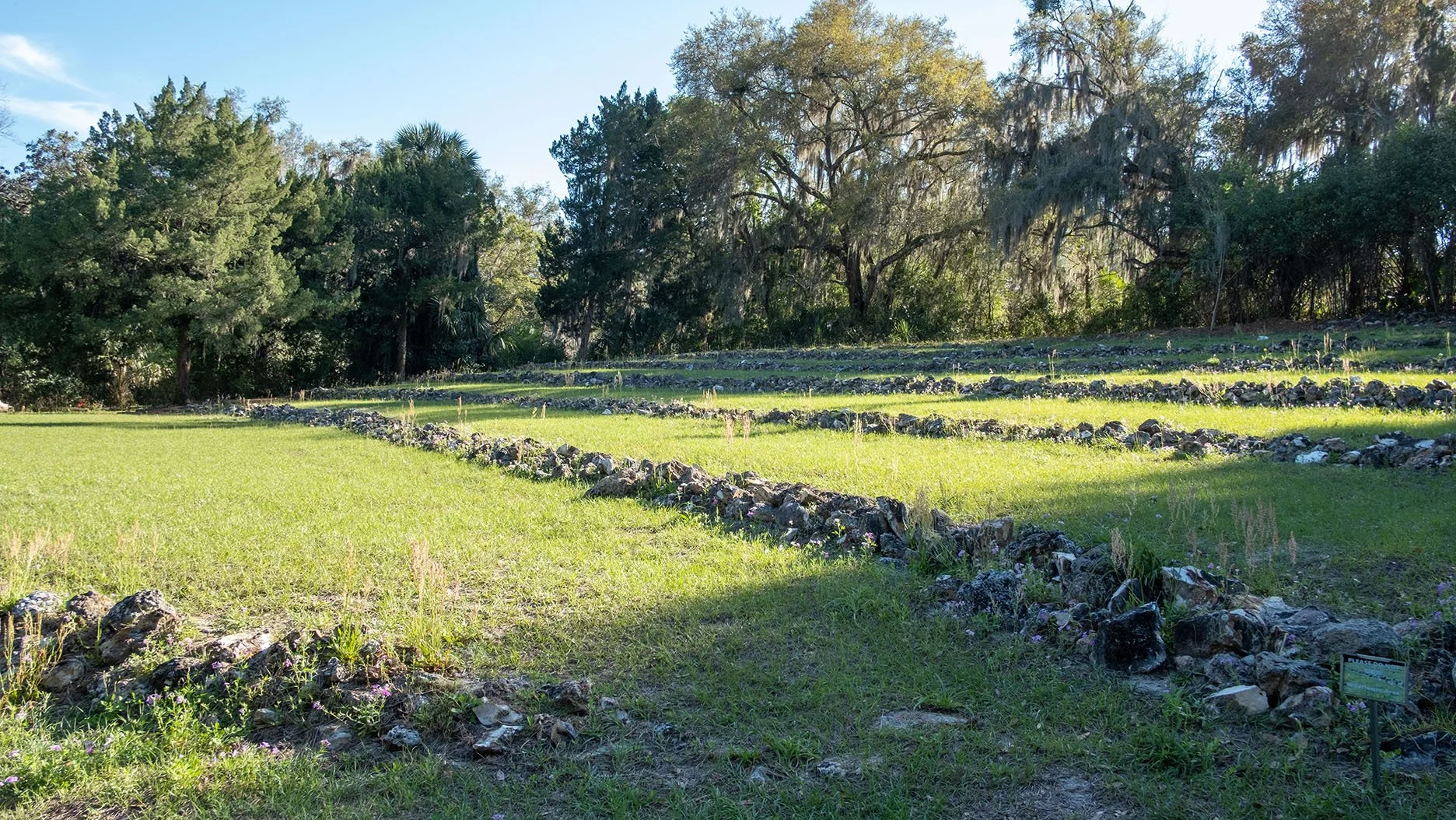
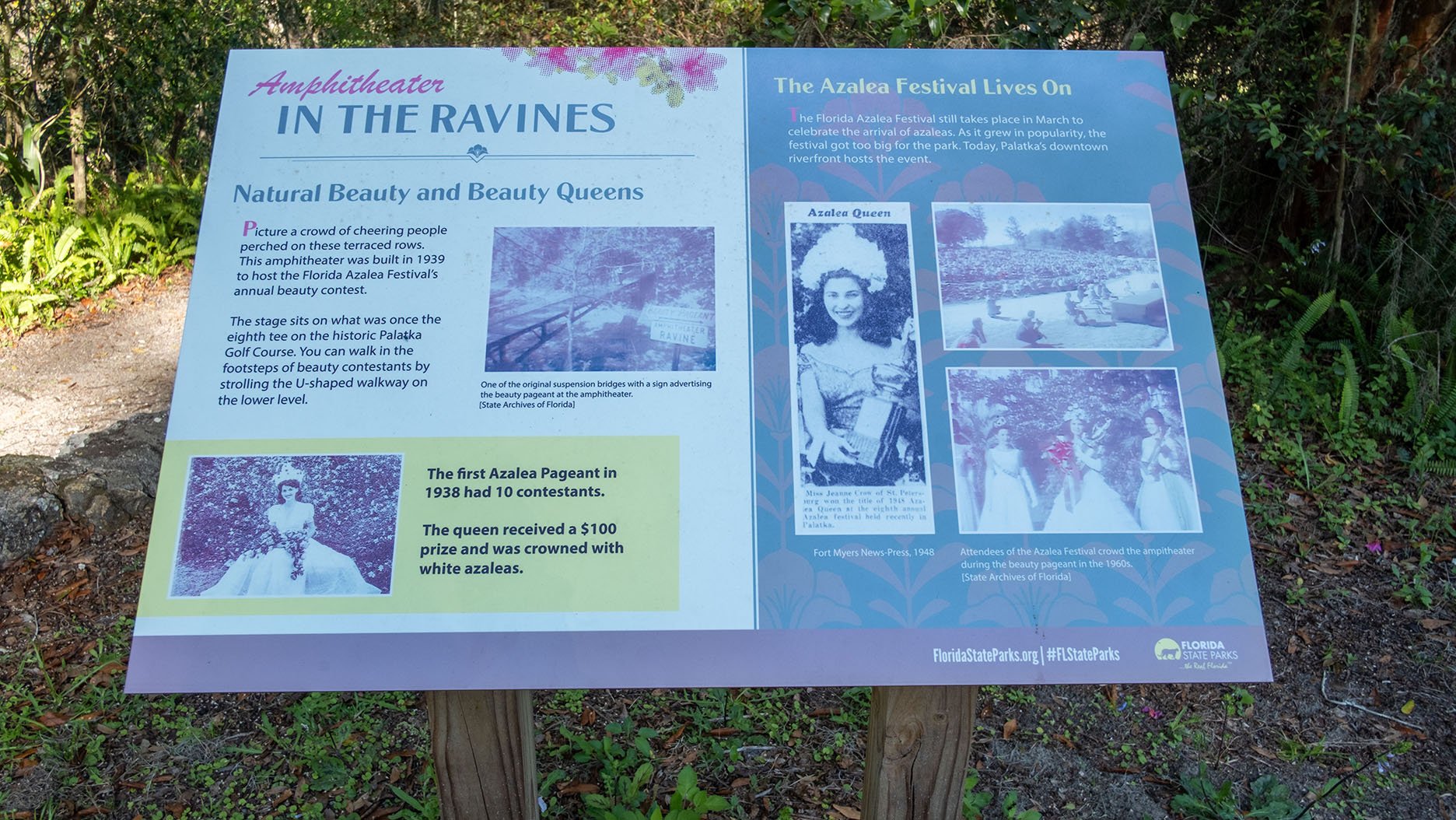
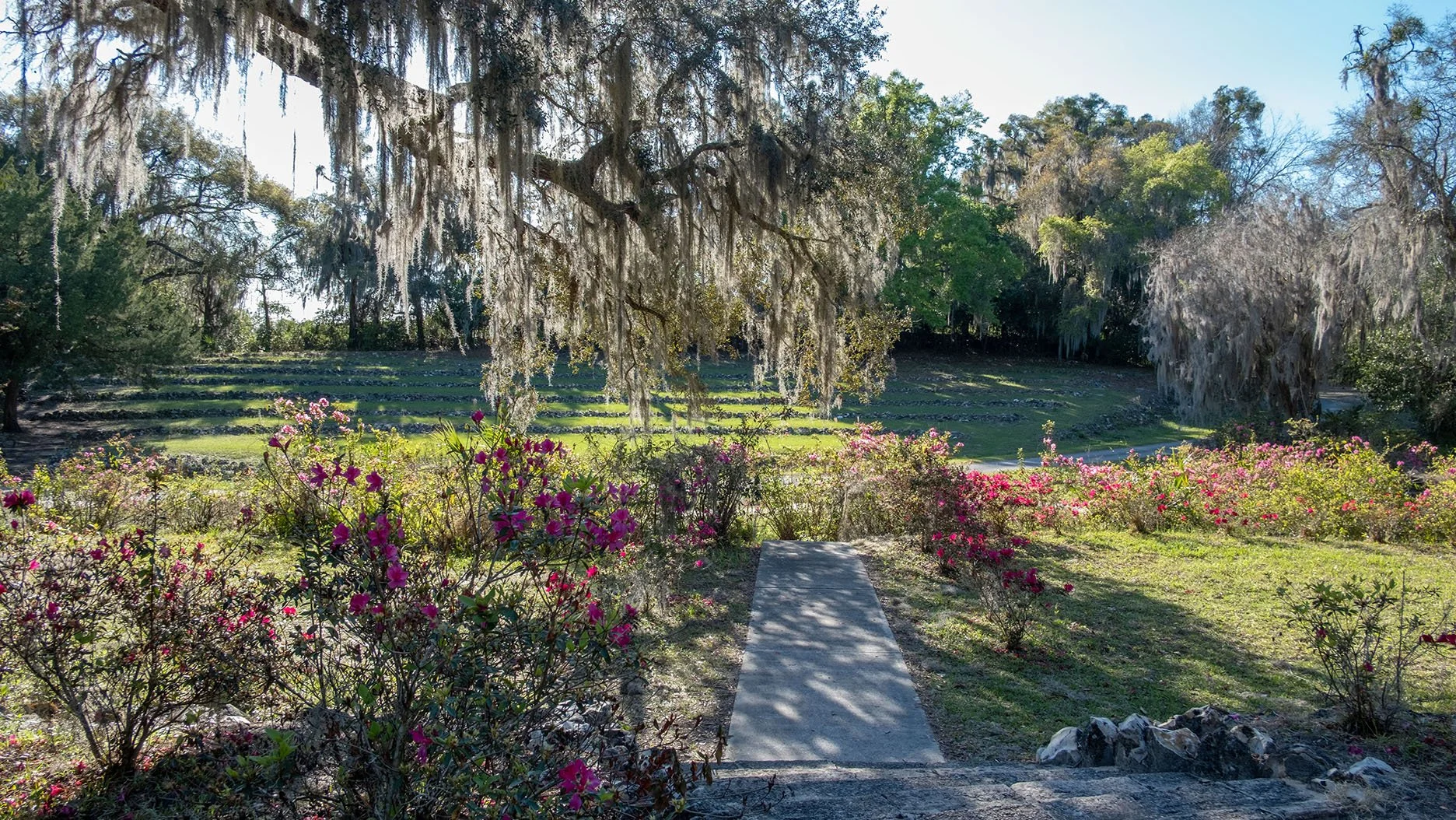
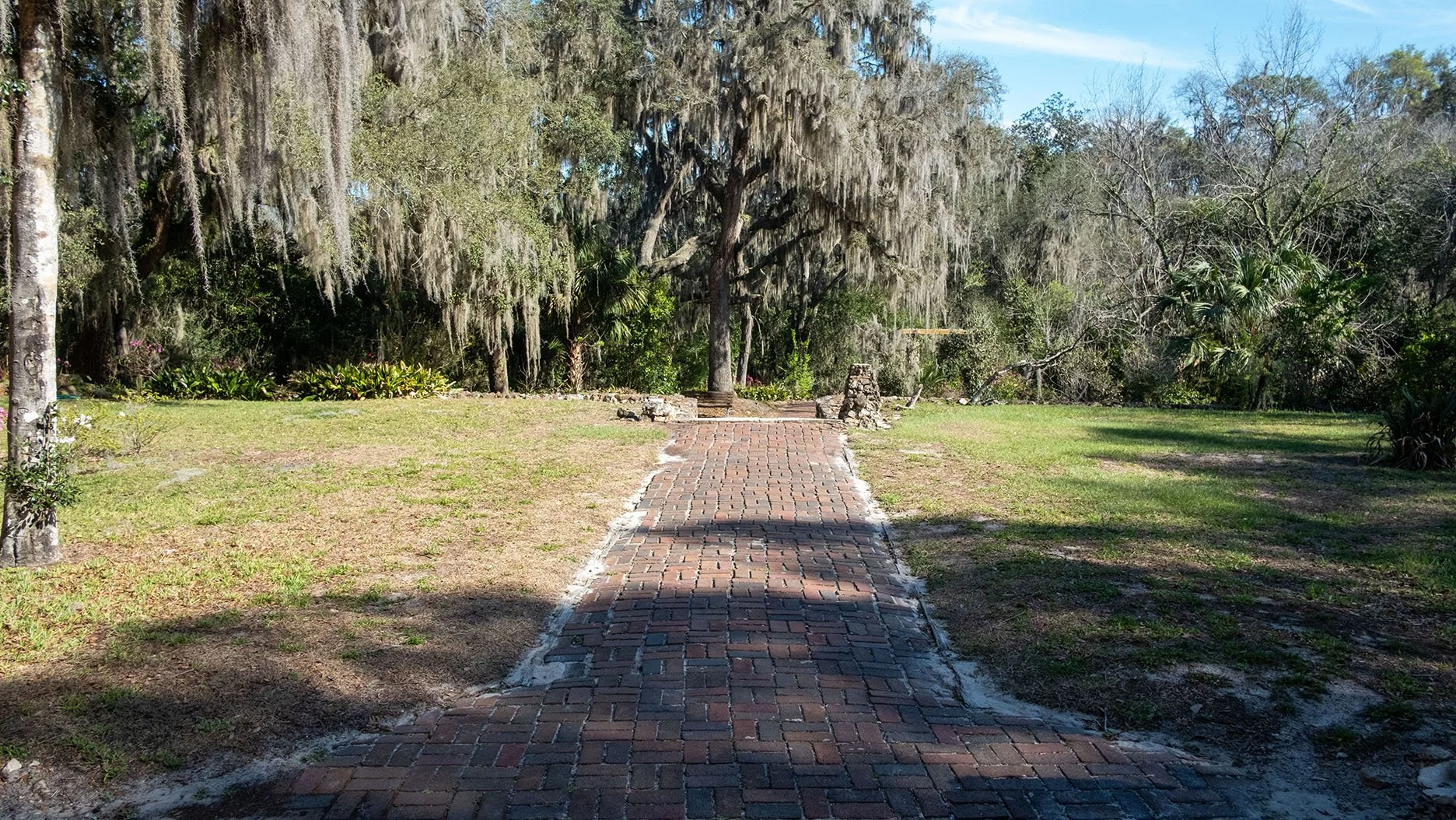
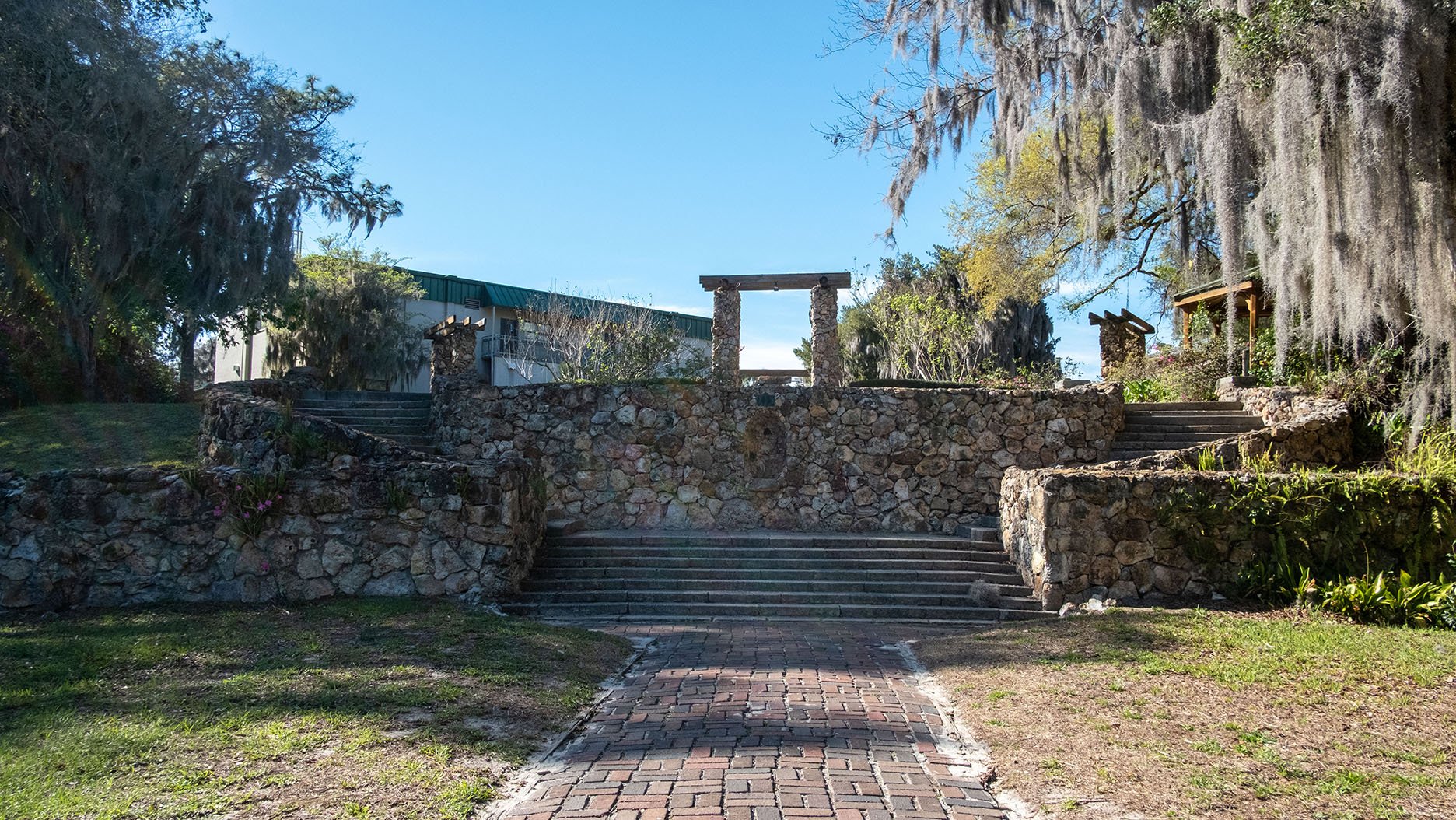
The park’s historic amphitheater is another highlight, blending natural beauty with cultural history.
Built in 1938–1939during the Great Depression
Created to host the Miss Florida Azalea Pageant
Features terraced seating with eight arced levels
Listed as part of the park’s historic structures
Today, it serves as a peaceful place to relax, picnic, or take photos. During azalea season, the surrounding blooms create a truly magical backdrop.
Picnic Areas & Amenities
Ravine Gardens is perfect for a laid-back day outdoors.
Picnic Features:
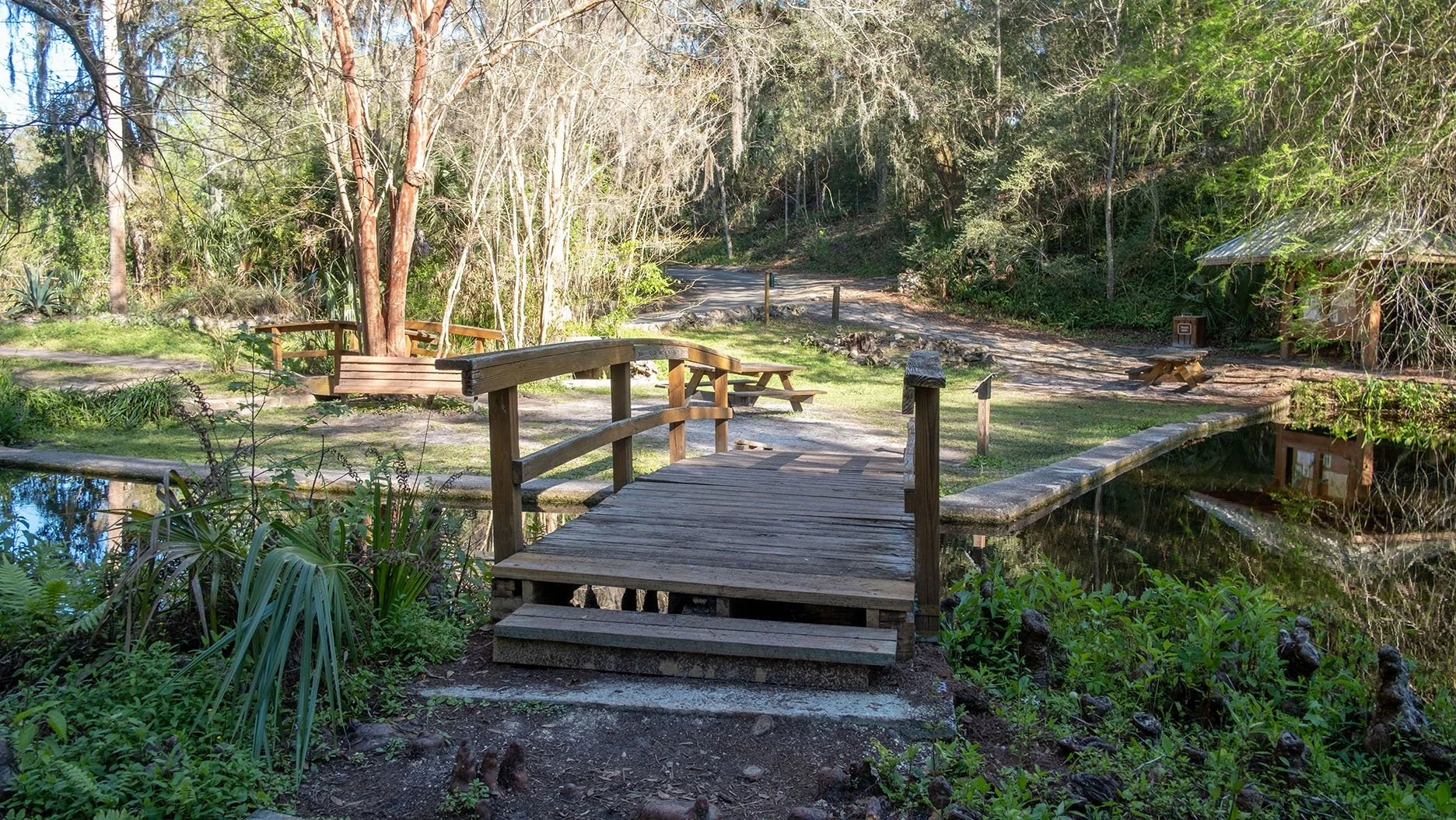
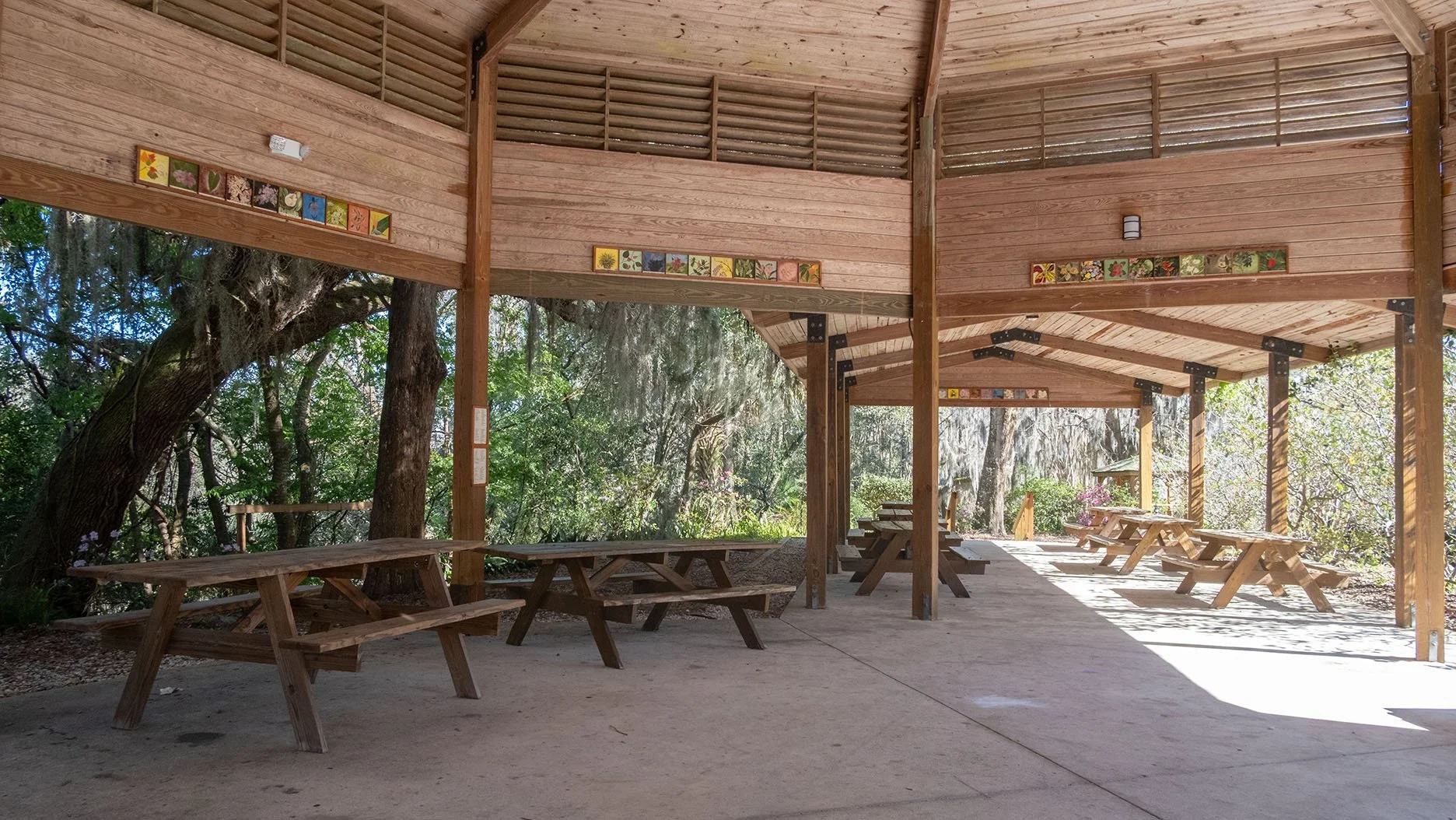
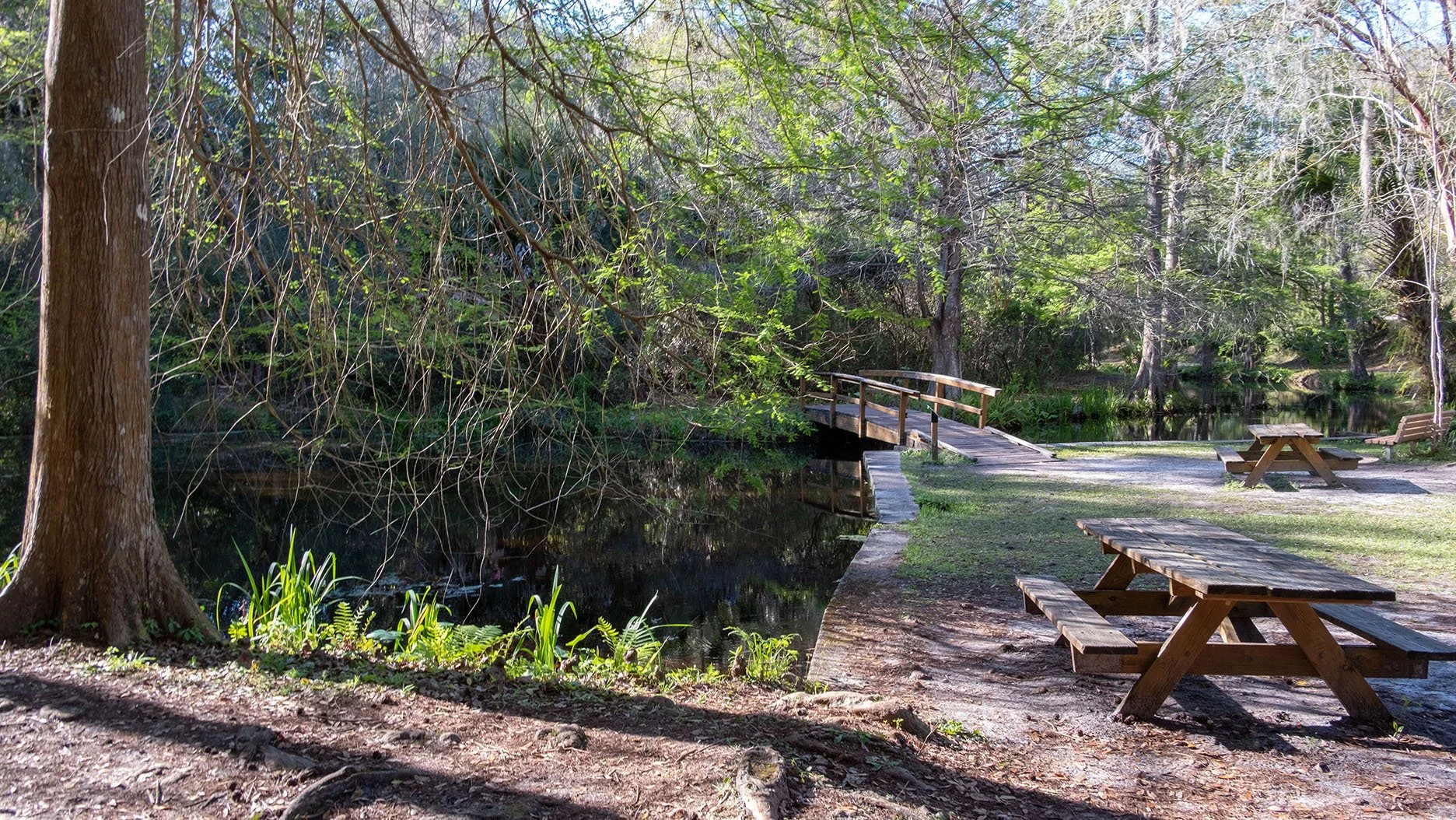
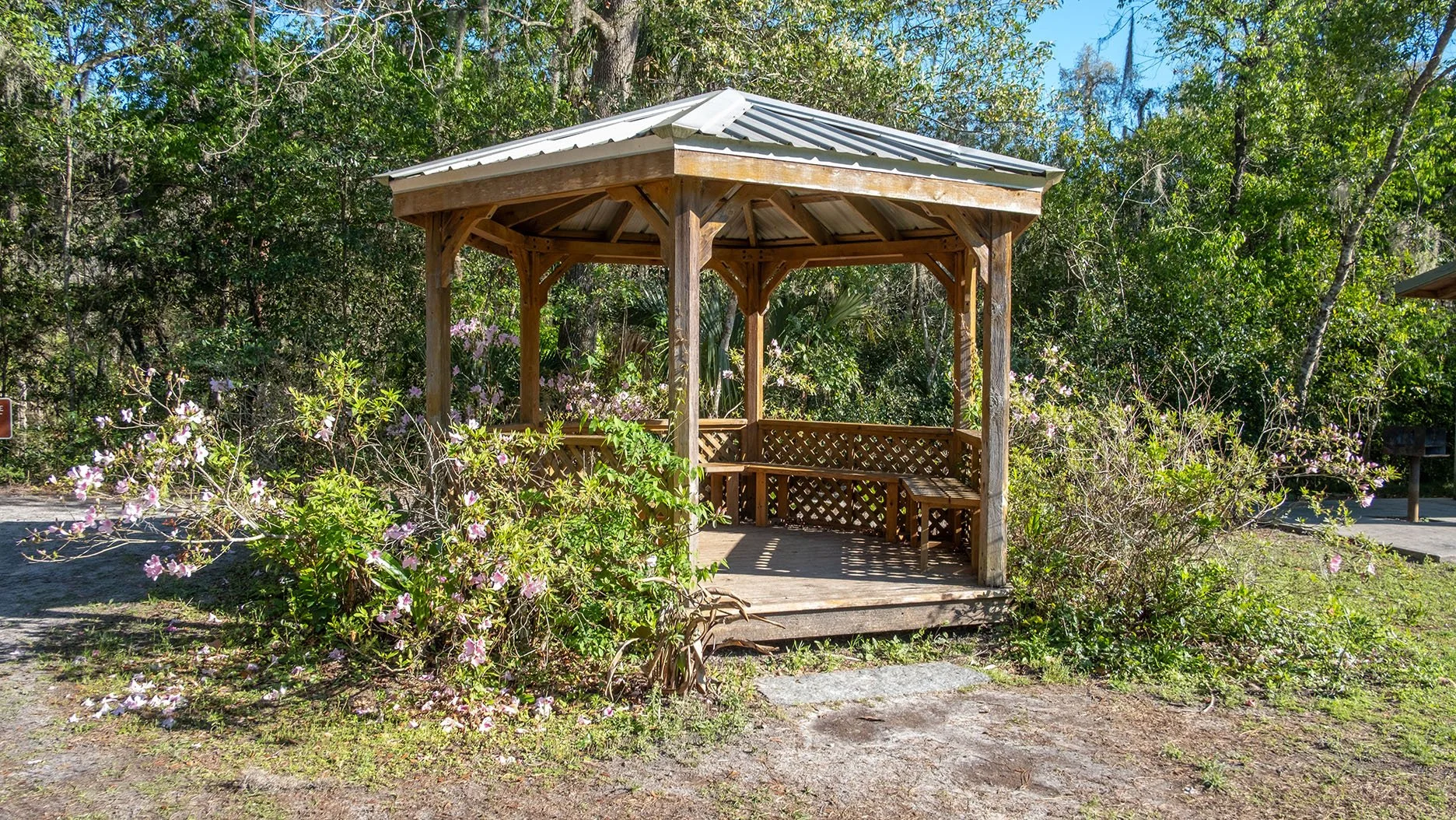
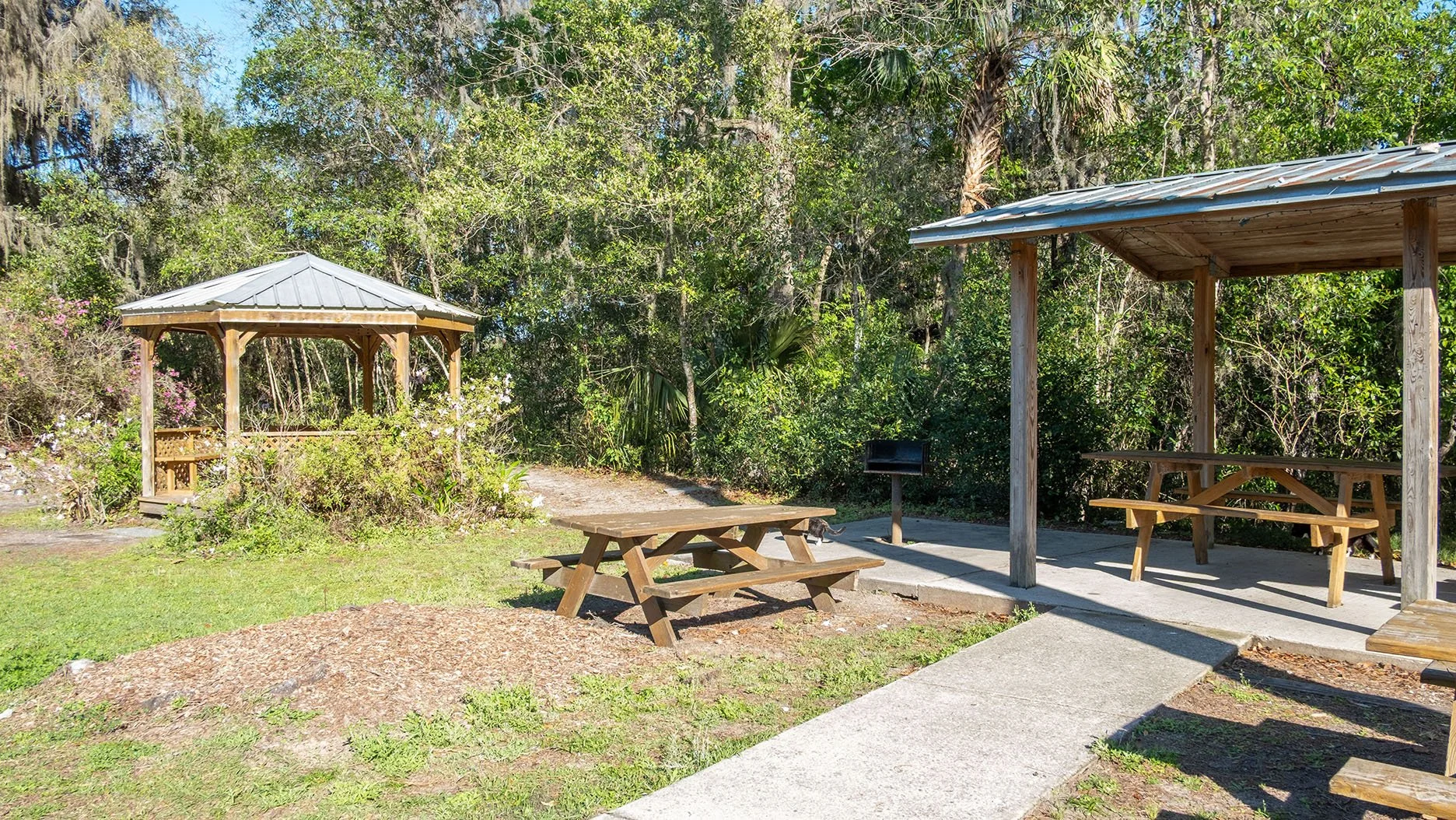
Numerous picnic tables and grills throughout the park
Scenic spots along the 1.8-mile loop road
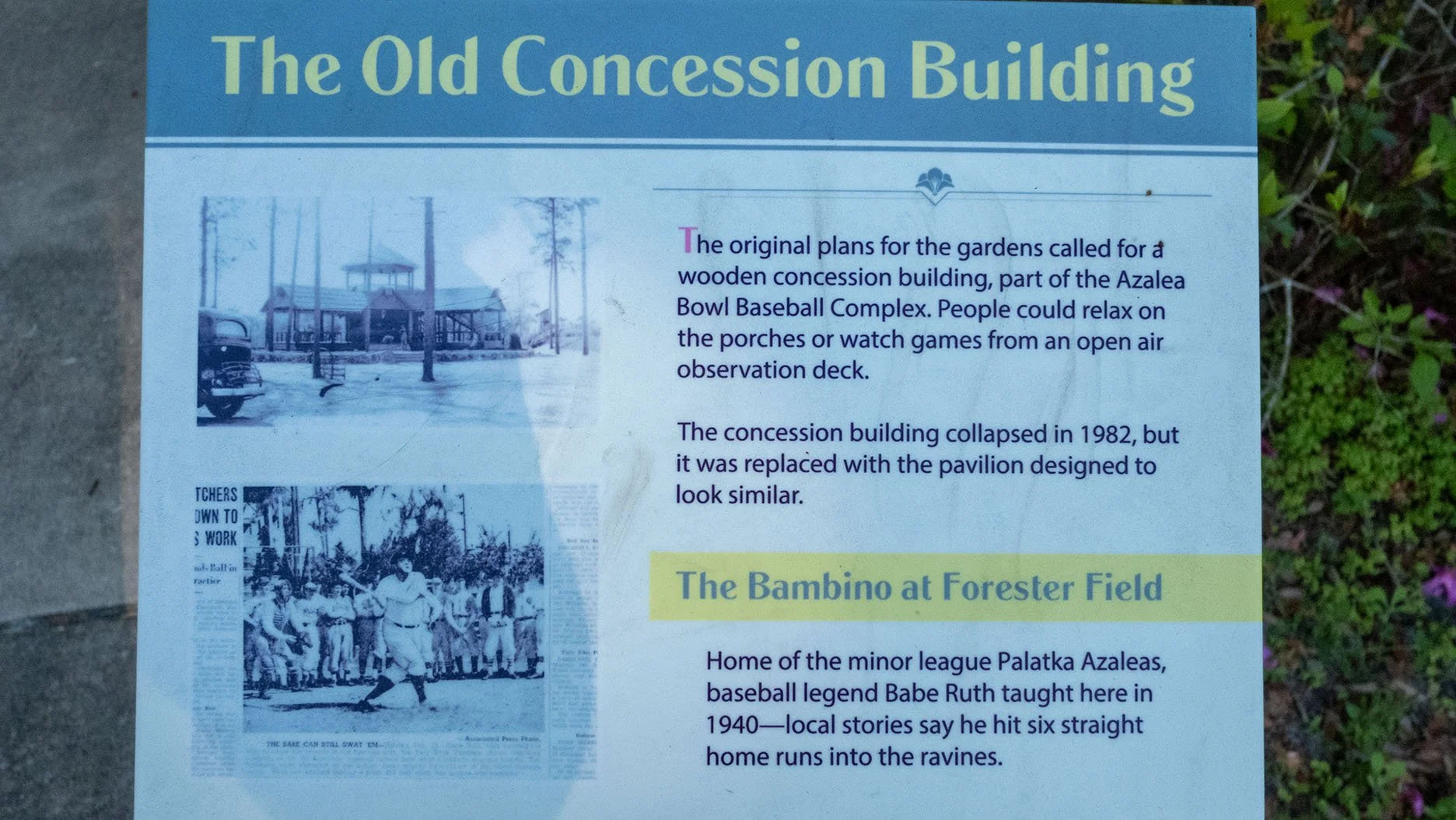
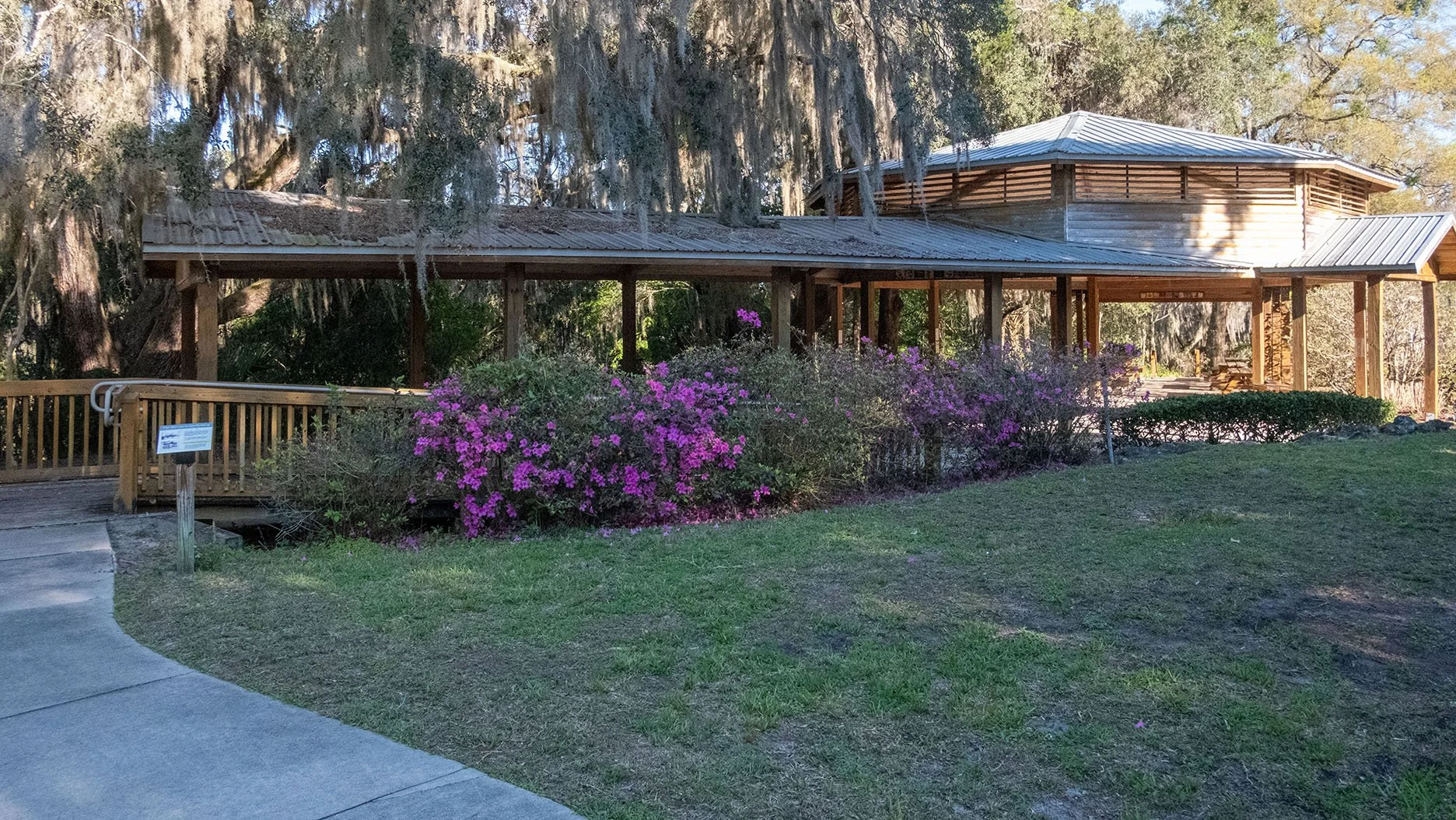
Large and small pavilions available for rent
Playground nearby for families
Snack machine located in the civic center - not a big selection
Restrooms:
There are public restroom facilities in the Roy E. Campbell Civic Center.
Accessible restroom facilities are available throughout the park
Whether you’re planning a quick lunch stop or a full picnic day, the park is well-equipped and family-friendly.
Hours & Entrance Fees
Hours:
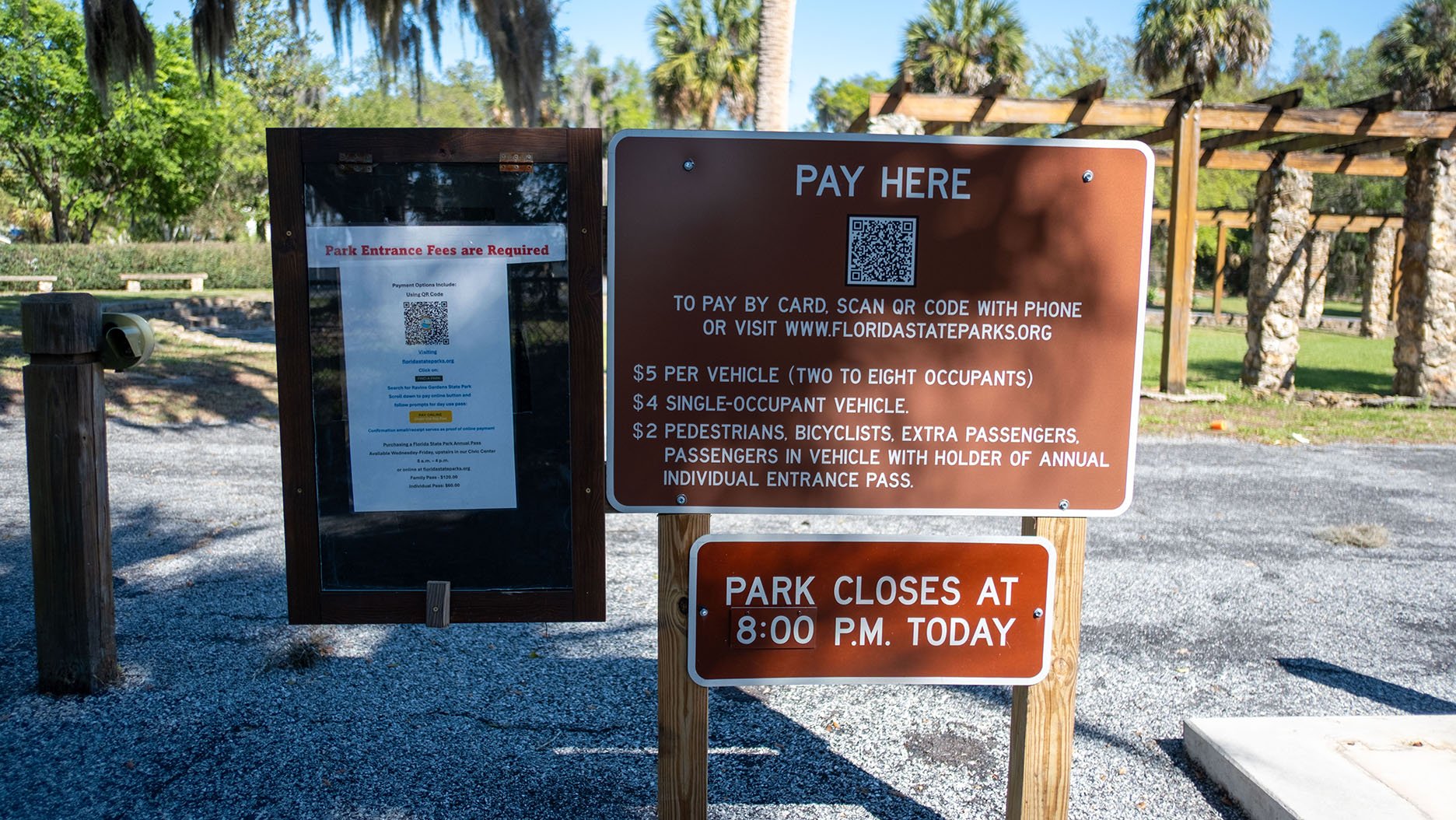
Open 8:00 AM to sundown, 365 days a year
Ravine Loop Drive (cars): 9:00 AM – 4:00 PM
Admission Fees:
$5 per vehicle (2–8 people)
$4 single-occupant vehicle
$2 pedestrians or cyclists
Fees are affordable, making this one of the best budget-friendly outdoor experiences in North Florida.
A Brief History
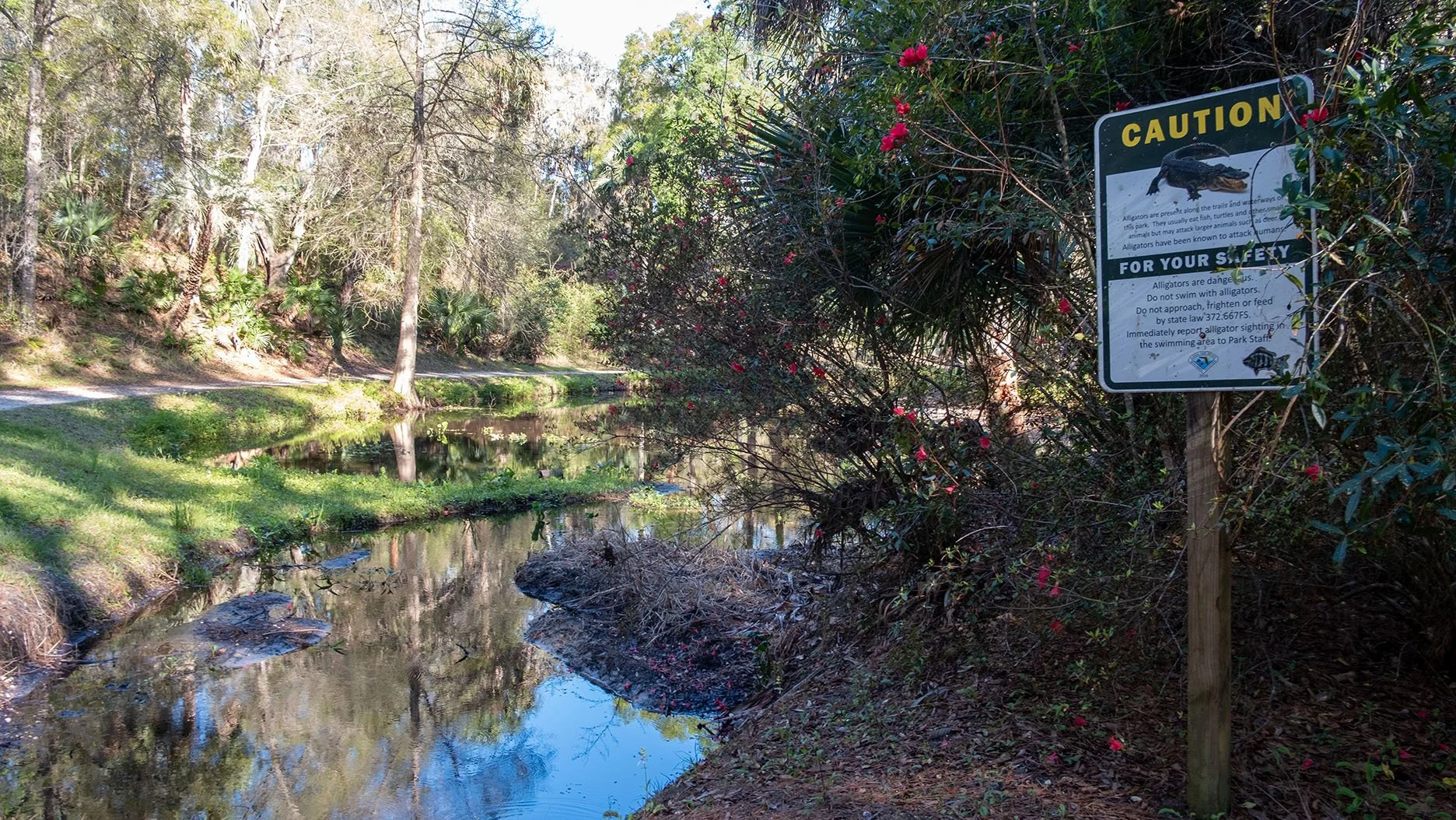
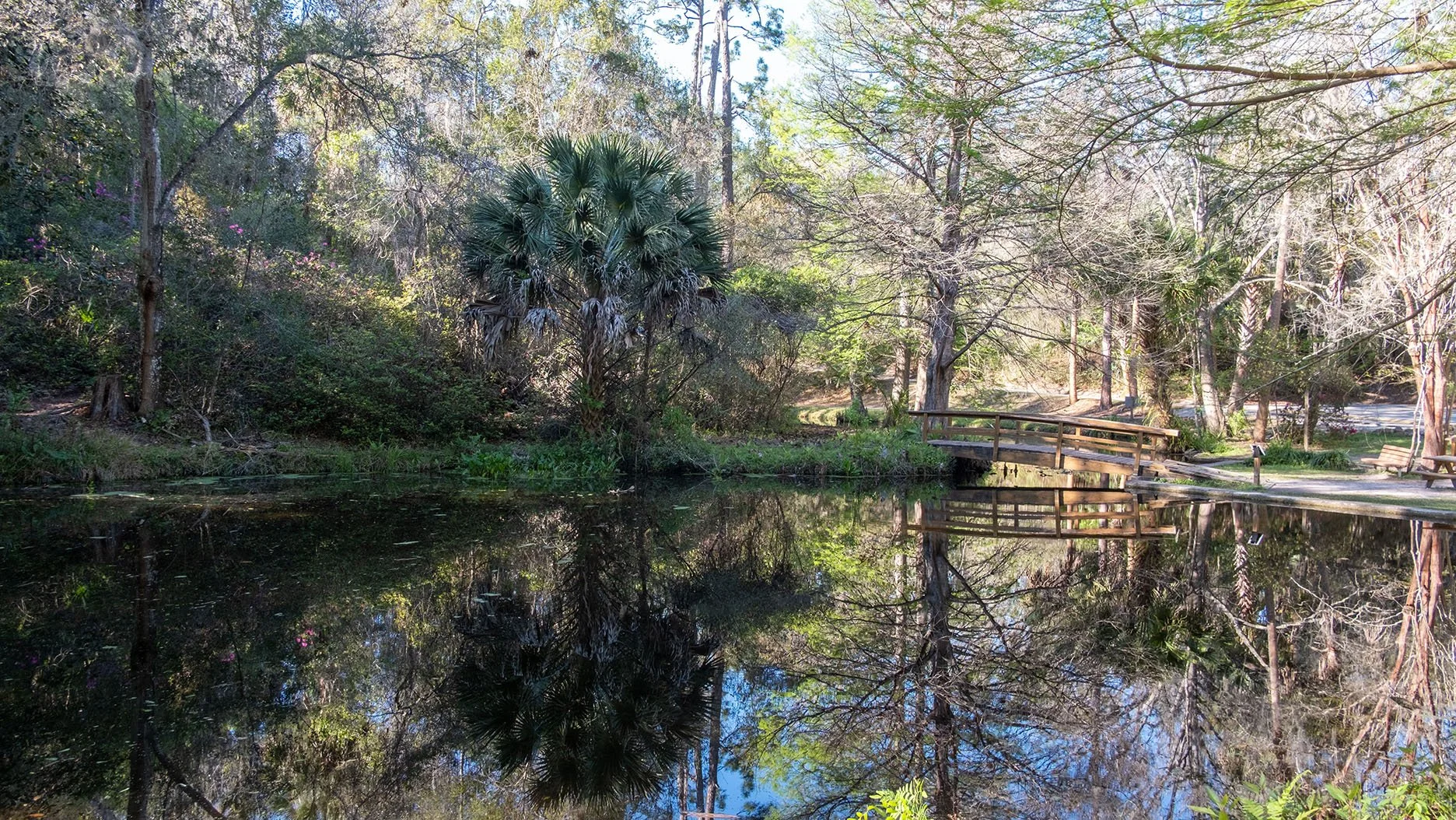
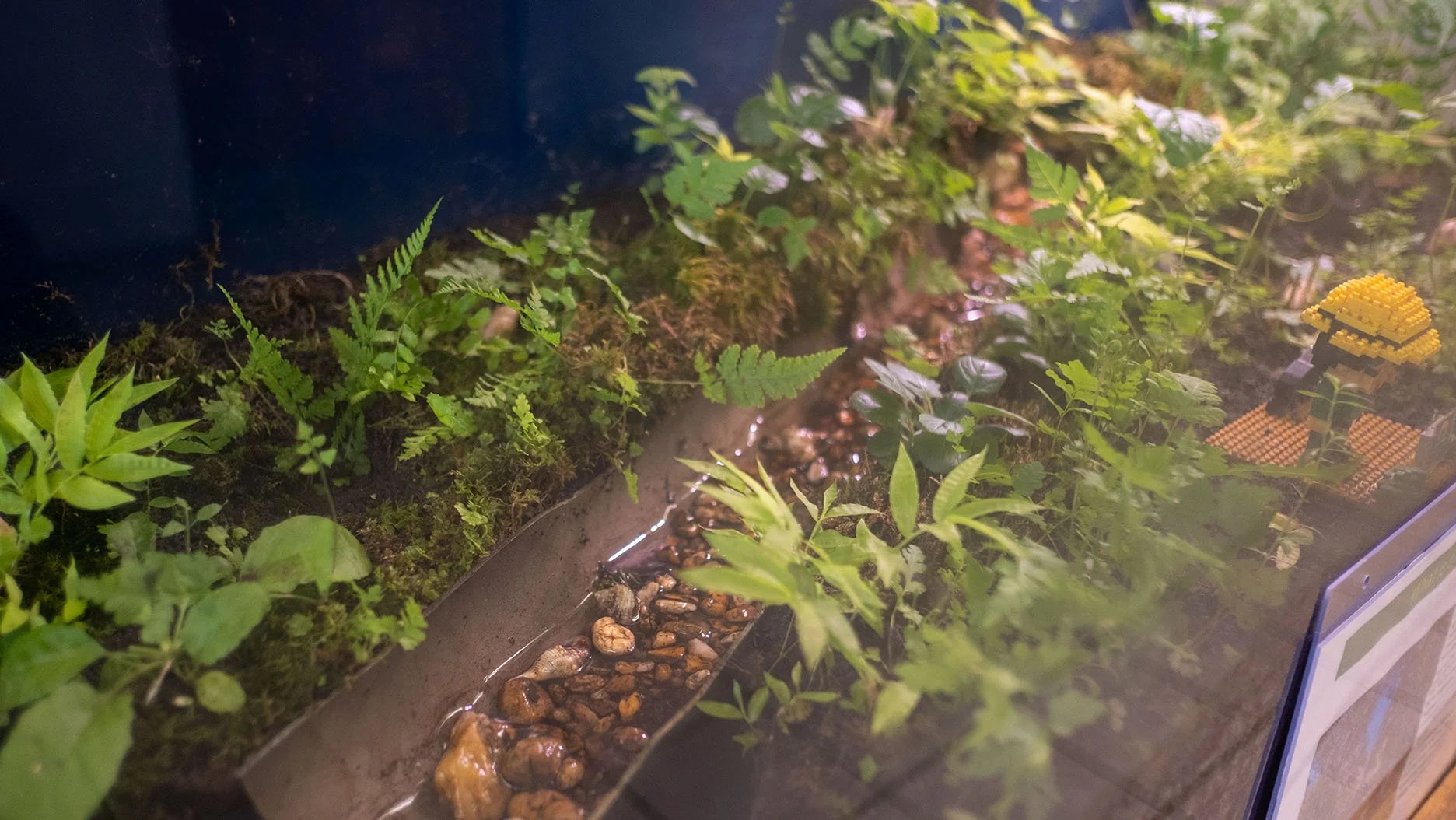
The steephead ravines are a permanent feature with a spring-fed creek that never dries up, called Whitewater Branch. The underground water bubbling up cuts into the bank and carries the sand and soil downstream to the St. Johns River. Over thousands of years, the ravines have widened and deepened to what you see today. Ravine Gardens dates back to the Great Depression, when it was developed as a public works project to boost tourism and provide jobs.
Built starting in 1933 by federal relief programs
Over 95,000 azaleas were planted in early development
Once considered one of Florida’s top tourist attractions
Listed on the National Register of Historic Places
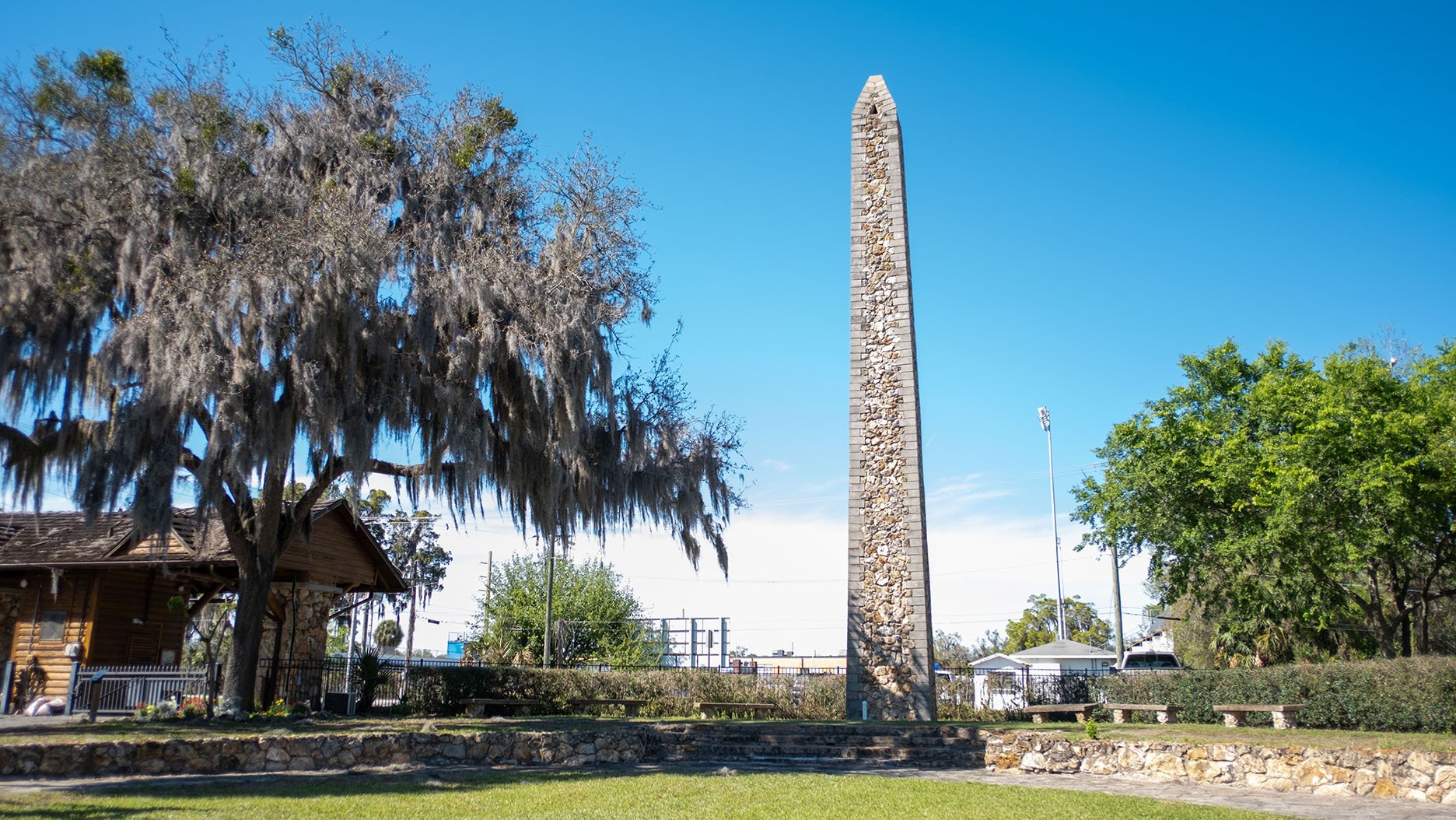
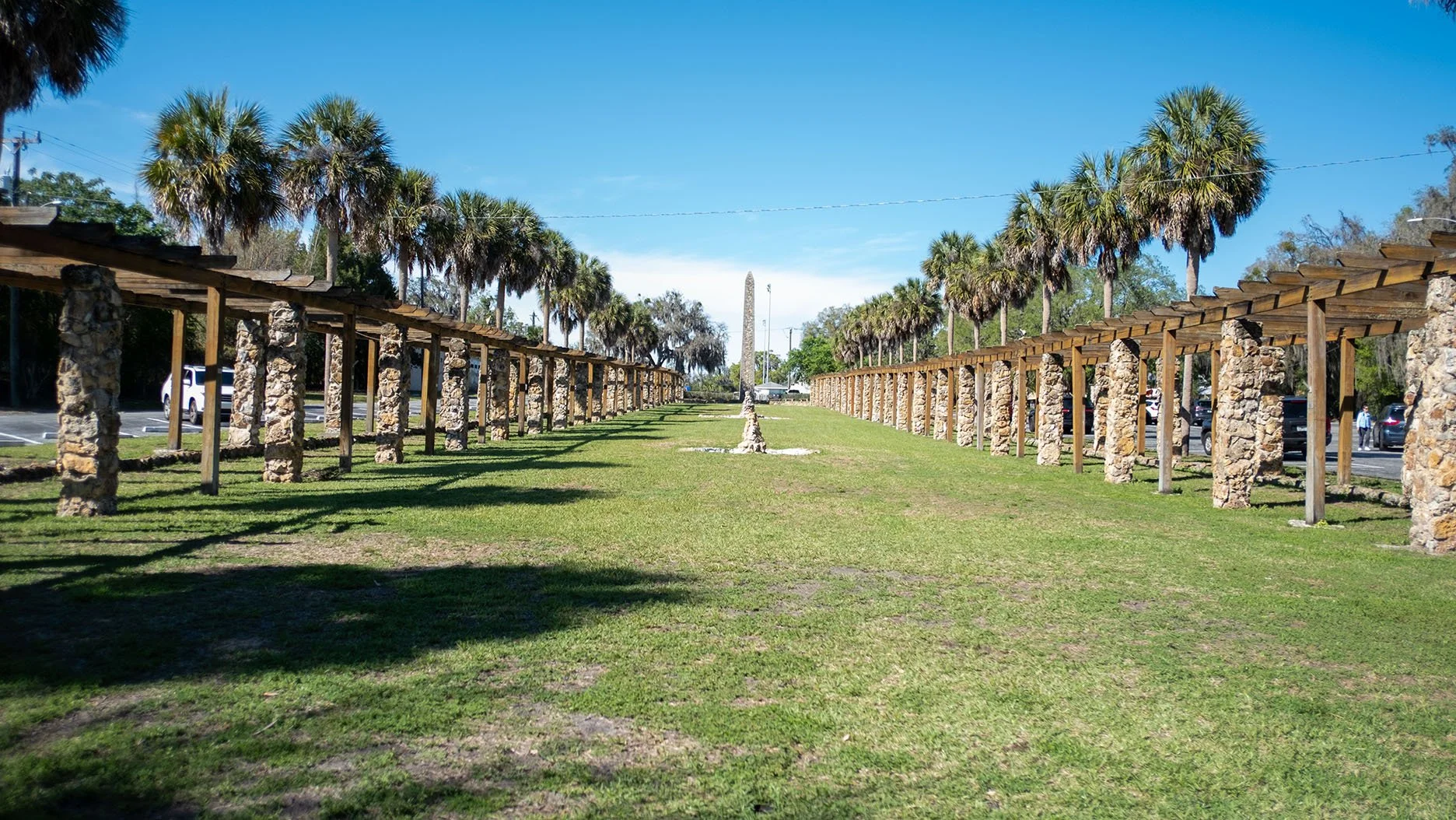
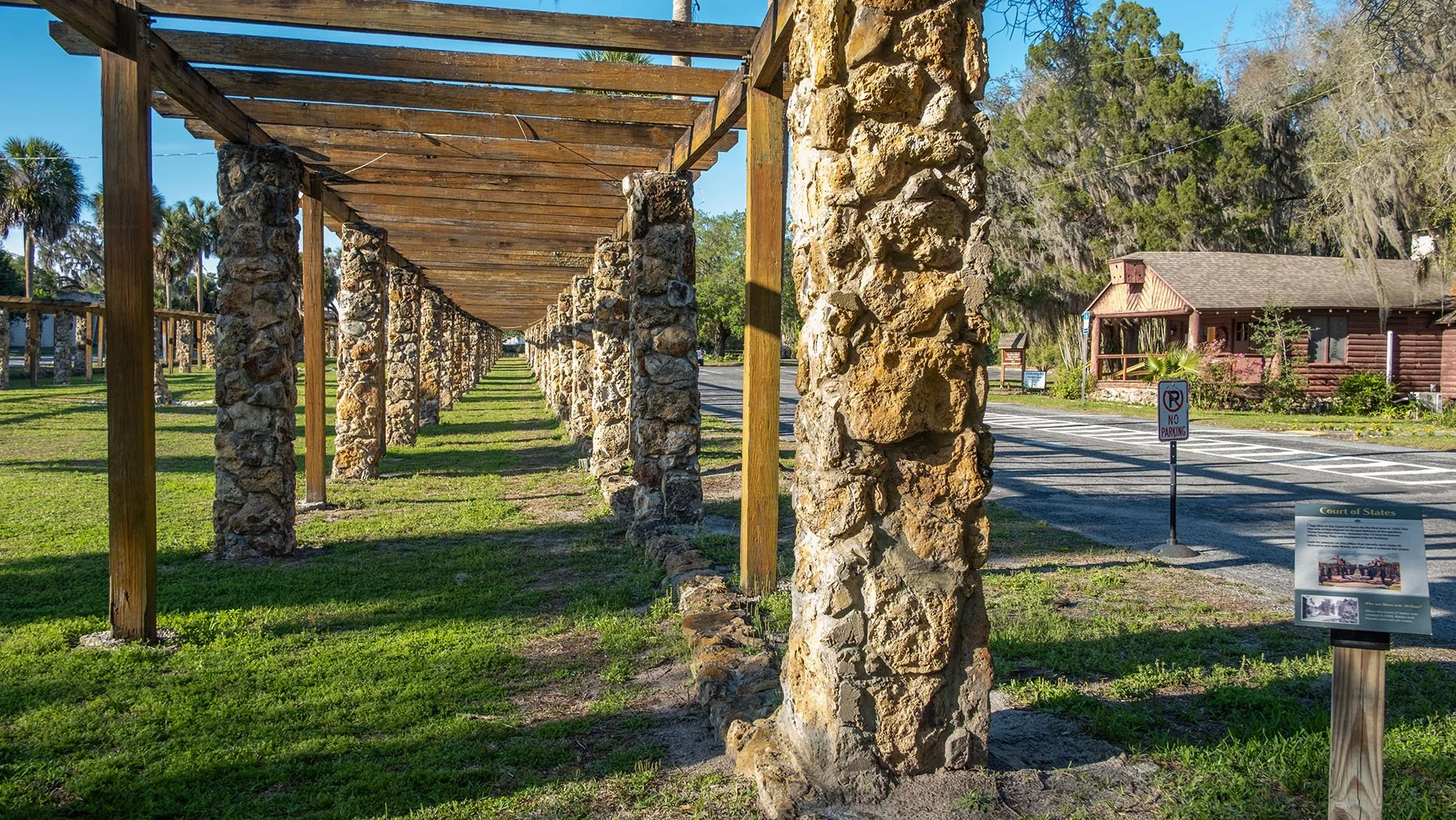
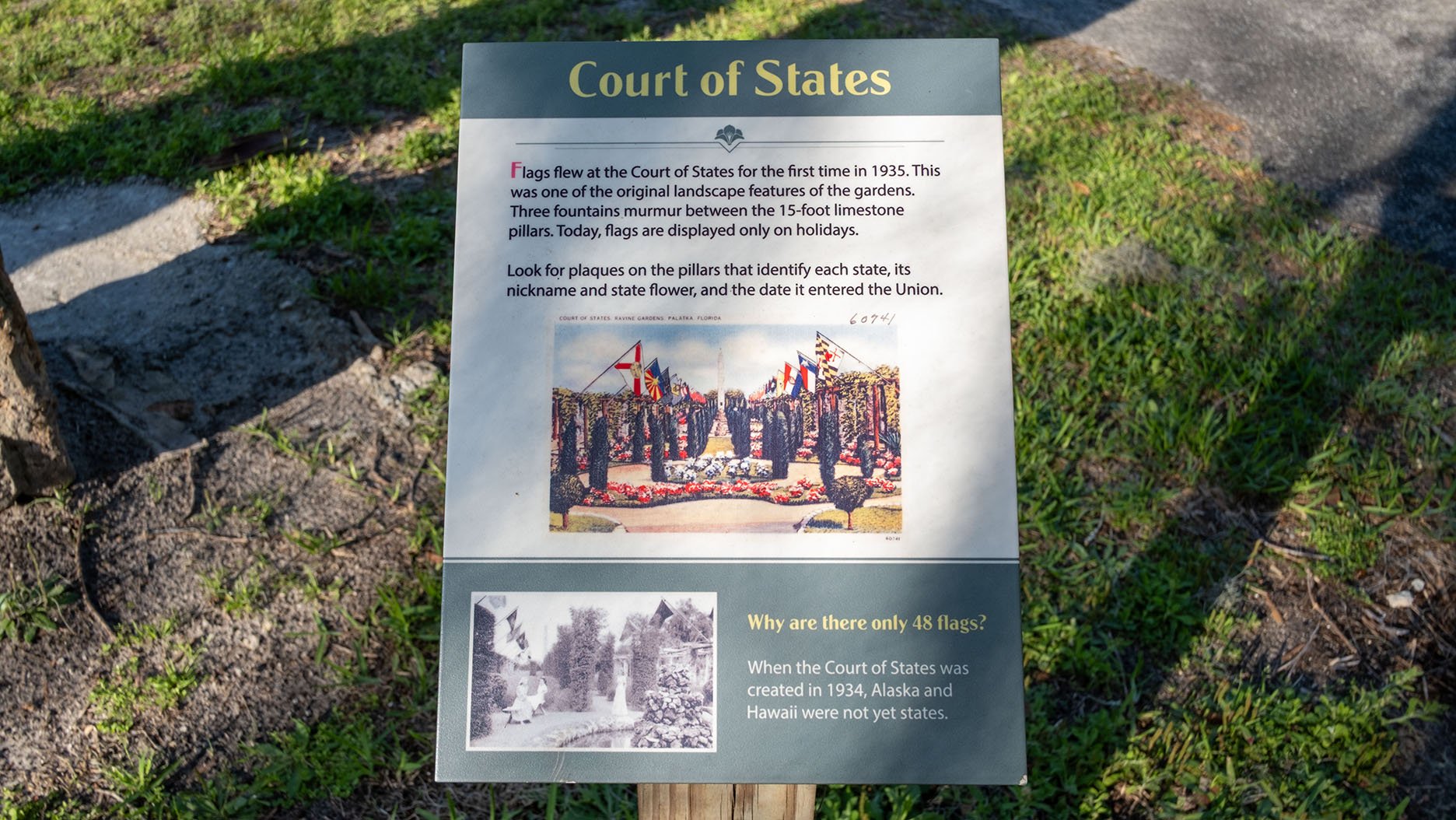
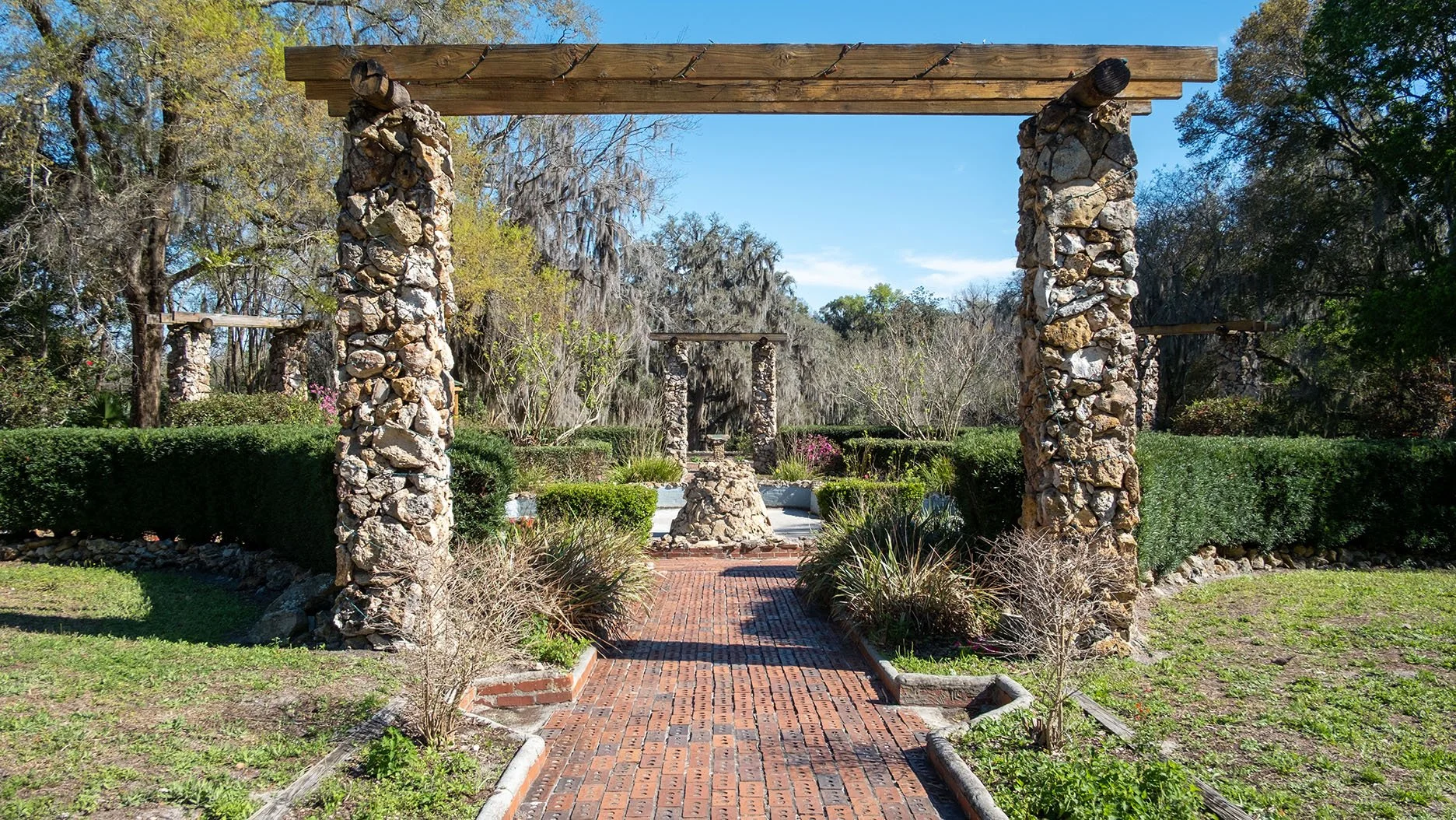
The combination of natural ravines and carefully designed gardens makes this park both a geological wonder and a historic landmark.The Court of State provides a stunning frame to the 60-foot obelisk dedicated to Franklin D. Roosevelt. On holiday weekends, the park displays among the stone and wood pillars the flags of the 48 states that were in the Union when the park was established.
Final Tips for Visiting
Best time for photos: Early morning or golden hour
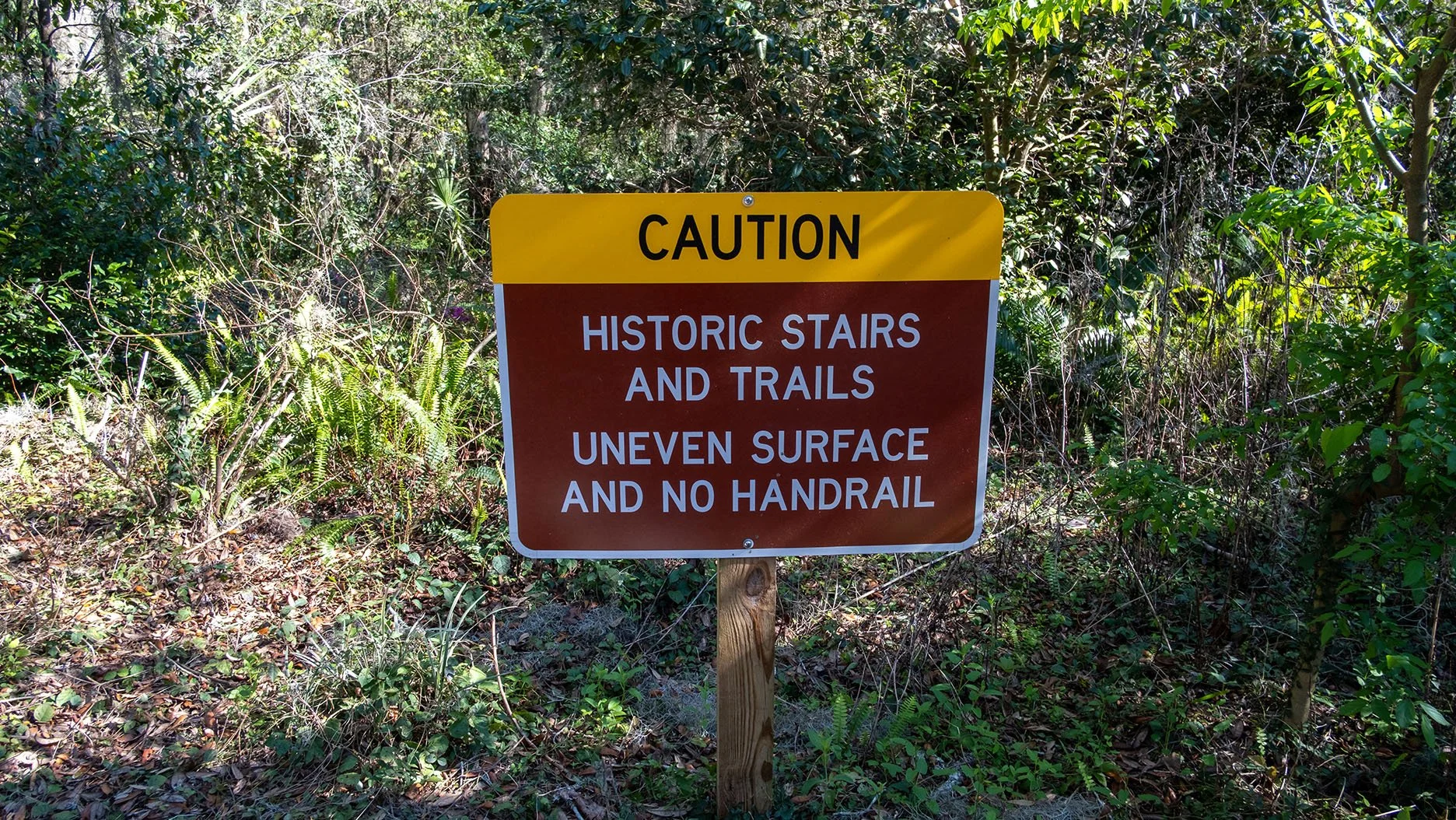
Wear comfortable gripping shoes: Trails can be steep and uneven
Bring bug spray & water (especially in warmer months)
Visit off-season (April–December) for fewer crowds
Don’t skip the bridges and amphitheater—they’re the highlights
Why You Should Visit
Ravine Gardens State Park is one of those places that feels completely unexpected in Florida. Between the dramatic elevation changes, historic charm, and seasonal azalea blooms, it offers a unique experience you won’t find anywhere else in the state.
Stay in the heart of downtown Palatka 5 minutes from Ravine Gardens. Click here to book.

**This page contains affiliate links**