

www.reddit.com
If you love traveling and taking photos, upgrading from your smartphone to a dedicated camera can make a huge difference. A good travel camera can give you better image quality, interchangeable lenses, stronger low-light performance, better zoom options, and much more creative control without requiring you to carry a huge professional DSLR.
The good news is that you don't have to spend thousands of dollars on a camera body to get excellent travel photos.
There are several compact mirrorless cameras that offer an excellent balance between price, image quality, portability, and features. Some are particularly good for photography, while others are better choices if you want to create travel videos, Instagram Reels, or YouTube content.
For travelers, size matters just as much as megapixels. A camera that stays in your backpack because it's small and lightweight is often more useful than a larger, more expensive camera that you don't want to carry all day.
Here are some of the best affordable cameras for travel, including the Nikon Z fc, Fujifilm X-T50, Fujifilm X-M5, Canon EOS R50, and Sony a6400.
What Should You Look for in a Travel Camera?
Before choosing a camera, think about how you actually travel and what you photograph.
For example, someone visiting theme parks may prioritize a lightweight camera with a versatile zoom lens, while someone photographing beaches and landscapes may care more about image resolution and lens selection.
The most important things to consider include:
Camera size and weight
Sensor size
Megapixels
Interchangeable lenses
Autofocus
Video capabilities
Image stabilization
Battery life
Viewfinder
Flip or tilting screen
Wi-Fi and Bluetooth
Overall system and lens cost
An affordable camera isn't necessarily the camera with the lowest price. You also need to consider the cost of lenses, batteries, memory cards, and accessories.
Nikon Z fc: Best Affordable Retro-Style Travel Camera
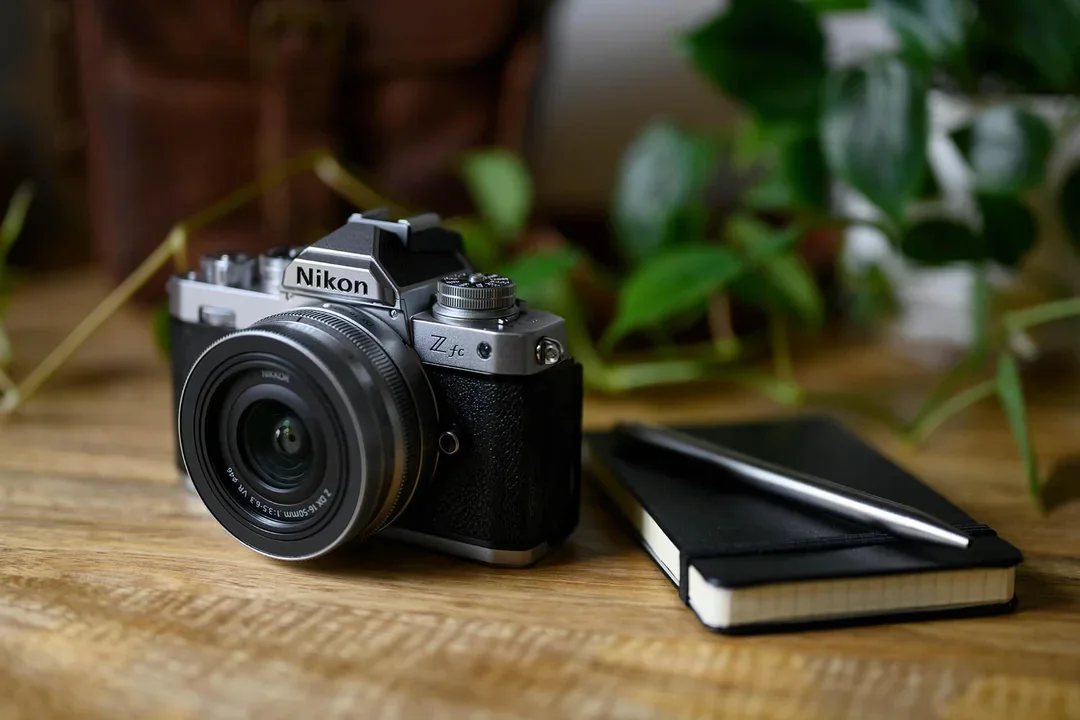
Nikon's Nikon Z fc is one of the most visually appealing compact mirrorless cameras available, especially if you love the look of classic film cameras.
It combines a retro-inspired design with modern digital features, making it an especially attractive option for travel photographers who want something that looks great while still producing high-quality images.
The Z fc uses a 20.9-megapixel DX-format sensor and Nikon's Z-mount system. Its interchangeable-lens design gives travelers considerably more flexibility than a traditional point-and-shoot camera. It also has image stabilization in camera for hand held shots.
Nikon Z fc specifications
SpecificationNikon Z fcSensorAPS-C/DXResolution20.9 MPLens mountNikon ZDimensions5.3 × 3.7 × 1.8 in.WeightApprox. 445 g with battery/cardScreen3-inch vari-angleVideo4K UHDStorageSD/SDHC/SDXCConnectivityWi-Fi + Bluetooth
Nikon lists the body at approximately 390 g, while the camera with battery and memory card weighs about 445 g. Nikon
Why choose the Nikon Z fc?
The biggest attraction is its combination of style, portability, and interchangeable lenses.
The vari-angle screen is particularly useful for travel creators because you can fold and position the screen for different shooting angles. It's also useful for selfies and video.
The Z fc can record 4K UHD video, and Nikon includes Wi-Fi and Bluetooth connectivity for transferring images and connecting the camera to compatible devices.
Best for:
Travel photographers who want a stylish camera with physical controls and access to Nikon's Z-mount lenses.
One thing to consider
The Z fc isn't the newest camera on this list, and its 20.9MP resolution is lower than the Fujifilm X-T50 and X-M5. However, that doesn't mean it produces poor photos. For everyday travel photography, 20.9MP is plenty for social media, websites, prints, and most travel projects.
I use my Z FC when I go to hotels. It’s a perfect camera for getting room and and exterior shots. It all depends on the lens I need. My ZFC has a wide lens on it, perfect for showing the size of rooms.
Fujifilm X-M5: Best Lightweight Travel Camera
If keeping your camera bag as light as possible is your priority, the Fujifilm X-M5 deserves serious consideration.
This is one of the smallest and lightest interchangeable-lens cameras in this group.
The X-M5 uses a 26.1-megapixel APS-C X-Trans CMOS 4 sensor and Fujifilm's X mount. It weighs approximately 355 g with the battery and memory card, making it substantially lighter than the Nikon Z fc.
This is my favorite camera for theme parks because I can stick it in my bag and it fits in the lockers when I’m riding rides.
The only downside is that it doesn’t have a viewfinder so you have to rely on the screen. Also, no image stabilization for hand held shots. There are lenses that have it.
Fujifilm X-M5 specifications
Sensor: APS-C
Resolution: 26.1 MP
Lens mount: Fujifilm X
Weight: Approx. 355 g with battery/card
Video: Up to 6.2K Screen Vari-angle
Storage: SD/SDHC/SDXCUSB
USB-C Headphone3.5mm
The X-M5 measures approximately 111.9 × 66.6 × 38 mm, or 4.41 × 2.62 × 1.50 inches.
That small footprint is a major advantage when you're traveling.
It can also record 6.2K video, making it particularly interesting for travel bloggers, Instagram creators, and YouTubers who want one small camera for both photos and video.
Why choose the X-M5?
Fujifilm is also famous for its Film Simulation modes. These can give your photos a distinctive look straight out of the camera, which can be especially appealing if you don't want to spend a lot of time editing every travel photo.
The X-M5 is also a great choice for someone who wants a camera that can move easily from vacation photography to social media content creation.
Best for:
Travelers who want the smallest and lightest interchangeable-lens camera possible without giving up image quality.
Fujifilm X-T50: Best for Serious Travel Photography
The Fujifilm X-T50 is the camera on this list for travelers who are willing to spend more to get a significant jump in photographic capability.
It features a 40.2-megapixel APS-C sensor, giving you considerably more resolution than the Nikon Z fc, X-M5, Canon EOS R50, and Sony a6400.
The camera measures approximately 4.87 × 3.31 × 1.92 inches and weighs approximately 438 g with battery and memory card.
Fujifilm X-T50 specifications
Sensor: APS-C X-Trans CMOS 5 HR
Resolution: 40.2 MP
Lens mount: Fujifilm X
Dimensions: 4.87 × 3.31 × 1.92 in.
Weight: Approx. 438 g with battery/card
Video: Up to 6.2K
Storage: SD
USB-USB-C
Screen: Tilting LCD
Pop up flash
Why choose the X-T50?
The biggest reason is image quality and resolution.
A 40.2MP sensor gives you plenty of room to crop photos later, which can be useful when photographing wildlife, architecture, landscapes, or distant subjects.
It's also still relatively compact compared with many full-frame cameras.
The X-T50 is an excellent choice for someone who wants to take travel photography more seriously but doesn't want to carry a huge professional camera.
Best for:
Travel photographers who want excellent image quality, high resolution, and room to grow.
The downside
This isn't really the "budget" option. It's better viewed as the affordable enthusiast option for someone who wants a camera that can potentially stay with them for many years. I just purchased mine for $1500 for just the body. Look on eBay for used. You can find good deals. KEH Camera is another safe option.
Canon EOS R50: Best Affordable All-Around Travel Camera
The Canon EOS R50 is one of my favorite choices for someone who wants a relatively affordable camera that is easy to use.
It has a 24.2-megapixel APS-C sensor, Canon's DIGIC X processor, and the RF lens mount.
Canon EOS R50 specifications
Sensor: APS-C CMOS
Resolution: 24.2 MP
Lens mount: Canon RF
Dimensions: 4.58 × 3.37 × 2.71 in.
Weight: Approx. 375 g with battery/card
Video: 4K
Storage: SD
USB-USB-C
Microphone: 3.5mm
Wi-Fi: Yes
Why choose the EOS R50?
The R50 is particularly appealing for beginners because Canon has designed it to be approachable without sacrificing the benefits of a modern mirrorless camera.
It also gives you access to Canon's growing RF/RF-S lens system.
For someone who is moving from a smartphone to a dedicated camera, this could be a very comfortable transition.
The camera also has USB-C connectivity, a microphone input, Wi-Fi, and Bluetooth features that can be useful for content creators.
Best for:
Beginners, families, and travel creators who want an easy-to-use camera that can handle both photos and video.
Sony a6400: Best Affordable Sony Travel Camera
Sony's a6400 has been around longer than some of the newer cameras on this list, but that can actually work in a traveler's favor.
Older models can sometimes offer excellent value, particularly when you find them discounted or as part of a kit.
The a6400 has a 24.2-megapixel APS-C sensor and uses Sony's E-mount lens system.
Sony a6400 specifications
SpecificationSony a6400SensorAPS-CResolution24.2 MPLens mountSony EDimensionsApprox. 4.75 × 2.75 × 2.38 in.WeightApprox. 403 g with battery/cardVideo4KStorageSDConnectivityWi-Fi/USBLens optionsExtensive Sony E-mount system
Sony lists the a6400 at approximately 403 g with battery and memory card.
Why choose the Sony a6400?
Sony's biggest advantage is the enormous selection of E-mount lenses and accessories.
That means you can start with a small kit lens and eventually add lenses for:
Beaches
Wildlife
Theme parks
Portraits
Landscapes
Food photography
Architecture
Night photography
The a6400 is also known for its capable autofocus system, making it a good choice for travelers who photograph moving subjects.
Best for:
Travelers who want a compact camera with a large lens ecosystem and strong autofocus.
Which Affordable Travel Camera Should You Buy?
The "best" travel camera really depends on what you want to photograph.
🏆 Best overall for most travelers: Canon EOS R50
If you're new to dedicated cameras and want something relatively affordable, lightweight, and easy to use, the Canon EOS R50 is an excellent starting point.
🪶 Best lightweight option: Fujifilm X-M5
If you're going to spend your days walking around cities, beaches, theme parks, or outdoor attractions, the Fujifilm X-M5 is extremely appealing because of its small size and approximately 355 g shooting weight.
📸 Best image quality: Fujifilm X-T50
If photography is your main priority and you're willing to spend more, the Fujifilm X-T50 stands out because of its 40.2MP sensor.
🎞️ Best retro camera: Nikon Z fc
For travelers who want their camera to be part of their personal style, the Nikon Z fc is hard to ignore.
🎯 Best lens selection and autofocus: Sony a6400
The Sony a6400 remains an attractive option if you want access to Sony's extensive E-mount ecosystem and strong autofocus.
Don't Forget the Lens
One of the biggest mistakes people make when buying a travel camera is spending their entire budget on the camera body.
For travel photography, the lens can be just as important as the camera.
A small 16-50mm, 18-45mm, or similar kit lens can be an excellent starting point because it gives you a useful range without adding too much weight.
If you're photographing landscapes and attractions, you'll appreciate having a wider focal length.
If you photograph wildlife or distant subjects, a telephoto zoom can be much more useful.
And if you love photographing food, people, and details, a small prime lens can provide beautiful background blur while remaining easy to pack.
What Size Camera Is Best for Travel?
For most travelers, I think the sweet spot is roughly 350–450 grams for the camera body with battery and card.
That's light enough to carry around all day while still giving you the controls and image quality of a proper interchangeable-lens camera.
The lens will add additional weight, of course.
A compact camera with a small lens can easily fit into a small camera bag or backpack, while adding a large telephoto lens can dramatically change the size of your travel setup.
If you're traveling to theme parks, walking around cities, visiting museums, exploring beaches, or taking day trips, smaller is usually better.
Final Thoughts: The Best Affordable Travel Camera
You don't need a $3,000 professional camera to take beautiful travel photos.
Today's affordable mirrorless cameras can produce outstanding images while remaining small enough to take on vacation.
The Canon EOS R50 is an excellent all-around choice for beginners, while the Fujifilm X-M5 is particularly appealing if portability is your number-one priority. The Nikon Z fc combines modern performance with a beautiful retro design, and the Sony a6400 gives travelers access to an enormous selection of lenses.
For photographers who are ready to invest more, the Fujifilm X-T50 provides a major step up in resolution while remaining relatively compact.
Ultimately, the best travel camera is the one you will actually bring with you.
For most travelers, I'd narrow the choices down to the Canon EOS R50 for value, Fujifilm X-M5 for portability, and Fujifilm X-T50 for serious photography.
***As an Amazon Associate I earn from qualifying purchases***